
Bexar County, TX
Water Damage, Mold and Fire Restoration in San Antonio
From King William's 1800s houses just south of downtown outward, San Antonio is a city of older homes: 42.5% went up before 1980, and nearly one in five before 1960. Our San Antonio restoration work, from water damage and mold to fire and smoke cleanup, starts by finding where the damage went inside that older structure.
Start with the damage in front of you
Each service page walks through the full process; below, we cover what the city's older housing, its water utility and its fire data mean for that work.
Older houses, hidden water
San Antonio has 612,901 housing units, according to five-year American Community Survey data from the Census Bureau (2020 to 2024). Of those, 42.5% date from before 1980 and 19.4% from before 1960. The median home dates to 1985, the oldest median of any city or county on this site.
The oldest blocks carry their own history. King William became the city's first historic district in 1968 and joined the National Register in 1972. Prosperous German immigrants built its Victorian, Greek Revival and Italianate homes in the second half of the 1800s, just south of downtown along the San Antonio River.
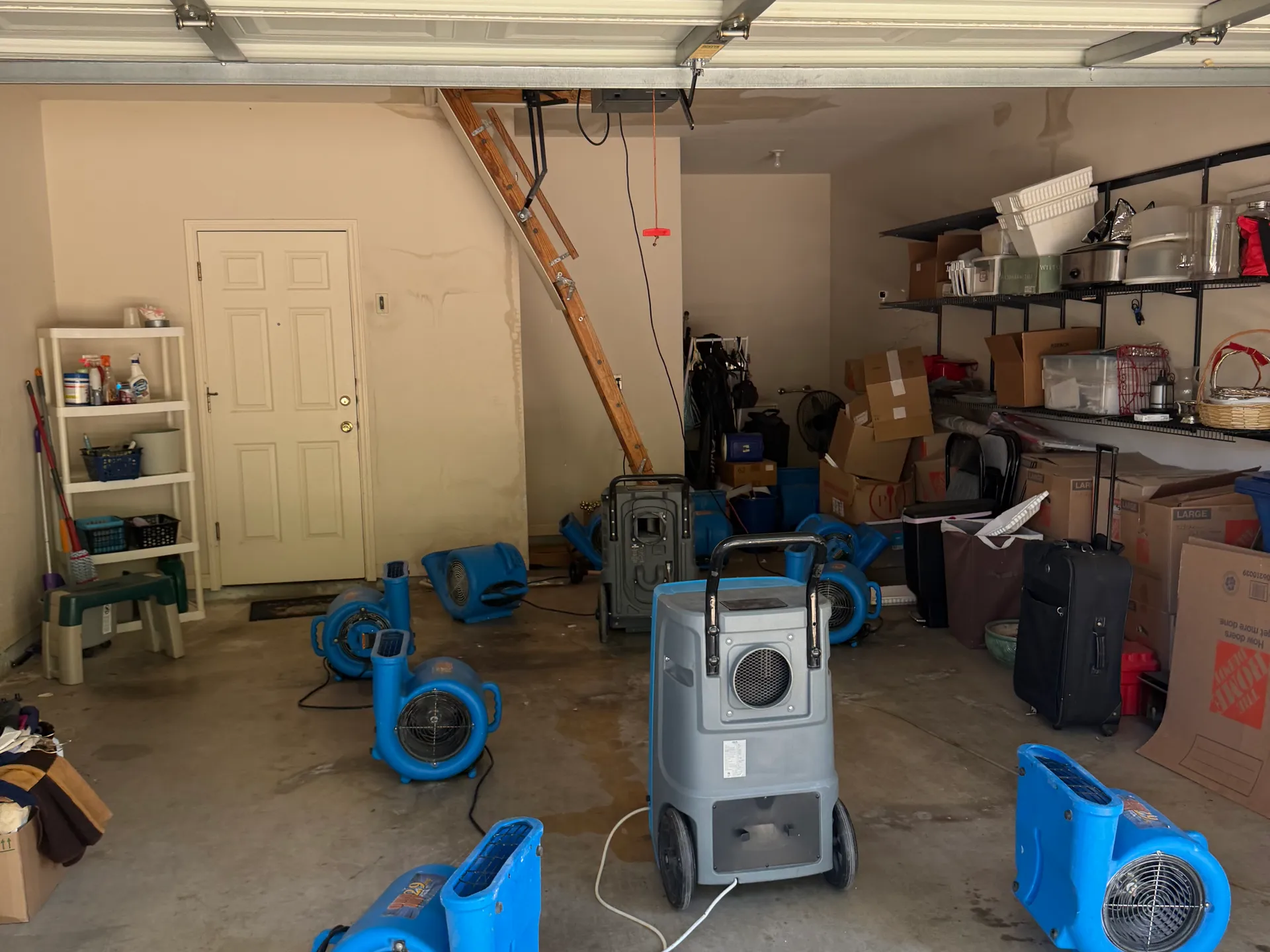
Age doesn't cause a leak. It does change where the water hides. Older houses tend to hold moisture in wall cavities and under floors, so San Antonio restoration in an older home starts with moisture readings, not the look of the drywall. That's how our water damage cleanup and drying works.
When SAWS shuts off your water
The SAWS Find Leaks page lays out what happens when the utility suspects a leak on a property: its representatives try to reach the owner or resident first, then shut the water off and leave a door hanger saying to contact a plumber for repairs. For a significant leak, SAWS asks you to turn off your water at the meter yourself. Can't get it off? The same page lists the SAWS Emergency Operations Center number for water emergencies, 24 hours a day.
That leaves a gap. SAWS shuts the water off, and a plumber fixes the pipe. Neither one dries your subfloor. That part is ours: we pull out standing water, dry the walls, floors and framing, and keep checking moisture levels until the house is dry. We help document the damage and work with your insurance carrier throughout the restoration process.
Mold in older walls and floors
Mold follows moisture. Water that sits in a wall cavity or under a floor can feed growth nobody sees until a stain or a musty smell gives it away, and older houses offer hidden moisture more places to sit.
Our mold remediation for older homes runs the same way it does anywhere. We seal off the affected area, take out the mold, and clean and treat every surface it touched. One opinion we'll stand behind: mold work that ignores the moisture behind it is only half a job, because the growth comes back. If you've had a leak and now notice a musty smell, mention both when you call. Together, they tell us where to start looking.
About three structure fires a day
San Antonio Fire Department data cited in a City news release in February 2026 puts structure fire dispatches at about three a day. A fire that stays in one room can still push smoke and soot into other rooms, closets and the belongings stored there.
Our fire and smoke damage restoration handles that cleanup: fire, smoke, soot and odor damage. The smell is part of the damage, not an afterthought, so smoke odor removal belongs to the same job, room by room. Belongings can go out with our pack-out service, where we pack, inventory, move and store them, then return everything when the house is clean.
Across the city and next door
Our San Antonio restoration coverage runs across the whole city, from King William to Stone Oak. For the rest of the county, start at the Bexar County hub, which deals with freeze damage and shutoff valves countywide. Converse, northeast of downtown, gets its own page, and the strip of cities below lists everywhere else we serve, from New Braunfels to Boerne.
Something happening right now? Call us day or night. Our 24/7 emergency restoration page lists what to do first, from getting people and pets out to closing the main water valve and taking photos before cleanup starts.
Frequently Asked Questions
The steps stay the same: get the water out, dry the structure, confirm it's dry. What changes is how far we look. In an older house, water can run into wall cavities and under flooring where you can't see it, so we take moisture readings around the wet area instead of trusting the surface.
If a pipe broke inside a wall, your plumber may need to open it for the repair. We dry what's behind it before anyone closes it back up.
The repair on your property is yours to arrange, and the SAWS door hanger will tell you to call a plumber. Once the plumber fixes the leak, look for water that got inside: soft spots in the floor, swollen baseboards, a damp cabinet bottom. Find any, and call us. We dry the wet materials and keep measuring moisture until they read dry.
In February 2026, the City said fire-affected homes are now eligible for impact and development fee waivers under its updated Fee Waiver Policy. The same release described a council request from Districts 4 and 5 to set up a City process for helping residents after a home fire, with strategies for relocation assistance, department coordination and an improved House Fire Checklist. Check with the City on where that stands today.
We aren't part of that process. Our role is cleaning up fire, smoke, soot and odor damage, plus packing out your belongings.
Other communities we serve
Converse is our other Bexar County city page, and the rest of the strip covers the cities we serve beyond the county line.
Damage in an older San Antonio house?
Call 24/7 or send a request, and we'll find where the water, mold or smoke went.