
Water Damage Restoration
Emergency Water Extraction in San Antonio
Water on the floor doesn't stay put. It soaks into carpet pad, drywall and subfloor until someone pulls it out, and that's the job we do 24/7 across San Antonio.
What emergency water extraction includes
Available 24/7
Leaks don't keep business hours, so call day or night, any day of the week.
Standing water first
Pumps handle deep water. Extraction vacuums lift what's left off tile, wood, vinyl and concrete.
Carpet and pad
The pad under your carpet holds water like a sponge, so extraction goes after both layers.
Hidden moisture
Moisture readings find the wet spots you can't see.
Furniture off the floor
We lift furniture and rugs off wet floors, and contents pack-out can store your belongings until the house is ready.
Photos for your claim
We help document the damage and work with your insurance carrier throughout the restoration process. Your carrier decides coverage.
Why emergency water extraction can't wait
Water moves. It wicks up into drywall, slides under baseboards and sinks into carpet pad, and the wet area grows until someone pulls the water out. Water extraction removes it as liquid, which takes far less time than drying it out of your walls later.
The clock is already running, too. The EPA advises drying water-damaged areas and items within 24 to 48 hours to prevent mold growth, and that window opens when the leak starts, not when someone finds it.
Don't wait until morning to see if it dries on its own. It won't dry in time. Texas Damage Response is veteran-owned and operated, based in San Antonio and available 24/7 for homes across the metro, from Schertz to Canyon Lake.
Standing water versus water in carpet and pad
Standing water and soaked carpet are two different problems. Standing water sits on tile, vinyl, wood or bare concrete, where you can see it. Deep water calls for a pump. Extraction vacuums pick up the rest, including what's hiding in grout lines and the seams between planks.
Carpet is sneakier. The pad underneath soaks up water like a sponge, and on a concrete slab, that water has nowhere to drain. Extraction tools press down through the carpet to squeeze the pad, then vacuum the water away.
The pad is the part people underestimate. If your carpet squishes underfoot, the pad is full of water, even when the surface feels only damp.
From extraction to drying, step by step
Extraction and drying are separate jobs, and the order matters. It usually goes like this:
- Stop the source. Shut the water off at the main if you can do it safely, which is what the Texas Department of Insurance tells homeowners to do for a sudden leak.
- We check for hazards like water near outlets, then photograph the damage before anything moves.
- Standing water out first, then the carpet and pad.
- Moisture readings mark the edges of the wet area, including spots behind baseboards and under flooring.
- Drying takes over. Structural drying goes after the water inside walls, floors and framing, with moisture monitoring until the readings say the materials are dry.
A frozen pipe that split inside a wall follows the same order, and our burst pipe water damage page covers that situation.
Water categories and why they matter
Not all water is equal. The industry standard for water damage work, the ANSI/IICRC S500, sorts it into three categories by source:
- Category 1 comes from a sanitary source, like a broken supply line.
- Category 2 carries significant contamination. Think washing machine or dishwasher discharge.
- Category 3 is grossly contaminated and can carry harmful agents, as with a toilet backflow from beyond the trap or rising water from a creek or river.
Categories can change, too. Under the S500, time and temperature affect water quality, so clean water left sitting in a warm house can slide into Category 2 or 3. In a San Antonio summer, that's one more reason to move fast. The category also shapes the rest of the water damage restoration job.
What water extraction costs
Nobody can price water extraction honestly without seeing the house. For a national benchmark, Fixr's water damage restoration cost guide gives this range for extraction. Industry average: $3.75–$7.50 per sq ft, with clean water at the low end and contaminated water at the high end. Water volume, equipment and the size of the wet area move the number too.
That's a national average, not our price. Your own number comes from an assessment of your home, and your policy and your carrier decide whether insurance pays for any of it. We help document the damage and work with your insurance carrier throughout the restoration process, and our insurance claims page explains how. The claim stays yours, and so does the deductible.
Related services
Water Damage Restoration
Emergency water extraction, structural drying, moisture monitoring and complete mitigation for San Antonio homes, 24/7.
Learn moreStructural Drying
Air movement, dehumidification and moisture monitoring that dry walls, subfloors and cabinets to a measured finish line.
Learn moreBurst Pipe Water Damage
Extraction, drying and moisture monitoring after a burst or frozen pipe.
Learn moreCeiling Water Damage
Stained, sagging or dripping ceilings dried from above, then rebuilt and painted.
Learn moreWater-Damaged Drywall
Wet walls measured, cut out where they can't be saved, dried to the studs and finished again.
Learn moreHardwood Floor Water Damage
Wet hardwood extracted, dried and measured board by board to save what can be saved.
Learn moreWater Heater Leak
Water out of the garage, closet and walls after a water heater leaks or lets go.
Learn moreWashing Machine Leak
Laundry room floods cleaned up and dried, including the rooms on the other side of the wall.
Learn moreAC Leak Water Damage
Ceilings, walls and floors dried and repaired after an AC drain line or pan overflows.
Learn moreFlood Damage Cleanup
Floodwater from outside cleaned out, contaminated materials removed, and the house dried, 24/7.
Learn moreSewage Cleanup
Sewer and drain backups contained, cleaned out, disinfected and dried, any hour.
Learn moreEmergency Restoration
What to do in the first hour, and how to reach us 24/7 when water, fire or mold damage hits.
Learn moreContents Pack-Out
Belongings packed, inventoried, moved and stored while your home dries, then brought back.
Learn moreInsurance Claims
How we help document the damage and work within your insurance carrier's process.
Learn more
Helpful guides
Does homeowners insurance cover water damage? What TDI says
Does homeowners insurance cover water damage? TDI says most policies cover sudden leaks, not slow ones or floods. Texas Damage Response explains the details.
Learn moreHow to choose a restoration company after water or fire damage: questions to ask
How to choose a restoration company: Texas Damage Response's checklist of questions to ask, what to get in writing and the Texas rules on deductibles.
Learn moreRenters and water or fire damage: what renters insurance usually covers
Does renters insurance cover water damage or fire damage? TDI says it usually covers your belongings, not the building. We explain what to check and do first.
Learn more
Frequently Asked Questions
Yes. Water extraction and water removal are two names for the same job: getting liquid water out of your home with pumps and extraction vacuums.
Extraction can't dry the house, though. Water that soaked into drywall, wood and subfloor is still there after the floor looks clear, and structural drying handles that part, with moisture monitoring until the materials are dry.
Sometimes. It depends on the water's category, how long it sat, and whether mold has started. Carpet soaked by clean water and extracted quickly has the best odds; pad is less forgiving.
Time works against you. The EPA says you may have to throw away porous materials such as carpet if they become moldy. And if mold has already started, the job shifts to mold remediation.
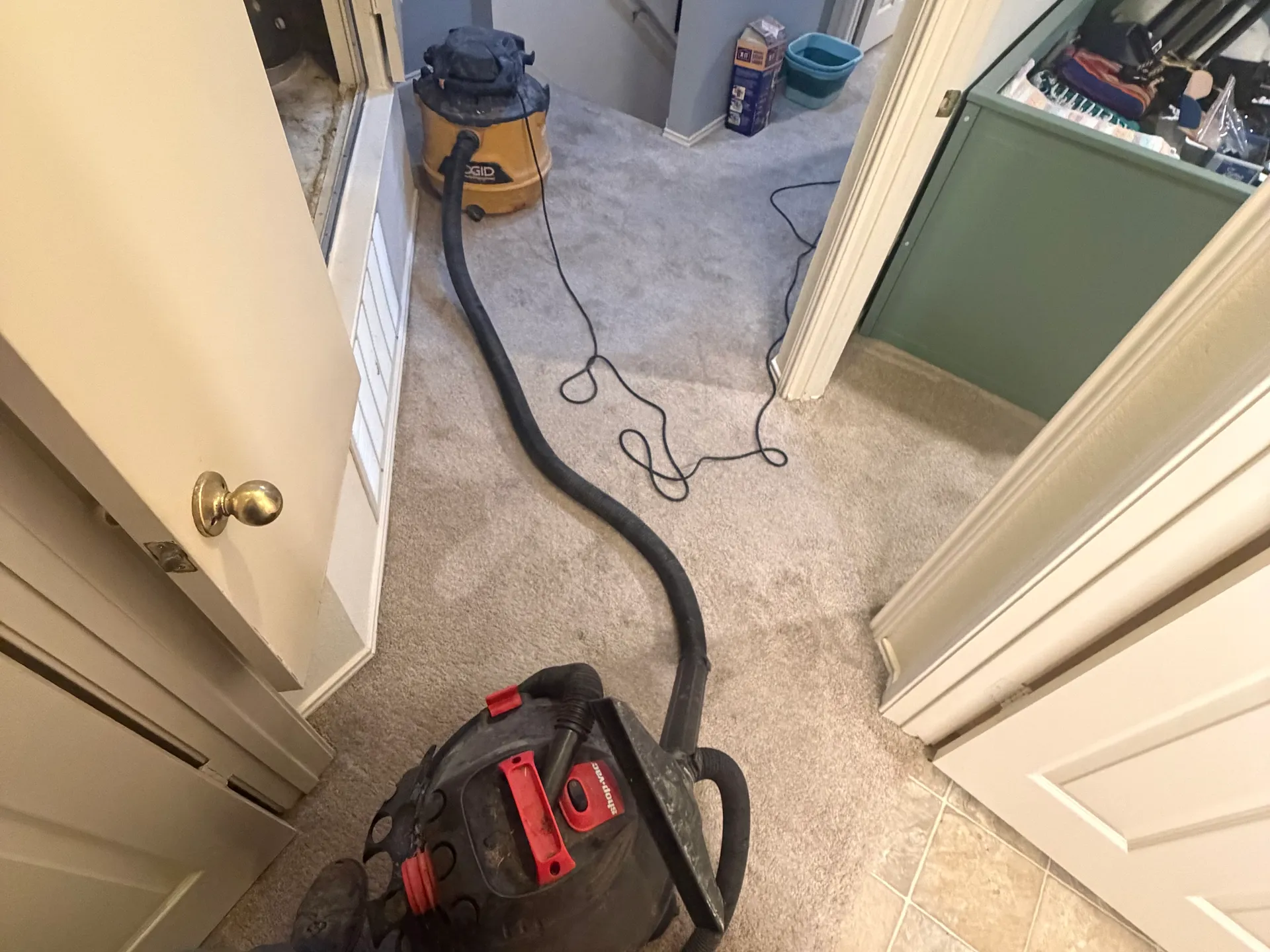
For a small spill on tile caught right away, a wet/dry vac may be enough.
Past that, it falls short. A shop vac won't get much out of soaked carpet pad, it can't show how far the water spread, and you should never run one while standing in water. If water reached carpet, came through a ceiling or crossed into another room, call for emergency restoration, available 24/7.
Areas we serve
From our San Antonio base, we handle water emergencies 24/7 across these counties and cities.
Standing water in your home right now?
Call 24/7 for emergency water extraction in San Antonio. The sooner the water comes out, the less of your home it reaches.