
Wet walls
Water-Damaged Drywall Repair in San Antonio
Drywall pulls water up the wall well past the puddle. We measure how far it went, cut out what can't be saved, dry the cavity and framing, then hang, tape, texture and paint new board, 24/7 across San Antonio.
What water-damaged drywall work includes
Moisture mapping
Readings along the wall show where the water went, which is usually higher and wider than the stain.
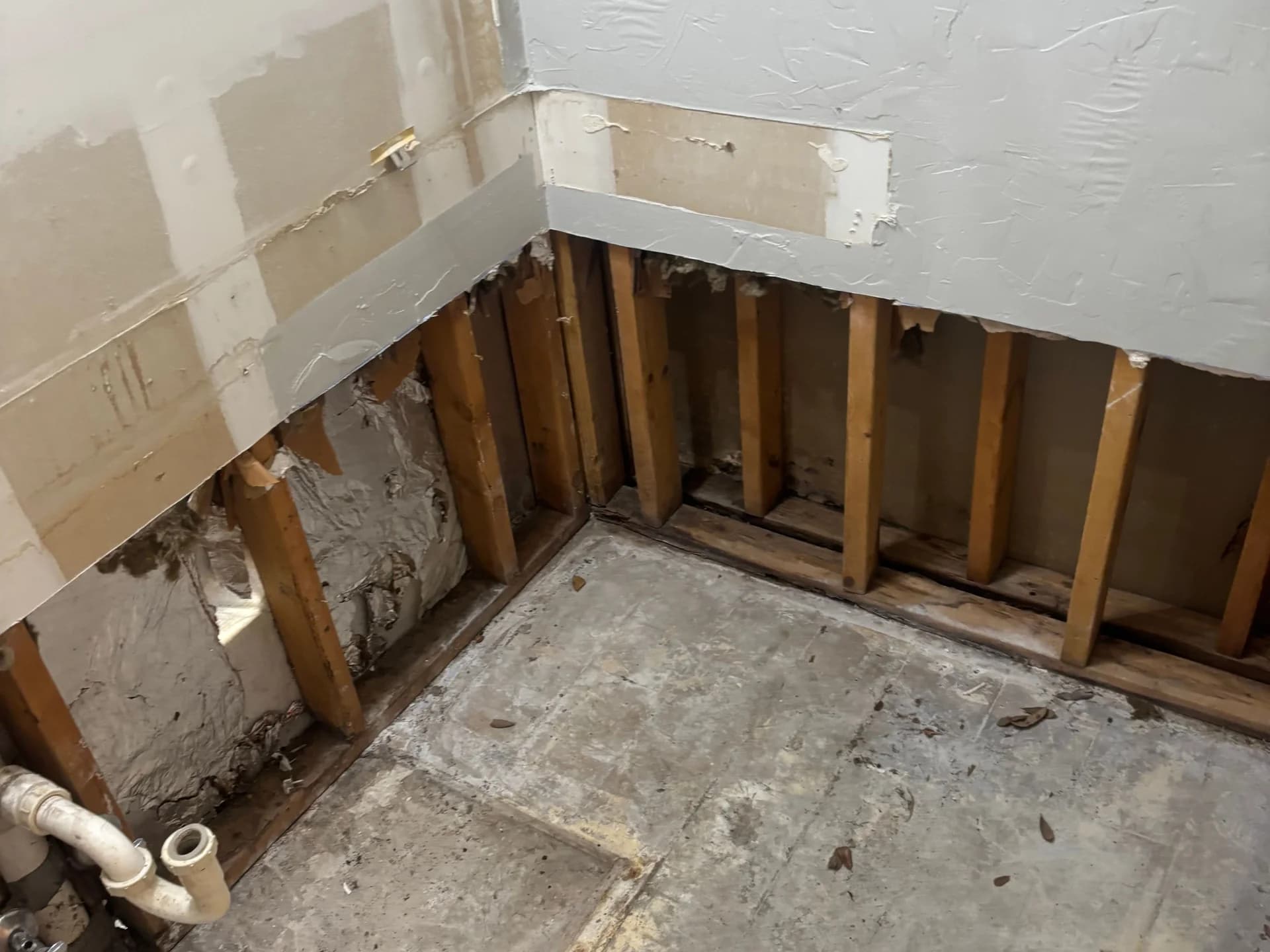
Cutting above the wet line
Wet board comes out in a straight, clean cut a margin above the highest wet reading, so new panels go in neatly.
Insulation and baseboards
Soaked insulation and swollen baseboards come out with the drywall so the cavity can dry.
Drying the studs
Structural drying works on the framing and bottom plate, with moisture monitoring until they read dry.
Hang, tape, texture, paint
We rebuild the projects we restore, so the crew that opened the wall closes it and matches the finish.
Photos for your carrier
We help document the damage and work with your insurance carrier throughout the restoration process.
How to tell if drywall is water damaged
Drywall is mostly gypsum wrapped in paper, and both soak up water fast. A wall can look almost normal from across the room while the bottom foot of it is wet through. Up close, these are the signs to look for:
- Stains that look yellow, brown or gray, often in a wavy line along the bottom of the wall
- Bubbling or peeling paint, or a blister that feels cool and damp when you press it
- Soft spots that give under your thumb, or a wall that sounds dull instead of solid when you tap it
- Swelling or crumbling at the bottom edge, where the board sits closest to a wet floor
- Baseboards that swell, pull away from the wall or show a gap at the top of the caulk
- A musty smell in one room, or dark spots creeping out from behind furniture
That last one matters. The EPA notes that mold may be hidden in places such as the back side of drywall, so a clean-looking face doesn't prove the wall is fine.
Before you touch a wet wall
Walls carry wiring. If outlets, switches or a wall-mounted appliance got wet, the CDC says to turn off the power at the main breaker, and not to walk through standing water to reach the panel. If you can't get to it safely, call an electrician. Then stop the water at the source. We don't repair plumbing, so a plumber fixes the pipe or the fitting. Our burst pipe water damage page covers what happens after a line inside a wall breaks.
Water climbs drywall, so the damage is bigger than it looks
Drywall acts like a paper towel standing in a puddle. NDSU Extension puts it plainly: gypsum board is very absorbent and will wick water up a wall. So a half inch of water on the floor can leave the board wet well above the waterline, and a leak inside the wall can spread sideways along the cavity without ever showing on the face.
That's why we start with moisture readings, not a guess. We take them along the wall, at different heights and past the stained area, plus the baseboard, the floor in front of it and the walls on the other side of the studs. The readings draw the real outline of the wet area, and that outline decides where the cut goes. It also gives your carrier a record of how far the water traveled.
If the water came from above, the ceiling usually took it first. Our ceiling water damage page covers that side of the job.
Can wet drywall be saved?
Sometimes. Three things decide it: what kind of water it was, how long the board stayed wet and what shape the board is in now.
The ANSI/IICRC S500, the industry standard for water damage restoration, sorts water by contamination. Category 1 comes from a sanitary source, like a broken supply line, and Restoration & Remediation magazine describes Category 2 as water with significant contamination, such as discharge from a dishwasher or washing machine. The same article notes that clean water can deteriorate into Category 2 or 3 as time passes, especially in a warm house.
- Clean water, caught quickly. Legend Brands' summary of S500 procedures lists gypsum wallboard wall assemblies among the materials that can be dried after a Category 1 loss. If the board is still firm, the paper is intact and there's no wet insulation behind it, drying in place is worth trying, with readings to prove it worked.
- Contaminated water. The same summary says highly porous materials that absorbed Category 2 or 3 water, gypsum wallboard and insulation included, are removed. For Category 3, Restoration & Remediation magazine quotes the S500 listing gypsum wallboard among the materials that should be removed and replaced. That covers floodwater and sewage.
- Board that's failing. Drywall that's swollen, crumbling, sagging or soft to the touch doesn't firm back up when it dries. It comes out.
We'll show you the readings and tell you which group your wall falls in before anything gets cut.
The flood cut: cutting above the wet line
When drywall has to go, the cut sits above the highest wet reading, not right at the stain. Guidance from the Gypsum Association, published in Walls & Ceilings, gives cutting and replacing the drywall 12 to 24 inches above the water line as the general recommendation. It suggests going higher, around 4 feet, when insulation has to be replaced and the wall cavity needs to dry. Restorers call this a flood cut, even when the water came from a supply line instead of a flood.
A straight cut at a consistent height does two jobs. It gets every wet piece out, and it leaves a clean edge where a new panel can be hung, taped and finished so the patch disappears. Baseboards come off first and get set aside if they're worth saving.
Insulation behind wet drywall usually comes out with it. Mississippi State University Extension says that in most cases wet insulation needs to be removed and replaced, since it holds water against the studs. Pulling it lets air reach the framing.
Dry the cavity and framing before anything closes up
Closing a wet wall is how mold gets a head start. The EPA says to dry water-damaged areas and items within 24 to 48 hours to prevent mold growth, and that no type of mold will grow without water or moisture. NDSU adds that mold grows readily on the paper of gypsum board. New drywall hung over damp studs puts fresh paper right against the moisture.
Once the wall is open, structural drying goes to work on the studs, the bottom plate and the back of the drywall on the other side. Moisture monitoring tells us when the framing is actually dry, and nothing new goes up before then. The Gypsum Association guidance makes the same point: dry, clean and inspect the cavity before new panels are installed. If we find mold growing inside the wall, the job moves to mold remediation first.
Water damaged drywall repair: hanging, taping and matching the wall
We don't open your wall and leave you to find someone to close it. We rebuild the projects we restore, so after the readings say the framing is dry, the same team puts the wall back:
- New insulation where wet insulation came out
- New drywall hung along the cut line and fastened to the dried studs
- Tape and joint compound over the seams, sanded smooth
- Texture matched to the existing wall, whether that's smooth, orange peel or knockdown
- Primer, paint and the baseboards back on
A small patch on an older textured wall won't always blend perfectly, and sometimes painting the whole wall corner to corner is what makes the repair vanish. We'll tell you up front when that's the case. This is part of our reconstruction work, and our operations manager, who is Xactimate-certified with more than six years in reconstruction, builds the estimate. If flooring, cabinets or trim also need replacing, our water damage repair page covers the rest of the rebuild. Walls damaged by fire or smoke are a different job, covered on fire-damaged drywall.
Insurance and wet drywall
How the water got into the wall shapes the claim. The Texas Department of Insurance says most homeowner and renters policies cover sudden and accidental water damage, and that policies usually won't cover damage from gradual leaks. A pipe that burst last night and a slow drip behind a shower wall can land on different sides of that line. Your carrier decides, not us.
TDI also says to take pictures or video of the damage before making repairs, and not to make permanent repairs until your insurance company sees the damage. Our order of work fits that: readings and photos first, drying next, rebuild last. We help document the damage and work with your insurance carrier throughout the restoration process. We don't interpret your policy or negotiate the claim, and your deductible is yours. Our insurance claims page explains where we fit.
We're veteran-owned, family-operated and IICRC-certified, based in San Antonio, and we handle wet walls in homes from New Braunfels to Boerne. For the bigger picture, start at water damage restoration.
Related services
Water Damage Restoration
Emergency water extraction, structural drying, moisture monitoring and complete mitigation for San Antonio homes, 24/7.
Learn moreWater Extraction
Standing water out of floors, carpet and pad, 24/7, before it soaks in any deeper.
Learn moreStructural Drying
Air movement, dehumidification and moisture monitoring that dry walls, subfloors and cabinets to a measured finish line.
Learn moreBurst Pipe Water Damage
Extraction, drying and moisture monitoring after a burst or frozen pipe.
Learn moreCeiling Water Damage
Stained, sagging or dripping ceilings dried from above, then rebuilt and painted.
Learn moreHardwood Floor Water Damage
Wet hardwood extracted, dried and measured board by board to save what can be saved.
Learn moreWater Heater Leak
Water out of the garage, closet and walls after a water heater leaks or lets go.
Learn moreWashing Machine Leak
Laundry room floods cleaned up and dried, including the rooms on the other side of the wall.
Learn moreAC Leak Water Damage
Ceilings, walls and floors dried and repaired after an AC drain line or pan overflows.
Learn moreFlood Damage Cleanup
Floodwater from outside cleaned out, contaminated materials removed, and the house dried, 24/7.
Learn moreSewage Cleanup
Sewer and drain backups contained, cleaned out, disinfected and dried, any hour.
Learn moreWater Damage Repair
Flooring, cabinets, trim and the rest of the rebuild once the drying is done.
Learn moreFire-Damaged Drywall
Walls and ceilings hurt by fire, soot or smoke, removed and rebuilt.
Learn more
Helpful guides
Does homeowners insurance cover water damage? What TDI says
Does homeowners insurance cover water damage? TDI says most policies cover sudden leaks, not slow ones or floods. Texas Damage Response explains the details.
Learn moreHow to choose a restoration company after water or fire damage: questions to ask
How to choose a restoration company: Texas Damage Response's checklist of questions to ask, what to get in writing and the Texas rules on deductibles.
Learn moreRenters and water or fire damage: what renters insurance usually covers
Does renters insurance cover water damage or fire damage? TDI says it usually covers your belongings, not the building. We explain what to check and do first.
Learn more
Frequently Asked Questions
Look for yellow or brown stains, bubbling or peeling paint, soft spots that give when you press them, swelling or crumbling along the bottom edge, and baseboards pulling away from the wall. A musty smell in one room is another clue.
The face of the wall can look fine while the board behind it is wet, and the EPA notes mold can hide on the back side of drywall. A moisture reading answers the question in a few minutes.
Drywall wet with clean water and dried quickly can sometimes stay, as long as it's still firm and there's no soaked insulation behind it. Board that's soft, swollen, sagging or crumbling has to be replaced.
Water from a flood, a sewage backup or another contaminated source is different. Under the IICRC S500, porous materials like drywall and insulation that absorbed that water get removed rather than dried.
Not long. The EPA says to dry water-damaged areas and items within 24 to 48 hours to prevent mold growth, and mold grows readily on the paper face of gypsum board.
That's why it's worth calling the same day. We're available 24/7, and the crew comes ready to work, so drying starts on the first visit.
Above the highest wet reading, not at the stain. Gypsum Association guidance gives 12 to 24 inches above the water line as the general recommendation, and around 4 feet when insulation has to come out and the cavity needs to dry.
The moisture readings on your wall decide the exact height. A straight cut at one height also makes the new drywall easier to hang and finish cleanly.
No. A plumber repairs the pipe, valve or fitting. We handle the water damage: measuring how far it spread, removing the drywall and insulation that can't be saved, drying the framing and rebuilding the wall.
Get the leak fixed as soon as you can. A wall can't dry while water is still running into it.
Areas we serve
From San Antonio, we dry and rebuild water-damaged walls in homes across these counties and cities.
Soft spot or water line on the wall?
Call us 24/7. We'll measure how far the water went, dry the wall cavity and put the wall back together.