
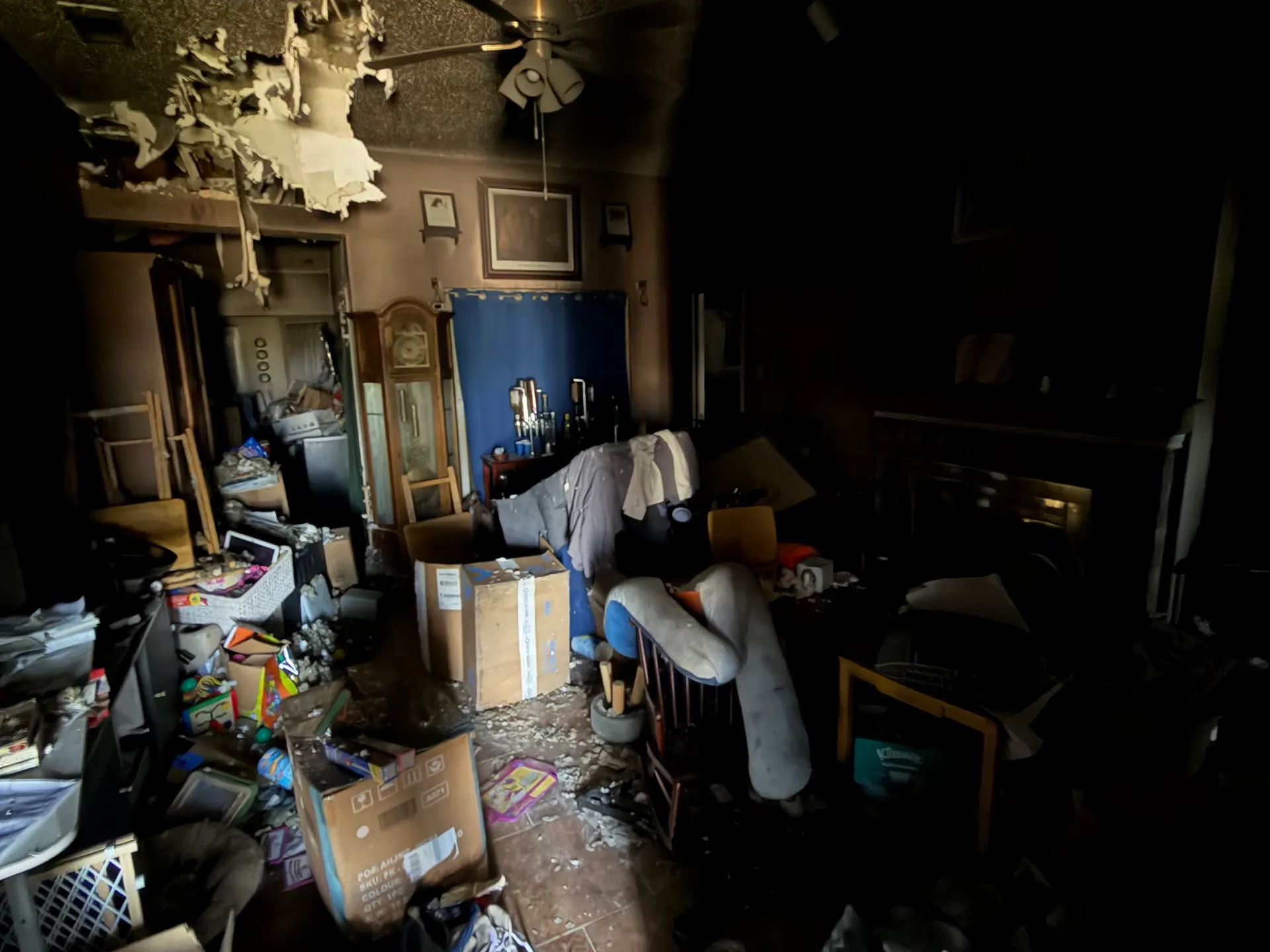
Rebuilding after a fire
Fire Damage Repair in San Antonio
Fire damage repair begins where the cleanup ends. Once the smoke, soot and odor work is done, we rebuild what burned or couldn't be cleaned, from charred framing and drywall to cabinets and the final coat of paint.
What fire damage repair covers
Charred framing
Studs, joists and rafters that burned or lost strength get replaced or reinforced before anything covers them.
Drywall and ceilings
New board where the fire burned through, or where smoke and heat left surfaces that cleaning couldn't bring back.
Insulation
Smoke-soaked insulation holds odor, so it comes out and new insulation goes in.
Cabinets, doors and trim
The woodwork that scorched, blistered or soaked up smoke past saving, rebuilt to fit the room.
Flooring and finishes
Floors ruined by heat or firefighting water, then primer and paint to finish the job.
One team from cleanup to rebuild
The crew that cleaned up the smoke and soot already knows what came out, so nothing gets lost in a handoff.
Repair comes after the cleanup, never before
It's tempting to want new drywall up the week after a fire. Every day the house looks burned is a hard day. But building new walls into a house that still holds soot and smoke residue is how you end up with a brand-new room that smells like a campfire every time the afternoon heat warms it up.
So the order goes like this. First the fire damage restoration: soot off the surfaces, smoke residue cleaned room by room, odor dealt with at its source, and the water from firefighting extracted and dried. Then the repair. The ANSI/IICRC S700, the industry standard for professional fire and smoke damage restoration, covers that cleanup and restoration work. Repair builds on top of it. Skip the cleanup and the rebuild inherits every problem underneath.
There's a practical reason too. Cleaning shows you what's actually salvageable. A cabinet that looked ruined under a layer of soot sometimes cleans up fine. A wall that looked okay sometimes reveals scorching once the film comes off. We'd rather know before we order materials.
What gets rebuilt after a house fire
Fire damage repair is really two lists. One is what burned. The other is what didn't burn but can't be cleaned well enough to keep.
What burned
Charred studs and joists, roof framing near the fire, drywall that burned through, cabinets and doors that caught. Structural pieces come first, and they have to be sound before any finish work starts. If the framing needs replacing, it gets replaced. Paint and new drywall over damaged wood is a shortcut we won't take.
What smoke and heat ruined
Insulation is the classic example. It soaks up smoke like a sponge, and you can't wash it. The same goes for some drywall, especially textured ceilings that took heavy smoke, along with laminate surfaces that blistered from heat and flooring that firefighting water got under. Our smoke odor removal work tells us a lot about which materials are holding the smell and need to go.
One team from the first call to the finished room
A fire job is long, and the hardest part for most families is keeping track of who's doing what. We rebuild the projects we restore, so the team that ran the cleanup is the one that runs the rebuild. They know which rooms the smoke reached, which cabinets came out and where the water from the hoses ended up. That history goes into the repair plan instead of getting lost between two companies.
It also helps with your belongings. If your things went out through contents pack-out, they've been wrapped, protected, inventoried and stored securely while the house was cleaned. They can stay put until the rebuild is done and the rooms are ready for them.
Construction experience behind the rebuild
Ricky Ballard, our co-founder and a Marine Corps veteran, started in restoration as a technician and carpenter. Later he built spec and custom homes and took on remodels and additions through his own construction company. Our operations manager is Xactimate-certified with more than six years of reconstruction experience. Together, our employees bring more than 15 years of combined experience across our companies.
What isn't part of our repair work
A house fire usually touches systems that need their own specialists. Wiring near the fire, the gas line, the air conditioning and ductwork, and sometimes the roof. We don't do electrical, gas, HVAC or roofing repair, and we'll tell you so plainly. Those trades need to sign off on their parts of the house.
Ready.gov is clear on one piece of this: don't try to reconnect utilities yourself. The fire department should make sure utilities are either safe to use or disconnected before they leave.
Estimates, contractors and your claim
Our fire damage repair estimates are written in Xactimate by our Xactimate-certified operations manager. Adjusters work in that software every day, so the scope is laid out in a form your carrier can review.
Whoever you hire, the Texas Department of Insurance has good advice in its claim tips for Texas wildfires, and it applies to house fires just as well. Make only temporary repairs and save your receipts. When it's time to rebuild, get more than one bid, don't sign a contract with blanks to be filled in later, and don't pay in full up front. TDI also says to avoid contractors who offer to waive your insurance deductible, because paying it or promising a rebate of it is illegal in Texas.
Your carrier decides what your policy covers and pays, and the deductible is yours. We don't interpret policies, negotiate or act as adjusters. We help document the damage and work with your insurance carrier throughout the restoration process. Our insurance claims page explains our part in more detail.
Fire damage repair in San Antonio and nearby
We're an IICRC-certified company, veteran-owned and family-operated, with our home base in San Antonio. We rebuild fire-damaged homes across the metro and in Seguin, Austin and Round Rock. If the fire just happened, call 24/7 and we'll start with the cleanup. If the cleanup is finished somewhere else and you need the rebuild, tell us what happened.
Related services
Reconstruction
We rebuild the projects we restore, from drywall and floors to kitchens and baths.
Learn moreWater Damage Repair
The rebuild after the drying: drywall, insulation, flooring, cabinets, trim and paint put back.
Learn moreFire Damage Restoration
The smoke, soot, odor and water cleanup that comes before the rebuild.
Learn moreKitchen Fire Cleanup
Grease, soot and smoke odor cleaned out of the kitchen first.
Learn moreContents Pack-Out
Belongings wrapped, inventoried and stored securely until the rebuilt rooms are ready.
Learn more
Frequently Asked Questions
Because new materials would trap the smoke and soot residue still in the house. Insulation and drywall installed over a dirty structure can carry the smell for a long time. The cleanup comes first: soot and smoke residue removed, odor treated at its source, and the water from firefighting dried. Then the rebuild.
Cleaning also shows what's salvageable, so the repair plan only replaces what actually needs replacing.
No. Electrical, gas, HVAC and roofing work belongs to specialists in those trades. We handle the cleanup and the rebuild of the structure and finishes: framing, drywall, insulation, cabinets, flooring, trim and paint.
Your policy and your carrier decide that, and the deductible is yours. We help document the damage and work with your insurance carrier throughout the restoration process, and we write our estimates in Xactimate, which adjusters use every day. We don't interpret policies or tell you what a claim will pay.
Yes. If a fire took out a kitchen you never liked anyway, the rebuild can be the moment to change it. We do remodeling too. Anything beyond putting the home back the way it was is a separate conversation from your claim, and we keep the two apart.
Areas we serve
We rebuild fire-damaged homes in San Antonio and across these counties and cities.
Ready to rebuild after the fire?
Call 24/7 or send a request. We'll finish the cleanup, then rebuild what the fire took, with one team the whole way.