
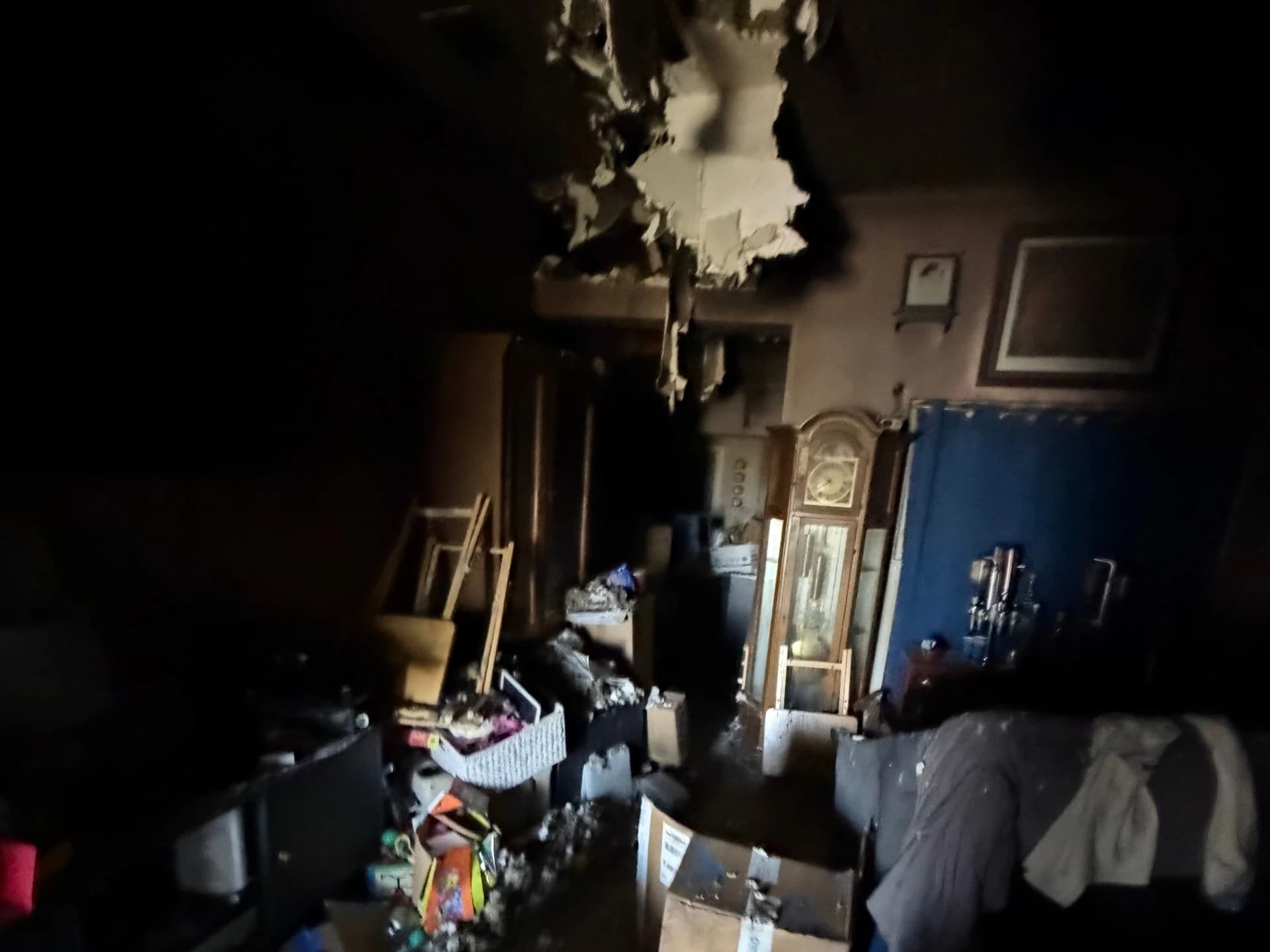
After the fire department leaves
Fire Damage Cleanup in San Antonio
Once the fire trucks leave, someone has to deal with what's left: burned material, soot on every surface, soaked floors and a fine layer of extinguisher powder. That's the cleanup we do, 24/7, starting on the first visit.
What fire damage cleanup includes
Openings covered
Windows the firefighters broke and holes they cut get boarded or tarped before the cleanup starts.
Charred debris and tear-out
Burned drywall, insulation, flooring and anything else past saving is removed, bagged and hauled away.
Soot and smoke residue
Walls, ceilings, trim, cabinets and hard surfaces are cleaned in every room the smoke reached, not just the one that burned.
Firefighting water
Water from the hoses is extracted and the structure dried, with moisture readings deciding when it's done.
Extinguisher powder
The dry chemical dust from a home extinguisher gets cleaned up along with the soot.
Contents pack-out
Belongings are packed, inventoried, moved out and stored while the house is cleaned, then brought back.
What's left when the fire department leaves
Firefighters put the fire out and make sure it stays out. To do that, the U.S. Fire Administration's After the Fire guide explains, they may break windows and cut holes in the roof to clear smoke, and cut into walls to check that nothing is still burning inside them. Then they hand the house back to you.
What you walk into is a mix of four things: material that burned, soot and smoke residue that spread well past the fire, water from the hoses, and sometimes the powder from a home extinguisher. USFA notes that the soot and dirty water left behind may contain things that could make you sick, and that you shouldn't go back in until the fire department says it's safe.
Fire damage cleanup is the physical work of getting all of that out of the house. It's the part between the fire and the rebuild, and it's what our crew does. Texas Damage Response is an IICRC-certified, veteran-owned and family-operated company based in San Antonio, and we take these calls 24/7.
Cover the openings first
A house with broken windows and a hole in the roof is open to rain and to anyone walking by. USFA says that in some cases you may need to board up windows and doors so no one can get in, and the Texas Department of Insurance tells homeowners to take steps to secure the home and prevent more damage, making only temporary repairs and saving the receipts.
That's why many of our fire jobs start with board-up and roof tarping: plywood over the openings and a tarp over roof damage. It's temporary protection only (we don't repair roofs), and it lets the cleanup go on inside without the weather undoing it.
Charred debris and tear-out
Some materials don't clean up. Drywall that burned or blistered, insulation that cooked or got soaked, carpet and pad under the debris, cabinet boxes that charred, trim that blackened all the way through. Those come out first, so the cleaning that follows is working on surfaces that can actually be saved.
Before anything leaves the house, it gets documented. Ready.gov advises not to throw away damaged goods until you've made an inventory, and TDI says not to throw anything away until your insurance company tells you to. Photos and notes now save arguments later.
Walls are often a judgment call. Drywall that only has smoke film on it may clean up fine, while a section that burned or soaked through needs to be cut out. Our fire-damaged drywall page covers how we decide and what happens to the wall afterward.
Soot on the walls, ceilings and everything else
Soot cleanup starts by finding where the residue stops. The industry standard for this work, the ANSI/IICRC S700, covers assessing the presence, intensity and boundaries of fire residues and odors in a building. In plain terms: before anyone cleans, someone has to walk the house and figure out how far the smoke went and how heavy it is in each room. A closet at the far end of the hall can need as much attention as the room next to the fire.
What we find depends on what burned. Some soot is loose and powdery. Some is oily and smears the moment it's touched. Plastics, furniture foam and cooking oil all leave different residue, and a single fire usually leaves more than one kind. That's the reason we ask people not to start scrubbing. A wet rag on soot often spreads it into wide gray streaks and pushes it into the paint, and those smears can be harder to clean than the original film.
Cleaning covers the ceilings, walls, trim, doors, cabinets, window frames, light fixtures and other hard surfaces the smoke reached. Getting the residue off is also what gives smoke odor removal a chance to work, since the smell lives in that residue. If the fire started in the kitchen, the grease adds its own problems, and our kitchen fire cleanup page goes into those.
The water and the powder from putting it out
USFA puts it bluntly: things the fire never touched may still be ruined by smoke and soggy with water used to put out the fire. That water soaks carpet, wicks up drywall and runs into the rooms below or under cabinets. From the moment the hoses stop, it's a water damage job too. The EPA advises drying water-damaged areas and items within 24 to 48 hours to prevent mold growth, so water extraction and structural drying run alongside the soot work, with moisture readings telling us when the framing and subfloor are dry.
If someone used a home extinguisher, there's usually a fine powder over everything near the fire. According to University of Washington Environmental Health & Safety, most modern multi-purpose dry chemical extinguishers use monoammonium phosphate. The dust can irritate the eyes and respiratory tract, and the residue can damage sensitive equipment if it isn't cleaned promptly. We clean it up with the rest of the residue rather than leaving it to sit on electronics and metal surfaces.
Vents, returns and the air conditioning
If the system was running during the fire, smoke may have gone through it. The S700 counts heating, ventilating and air conditioning among the building systems a fire can affect, and Texas A&M AgriLife Extension advises having HVAC units and all ductwork professionally cleaned to remove soot, ash and smoke residue, and changing filters when you first return and at least once a month for the first year.
We don't repair or service HVAC equipment. During the walkthrough we'll look at the registers and returns, and if soot is showing there, we'll tell you so you can have the system looked at by an HVAC company before it's run for long.
Belongings out, then the rebuild
Furniture, clothes, boxes and everything on the shelves sit right where the cleaning has to happen. Our contents pack-out service covers careful packing, inventory, transportation, storage and the return of your belongings once the house is ready. The inventory also gives you a room-by-room record for your claim.
When the cleanup is done and the structure is dry, the house is ready to be put back together. We rebuild the projects we restore, so new drywall, cabinets, trim, paint and flooring go in through our fire damage repair work, with the same team that already knows what came out.
Insurance during the cleanup
We help document the damage and work with your insurance carrier throughout the restoration process. Your carrier decides what's covered and what it pays, and the deductible is yours. We don't interpret policies and we aren't adjusters. TDI warns homeowners to avoid contractors who offer to waive the deductible, and says paying a deductible or promising a rebate of it is illegal in Texas. We don't do either. Our insurance claims page explains where we fit in your carrier's process, and the fire damage restoration page covers the first steps after a fire.
Related services
Fire Damage Restoration
Cleanup for fire, smoke, soot and odor damage, including the water used to put the fire out.
Learn moreSmoke Odor Removal
Smoke odor removal after a fire: we clean the residue behind the smell, then treat the odor that's left.
Learn moreKitchen Fire Cleanup
Grease, soot and smoke odor cleaned out of the kitchen and the rooms around it, then the damaged parts rebuilt.
Learn moreFire-Damaged Drywall
Burned drywall cut out, smoke-stained walls cleaned and sealed, soaked board dried or replaced, then new drywall hung and finished.
Learn moreBoard-Up and Roof Tarping
Plywood over broken windows and doors and a tarp over roof damage, before the cleanup starts.
Learn moreContents Pack-Out
Belongings packed, inventoried, stored securely and returned while the house is cleaned.
Learn moreFire Damage Repair
Drywall, cabinets, trim and flooring rebuilt after the cleanup is done.
Learn more
Helpful guides
Space heater and fireplace safety for Texas cold snaps
Space heater safety for Texas cold snaps: the 3-foot rule, switching off at bedtime, yearly chimney checks, and the heat sources to skip when the power goes out.
Learn moreFire damage restoration cost: what cleanup costs and what to do first after a house fire
Fire damage restoration cost explained: the national averages, what moves the price and what to do first after a house fire, from Texas Damage Response.
Learn more
Frequently Asked Questions
A light film in one room from a small, quick fire is sometimes manageable. Once soot is on ceilings and walls in several rooms, the floors are wet from the hoses, or drywall and insulation burned, it's a bigger job than it looks.
Soot smears easily, and wiping it with a wet rag can push it into paint and spread it. The U.S. Fire Administration also warns that the soot and dirty water left behind may contain things that could make you sick, so be careful with anything you touch.
Usually the openings get covered first, then the water comes out and drying starts, because water damage runs on its own clock. Charred material and anything past saving is documented and torn out. Then soot and smoke residue are cleaned from the surfaces that stay, room by room, while belongings are packed out.
How long that takes depends on how far the smoke traveled, how much water there is and how much has to come out. We'll walk you through the plan once we've seen the house.
Yes, as part of the cleanup. Most multi-purpose home extinguishers use a dry chemical powder that can irritate the eyes and airways, and University of Washington safety guidance notes the residue can damage sensitive equipment if it isn't cleaned promptly.
The U.S. Fire Administration also suggests keeping pets out of the house until the cleanup is complete.
Your policy and your carrier decide that, and your deductible applies. We help document the damage and work with your insurance carrier throughout the restoration process, but we don't interpret policies or decide coverage.
The Texas Department of Insurance tells homeowners not to throw anything away until the insurance company says to, and to save receipts for temporary repairs.
Areas we serve
From our San Antonio base, we clean up after house fires across these counties and cities.
Fire's out. Now what?
Call us 24/7. We'll cover the openings, get the water and debris out, and clean the soot from every room it reached.