
After hail, wind and heavy rain
Storm Damage Restoration in San Antonio
Hail, wind and sideways rain can open a path into your house in a few minutes. Your roofer handles the roof. We handle everything the water reached inside: attic insulation, ceilings, walls and floors, 24/7.
What storm damage restoration includes
24/7 after the storm
Storms roll through at night. Call any hour, and the crew shows up ready to start on the first visit.
Attics and ceilings
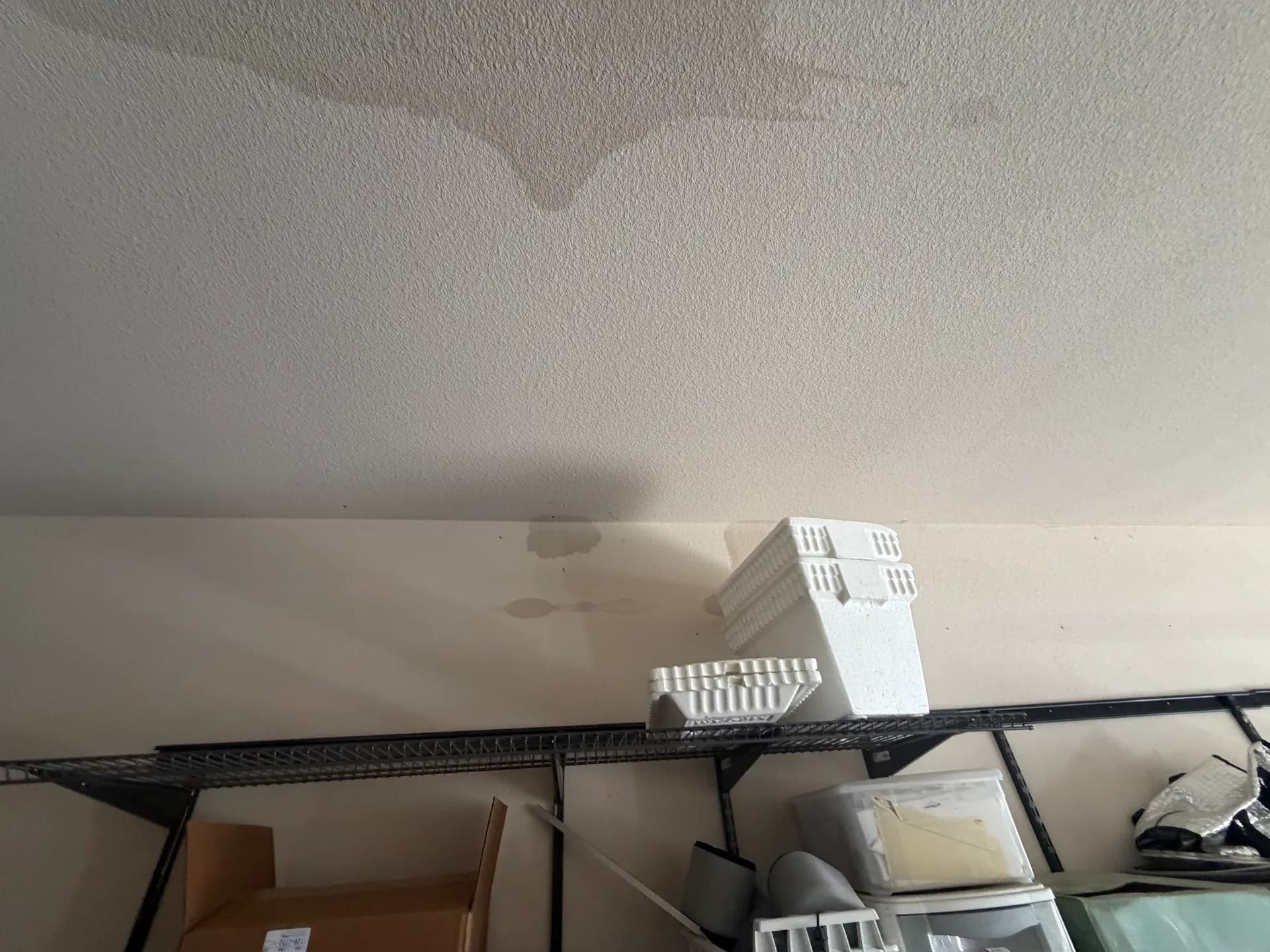
Wet insulation comes out of the attic, and stained or sagging ceiling drywall gets opened and dried.
Walls, windows and doors
Rain blown in around windows and doors runs down inside the wall, so we take readings well past the visible stain.
Floors and flooding
Water on carpet, wood and tile comes out, including floodwater that came in from outside.
Drying and rebuilding
Structural drying with moisture readings, then the drywall, paint and flooring rebuilt by our reconstruction team.
Claim documentation
We help document the damage and work with your insurance carrier throughout the restoration process.
Storm damage inside the house
The Texas Department of Insurance notes that spring typically brings the most severe thunder and hail to Texas, and San Antonio homeowners know the pattern. A hailstone cracks a skylight, wind peels back a row of shingles, or rain blows sideways for twenty minutes against a window that was never quite sealed. The damage on the roof is visible from the street. The water that got in is harder to see.
That interior water is the part we handle. Storm damage restoration at Texas Damage Response means three kinds of jobs:
- Roof leaks that soak attic insulation and come through the ceiling
- Wind-driven rain forced in around windows, doors, vents and siding
- Flash flooding that pushes water in from the yard or street
The roofer handles the roof, and we handle the inside
The Texas Department of Insurance tells homeowners to cover broken windows and holes to keep rain out and to remove standing water after a hail or windstorm. We can do both. Our crew boards up broken windows and doors and tarps the damaged part of the roof as temporary protection (see emergency board-up and roof tarping), then pulls out the standing water and dries everything wet underneath.
Roof repair is still a roofer's job. Texas Damage Response doesn't do roofing or roof repair, and a glass company or contractor replaces broken windows. A tarp holds things over until the roofer gets there.
The two jobs don't have to wait on each other. Once the openings are covered, we can start pulling water out and drying the house while the roof repair gets scheduled. That matters, because the EPA advises drying water-damaged areas within 24 to 48 hours to prevent mold growth, and roof repairs after a big hail storm can take a while to book.
Roof leaks: from the attic to the ceiling
Water from a roof leak lands on attic insulation first. Blown-in and batt insulation hold water, flatten and stop insulating, and they keep the drywall under them wet long after the rain stops. We remove the wet insulation, open the ceiling where it's soaked or sagging, and dry the cavity and the framing around it.
If a ceiling sags, clear the room and leave it alone. Our ceiling water damage page walks through the warning signs and what drying a ceiling involves. If water has run down the inside of an exterior wall, we take moisture readings along the wall and in the rooms below, because the stain usually shows up far from where the water came in.
Wind-driven rain and flash flooding
Storm water isn't treated like water from a broken supply line. The industry standard for water damage, the ANSI/IICRC S500, lists wind-driven rain from hurricanes, tropical storms or other weather-related events among its Category 3 examples, as summarized by Restoration & Remediation magazine. Rising water from rivers or streams is on the same list. In practice, that means more of what the water soaked, like carpet pad and the bottom of the drywall, is likely to come out instead of being dried in place.
When a storm floods the house from outside, stay out of the water until authorities give the all-clear. Ready.gov says not to walk, swim or drive through flood waters, and not to touch electrical equipment if it is wet or if you are standing in water. Our flood cleanup page covers that job from tear-out to drying.
Claims and contractors after a Texas storm
After a big hail or wind event, the phone and the doorbell both get busy. TDI's hail and windstorm tips are worth keeping handy:
- Take pictures and video of the damage.
- Don't throw any damaged items away until your insurance company tells you.
- Save all receipts, because your policy may pay for temporary repairs.
- Get more than one bid or repair estimate, and don't pay in full up front.
- Avoid contractors who offer to waive your deductible.
We help document the damage and work with your insurance carrier throughout the restoration process, with photos and moisture readings from the first visit on. Your carrier decides what's covered, and the deductible is yours to pay. We don't interpret policies, negotiate claims or act as an adjuster. Our insurance claims page has more.
Drying out and putting it back together
Once the water is out, structural drying takes over, and moisture readings decide when the framing, subfloor and drywall are dry. If belongings need to leave the house while that happens, contents pack-out wraps, inventories and stores them securely.
Then we rebuild. We rebuild the projects we restore, so insulation, ceiling drywall, texture, paint and flooring go back through our reconstruction team after the roofer has finished up top. We're a veteran-owned, family-operated company based in San Antonio, and we take storm calls across the metro and up the I-35 corridor, from Converse and Schertz to Round Rock.
Related services
Emergency Restoration
Water, fire, smoke or mold damage that can't wait? Call 24/7, day or night.
Learn moreBoard-Up and Roof Tarping
Plywood over broken windows and doors, tarps over roof damage, so the house is covered while the real work starts.
Learn moreCeiling Water Damage
Stained, sagging or dripping ceilings dried from above, then rebuilt and painted.
Learn moreFlood Damage Cleanup
Floodwater from outside cleaned out, contaminated materials removed and the house dried.
Learn moreReconstruction
We rebuild the ceilings, walls and floors that came out during the drying.
Learn more
Frequently Asked Questions
We tarp roof damage and board up broken windows and doors as temporary protection, so rain stays out while repairs get scheduled. We don't repair roofs or do roofing. A roofer makes the permanent repair.
We also handle the water damage inside: wet attic insulation, ceilings, walls and floors, extracted, dried with moisture readings and then rebuilt.
No. Once the openings are covered, the drying can start. The EPA advises drying water-damaged areas within 24 to 48 hours to prevent mold growth, and a roof repair may take longer than that to schedule after a big storm.
Call us 24/7, and we'll start on the inside while your roofer works on the outside.
It depends on your policy and on how the water got in. The Texas Department of Insurance says home policies don't cover flood damage and that flood needs a separate policy, while wind and hail coverage depends on what your home policy includes. Your carrier makes the call.
We help document the damage and work with your insurance carrier throughout the restoration process. Your deductible applies, and TDI warns against contractors who offer to waive it.
Areas we serve
From our San Antonio base, we handle interior storm damage across these counties and cities.
Storm water inside your home?
Call us 24/7. We tarp the roof damage, board up broken windows, extract the water, dry the house and rebuild what had to come out.