
Questions and answers
Restoration FAQ for San Antonio Homeowners
Plain answers to what San Antonio homeowners ask about water damage, mold, fire and smoke cleanup, insurance and cost. Where an answer belongs to someone else, like what a Texas home policy usually covers, this restoration FAQ names the source: TDI, the EPA, the CDC or TDLR.
Water coming in right now? Skip the reading and call.
3 questions
About Us
Who we are, when we're available, and where we work.
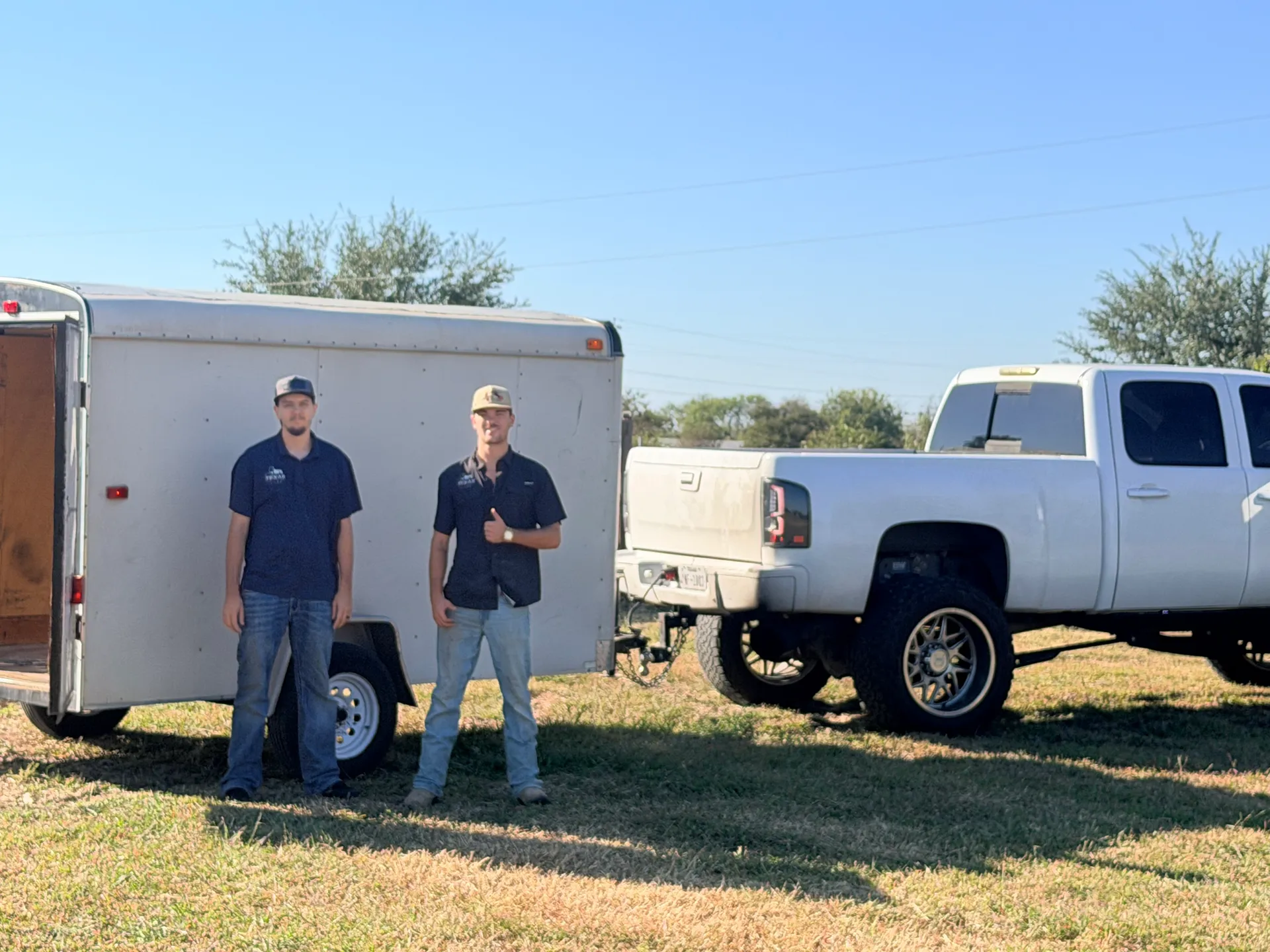
Texas Damage Response is a veteran-owned and operated restoration company based in San Antonio. We handle the messes nobody plans for: water damage, mold, and fire and smoke damage. When the work calls for it, we also pack out and store your belongings, and emergency response is available 24/7.
When water, fire or mold damages your home, you need someone who shows up, documents the damage and gets the cleanup moving before a bad week turns into a bad month. That's the job. Our about page covers who we are and how we work, in more detail than an FAQ answer can.
Yes. Emergency response is available 24/7, day or night, for water, fire, mold and other property damage. Call (210) 726-4411 whenever it happens, whether that's a Tuesday afternoon or a Sunday at midnight.
Why push the after-hours point so hard? Because water keeps moving. A supply line that splits overnight runs until someone shuts it off, and every hour gives the water more time to wick into drywall, cabinets and subfloor. The Texas Department of Insurance (TDI) notes that mold can start growing within a day after a leak, so waiting until Monday can turn a drying job into a mold job. If it's happening right now, our emergency restoration page covers what to do while you wait for help.
We're based in San Antonio and work throughout the surrounding area, including nearby communities like Converse, Schertz, Cibolo, Seguin, New Braunfels, Canyon Lake and Boerne. Our service areas page lists every county and community we cover, with a page for each one.
Not sure where the line falls for your street? Call (210) 726-4411 and ask. A quick phone call settles it faster than any map, and you'll have an answer before anyone climbs into a truck. For the city itself, our San Antonio page covers the water, mold and fire work we do across town, inside Loop 410 and out past Loop 1604.
5 questions
Services
What each service covers, and where our work stops and a plumber's starts.
We offer seven services, all for homes in and around San Antonio. Water damage restoration is the big one, and it runs from the first gallon out to the last moisture check: emergency water extraction, structural drying, moisture monitoring and complete mitigation. Mold remediation means safe containment, removal, cleaning and treatment of the affected areas. With fire damage restoration, we clean up fire, smoke, soot and odor damage. Contents pack-out is the moving piece: we wrap, inventory, move and securely store your belongings, then bring them home when the house is ready. Reconstruction puts the house back together, because we rebuild the projects we restore, and remodeling is there if you'd rather rebuild it differently while the walls are open. And emergency restoration is the 24/7 response that ties it all together when the damage can't wait.
Plenty of jobs need two or three of these at once. A kitchen fire, for example, often leaves water from the fire hoses behind, and everything in that room needs somewhere safe to go during the cleanup.
Yes, with the water damage it leaves behind. We extract the standing water, then dry the walls, floors and framing it soaked. The pipe itself is a plumber's job, so you'll want one lined up quickly.
Before anyone arrives, stop the flow. The Texas Department of Insurance (TDI) keeps its advice simple: if you have a sudden leak, shut your water off at the main, then move expensive items off the floor. Find that main valve now, before you need it. Hunting for it with water spreading across the floor is miserable. Then call (210) 726-4411, and look over our burst pipe water damage page for what the cleanup involves from extraction to final drying.
Yes. Cleanup of fire, smoke, soot and odor damage is one of our core services. Once the fire department clears the house, we clean the soot and smoke residue off walls, ceilings and other surfaces, and we work on the odor too.
Smoke travels. It drifts down hallways and into closets, so rooms the flames never touched can still end up coated in residue and that sour, stale smell. Air fresheners just cover it up. Our fire damage restoration page walks through the cleanup, and our smoke odor removal page covers the smell in more detail. If firefighting soaked the house as well, we handle the water extraction and drying on the same job.
Usually not. The CDC states plainly that it does not recommend mold testing, and it says you do not need to know the type of mold, because no matter what type is present, you need to remove it. The EPA takes a similar line: in most cases, if mold is visible, sampling is unnecessary.
That's why our mold remediation work centers on the fix itself: safe containment, removal, cleaning and treatment of the affected areas. One thing matters more than any lab result. Mold needs moisture. If nobody fixes the leak or humidity problem feeding it, the EPA says the mold problem will most likely come back.
For a small patch, often you can. The EPA's rule of thumb is about 10 square feet. Below that, you can usually handle the job yourself with gloves, goggles and an N-95 respirator, as long as you avoid touching the mold with bare hands or breathing in spores.
Texas adds its own rules. Mold licensing here runs through the Texas Department of Licensing and Regulation (TDLR), and TDLR says that in most instances, people who aren't licensed can clean up areas of visible mold under 25 contiguous square feet. Some exemptions also apply to buildings with fewer than 10 rental units, including houses.
Bigger than that, or hiding inside walls, ductwork or the attic? Call in a professional. And whoever does the work, fix the moisture problem first, or you'll be doing it again.
4 questions
Process
What to do first, how long drying takes, and what happens to your things along the way.
Stop the water, stay safe, then document it. In that order.
If a pipe or appliance line is leaking, shut off the water at the main, which is exactly what the Texas Department of Insurance (TDI) advises for a sudden leak. Stay away from standing water near outlets, cords or the breaker panel. Before you move or repair anything, take photos or video of the damage (TDI recommends that too), and lift valuables off the wet floor. Then call us at (210) 726-4411. Tell your insurance company as soon as possible, which is also TDI's advice.
Speed matters here. The EPA advises drying water-damaged areas and items within 24 to 48 hours to prevent mold growth, and that window starts the moment the water does. Our water damage restoration page explains what happens after the first call.
We won't promise an arrival time on a website. An honest answer depends on where you are, the time of day, traffic and what other emergencies are already underway, and nobody can know all of that before you call. Two things are certain. Emergency response is available 24/7, and we're based right here in San Antonio. Call (210) 726-4411, describe what's happening, and ask about timing for your address.
While you wait, use the time well. Shut off the water if you can, keep people and pets away from anything unsafe, and take photos before anything gets moved. Our emergency restoration page covers more of what to do in the first hour.
It depends, and a firm number given before anyone checks the house is a guess. Drying time comes down to how much got wet, what those materials are, how long the water sat, and the temperature and humidity inside. Wet carpet over a concrete slab dries on a different schedule than soaked drywall, insulation and hardwood.
Two things hold true on every job. First, the clock starts early: the EPA advises drying water-damaged areas and items within 24 to 48 hours to prevent mold growth. Second, moisture readings, not the calendar, should decide when drying ends. That's how our structural drying works, with moisture monitoring from start to finish, and it's why fast water extraction at the start shortens everything after it.
If the damage or the work puts them at risk, we can pack them out. Contents pack-out means we carefully pack your belongings, inventory them, move them out, store them and bring them back once the house is ready.
The inventory is the most underrated part. After a fire or a flooded room, it's easy to lose track of what was where, and a list made at packing time beats trying to remember it all weeks later. The Texas Department of Insurance adds a caution worth repeating: don't throw away damaged items until your adjuster has seen them, even the pieces that look ruined. Set them aside instead. Our contents pack-out page explains each stage, from the first box to the trip home.
4 questions
Insurance
Coverage basics in the Texas Department of Insurance's own words, plus what we do and don't do in a claim.
Often, but it depends on how the damage happened. According to the Texas Department of Insurance (TDI), most homeowner and renters policies cover sudden and accidental water damage, like a burst pipe. Most home policies don't cover damage from gradual leaks or seepage, including mold from those leaks. Flooding needs a separate flood policy.
Mold follows similar logic. If mold develops on an item damaged in a covered loss, TDI says that mold would fall under the coverage. But most home policies don't include mold cleanup and testing after the damaged item comes out, though your insurer may let you add coverage for cleanup caused by a covered loss.
Your policy and your carrier decide what's covered, not a restoration company. Our insurance claims page explains how we document damage for a claim.
Yes. We help document the damage and work with your insurance carrier throughout the restoration process. Documentation starts at the first visit, so your adjuster can see what happened and what the work involved.
What we don't do matters just as much. We aren't adjusters, we don't interpret policies, and we won't guess at what your carrier will approve. Coverage decisions belong to your carrier, under the terms of your policy. If anyone promises you a specific claim outcome before your adjuster weighs in, treat that as a warning sign.
Our advice? Call your carrier early, write down your claim number, and take coverage questions straight to your adjuster. Our process page shows where documentation fits into the job.
It depends on your policy and on what your carrier approves. If the carrier accepts the claim, the policy pays for covered damage after your deductible. If the damage isn't covered, say a slow leak that ran for months, the cost falls to you.
The deductible is always yours. The Texas Department of Insurance (TDI) defines it as the amount you have to pay before the insurance company will pay, and on home policies it applies to each claim. It's part of your agreement with your insurer, so treat any contractor who offers to make it disappear as a red flag.
One more tip. Before work starts, read the payment terms closely, whoever you hire, and call your carrier early so you know where you stand.
Protect the house, document everything, and hang on to the damaged stuff, because that's what the Texas Department of Insurance (TDI) checklist boils down to.
Take pictures or video of the damage before making repairs. Make temporary repairs that protect your home and belongings, and keep receipts for any materials you buy. Don't throw out damaged items until your adjuster has seen them. And report the damage fast, since TDI notes you usually must report hidden water damage within days after you first see it.
TDI also warns that your insurer may deny your claim if you don't protect your property, so ask your carrier what it expects before work starts. If belongings have to come out of a wet room first, our contents pack-out service can pack, inventory and store them so you keep track of what you had.
3 questions
Pricing
Published industry averages for context. They aren't our prices, and the damage in your home sets the real number.
No honest company can quote a flat price, because no two water losses look alike. For context, the national cost guide from Today's Homeowner gives a range for a whole project (Industry average: $1,300–$6,000 per project) and prices clean and gray water cleanup by the square foot (Industry average: $3–$7 per sq ft). Those are national industry averages, not our prices, and the guide doesn't break out San Antonio.
What moves the number? The water's category, since clean water from a supply line is simpler to handle than gray water, plus the square footage that got wet, what soaked through, how long it sat and whether belongings need a pack-out. Insurance may cover some or all of it, depending on your policy. Our water damage restoration page explains the work, but only an assessment of your home produces a real number.
It depends on how much mold there is and where it's growing. This Old House reports national figures for a typical professional project (Industry average: $1,200–$3,750 per project) and for pricing by the square foot of affected area (Industry average: $10–$25 per sq ft). For San Antonio specifically, HomeBlue published a local range in 2022 (Industry average: $10–$19 per sq ft). All three are industry averages from outside sources, not our prices.
Location changes the math. Mold on an open bathroom wall is a smaller job than mold inside a wall cavity, attic or crawlspace, where containment takes more work. And the moisture source has to go too, or the EPA says the mold problem will most likely come back. Our mold remediation page covers the steps.
Fire cleanup costs swing widely, because a small kitchen flare-up and a whole-house fire have almost nothing in common. Fixr's national cost guide prices fire damage restoration by area (Industry average: $4–$6.50 per sq ft) and professional smoke removal separately (Industry average: $200–$1,200 per home). Both are industry averages, not our prices.
The burned area matters. But the smoke matters just as much: how far it traveled, how much soot settled, whether firefighting left water behind, and whether belongings need a pack-out. Check with your carrier early about what your policy covers and what it needs from you. Our fire damage restoration page explains the cleanup work in detail.
Sources behind the answers
The general guidance in this restoration FAQ comes from the public sources below. Your own policy, your carrier and an assessment of your home settle the specifics.
- Texas Department of Insurance: When are water damage and mold covered by insurance?
- Texas Department of Insurance: Unexpected indoor waterfall? Home or renters insurance might help.
- Texas Department of Insurance: What to know about deductibles
- U.S. Environmental Protection Agency: A Brief Guide to Mold, Moisture and Your Home
- Centers for Disease Control and Prevention: Mold
- Texas Department of Licensing and Regulation: Mold Assessors and Remediators FAQ
- Today's Homeowner: Water damage restoration cost guide
- This Old House: Mold remediation cost guide
- HomeBlue: San Antonio, TX mold remediation cost
- Fixr: Fire damage restoration cost guide
Water or fire damage right now?
Emergency response is available 24/7. And if this restoration FAQ missed your question, call and ask.