
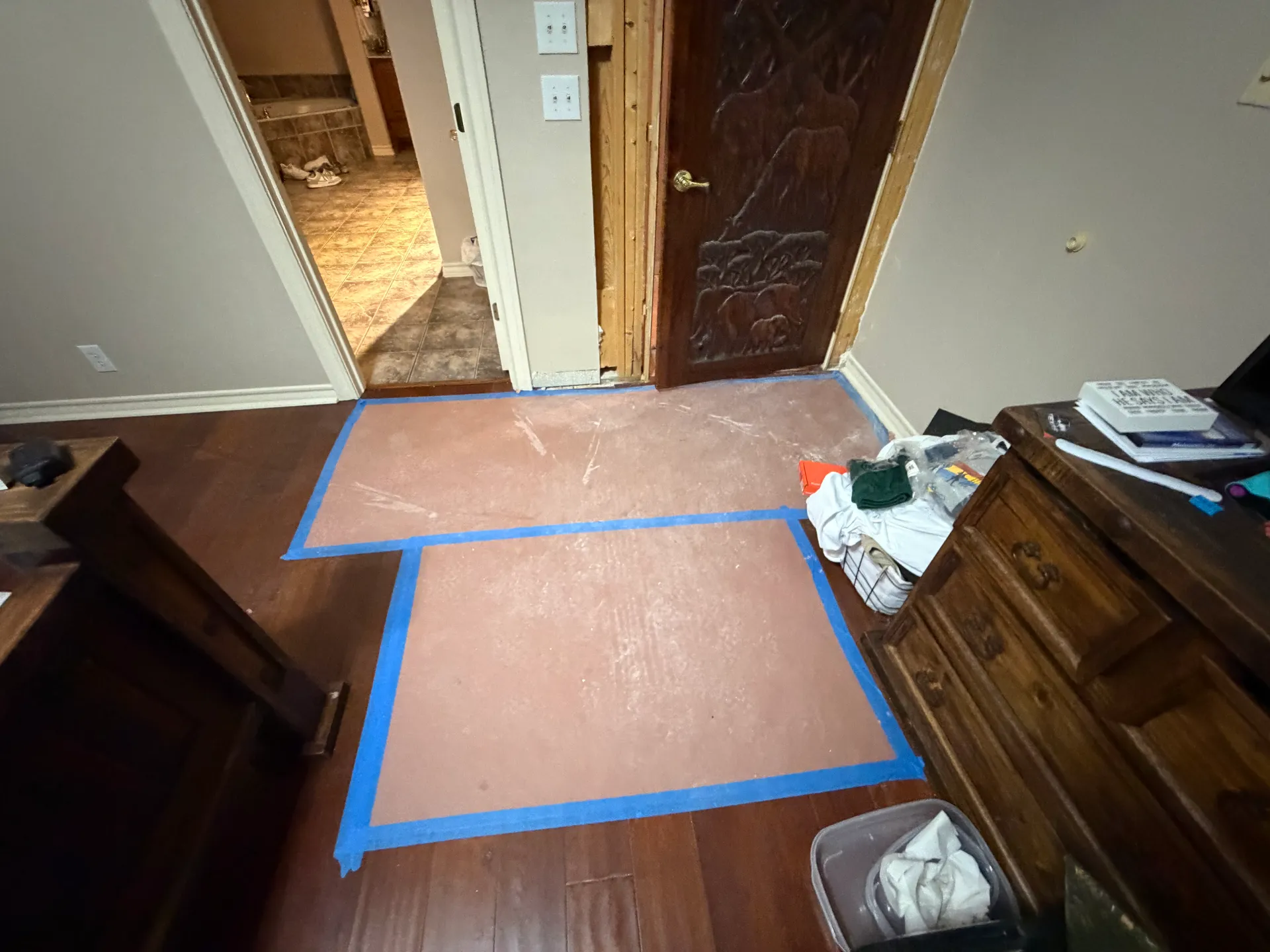
Wet wood floors
Hardwood Floor Water Damage in San Antonio
Hardwood floor water damage gets worse by the hour as the boards drink in water and start to cup. We pull the water out, dry the floor and the subfloor under it, and use moisture readings to show what can stay and what has to go.
What hardwood floor water damage work includes
Water off the surface fast
Extraction pulls water off the boards and out of the seams before more of it soaks in.
Readings in the wood
We measure moisture in the boards and compare them to a dry area of the same floor.
The subfloor too
Water that slid under the boards sits on the plywood or slab, and that layer has to dry as well.
An honest save-or-replace call
Once the numbers settle, we tell you which boards are worth keeping. Sometimes it's most of them. Sometimes it isn't.
Furniture moved out
Pieces sitting on wet wood come off the floor, and contents pack-out can store them while the room dries.
Refinish or replace
When boards need sanding, patching or replacing, our reconstruction team handles the rebuild.
Why hardwood floors react to water the way they do
Wood is thirsty. A solid oak board pulls water in through its bottom face and its edges, swells, and has nowhere to go because its neighbors are swelling too. What happens next has names, and you'll hear them a lot once your floor gets wet:
- Cupping. The edges of each board rise above the center, so the floor looks rippled, like a washboard. It usually means more moisture underneath the boards than on top.
- Crowning is the reverse: the middle of the board sits higher than the edges. It often shows up when someone sands a cupped floor flat before the wood has dried, and then the boards shrink back.
- Buckling is the bad one. The boards push so hard against each other that they lift right off the subfloor.
Engineered hardwood has its own failure: the thin wood layer on top can separate from the core once water gets into it. And a lot of hardwood in San Antonio homes sits on a concrete slab, where water trapped under the boards can't drain away and dries slowly.
The first day decides a lot
Speed is the whole game with wood floors. The longer water sits, the deeper it goes into the boards and the subfloor, and the less likely the floor flattens out again on its own. The EPA says to dry water-damaged areas and items within 24 to 48 hours to prevent mold growth, and the Texas Department of Insurance warns that mold can start growing within a day after a leak.
A few things you can do while you wait for us:
- Stop the water first. Close the valve at the fixture or shut off the main.
- Mop or towel up what's standing on top. Every bit you get off the surface is water that won't soak in.
- Pull wet rugs off the wood, since a soaked rug holds water right against the finish.
- Don't crank up a space heater to "bake" the floor. Drying one side of a board fast while the bottom stays wet is a good way to make the cupping worse.
We're available 24/7, and the crew comes ready to start work on the first visit, not to look around and schedule a return trip.
How we dry a wet hardwood floor
Drying hardwood is slower and fussier than drying carpet or tile. We work in this order:
- Extraction. Water extraction pulls water off the surface and out of the gaps between boards.
- Mapping the wet area. Moisture readings in the wood, along the baseboards and in the drywall show how far the water traveled. Water under a floor almost always goes farther than the puddle did.
- A dry baseline. We take readings on a part of the same floor the water never touched. That number becomes the target.
- Drying the floor and what's under it. Structural drying works on the boards, the subfloor and the wall bottoms together, because a dry surface over a wet subfloor won't stay flat.
- Monitoring until the readings match. The floor is dry when the wet area reads like the dry baseline, not when it looks fine.
What can be saved and what has to be replaced
We won't promise to save a floor before we've measured it. Nobody honest can. That said, it tends to break down like this.
Often worth saving: solid hardwood that got wet from clean water, was caught quickly and only cupped mildly. A lot of that cupping relaxes as the wood dries. It may still need sanding and refinishing afterward, but the boards stay.
Usually coming out: boards that buckled off the subfloor, engineered planks with a separated top layer, wood that sat in water for days, and anything that stayed wet long enough to grow mold. Water from a dirty source changes the math too. Wood soaked by Category 2 water, like a washing machine overflow, gets a harder look, and our washing machine leak page explains that category.
One opinion we hold firmly: don't let anyone sand a cupped floor until it's dry. Sand it wet, and you can end up with a crowned floor once the wood shrinks back.
Refinishing and replacement are part of the rebuild
Once the floor is dry, what's left is repair work, and we do that too. We rebuild the projects we restore. That can mean sanding and refinishing boards that flattened out, weaving in replacement boards where a section had to come up, or replacing the floor in a room where the damage went too far. It all falls under reconstruction, and the specifics of rebuilding after a leak are on our water damage repair page.
A heads-up about matching: older floors have aged and been refinished, so new boards rarely blend in perfectly on day one. Sometimes refinishing the whole room is what makes a patch disappear. We'll talk through that before anything gets ordered.
On the insurance side, we help document the damage and work with your insurance carrier throughout the restoration process. Your carrier decides what your policy covers and pays for, including whether it covers replacing the floor, and your deductible applies. We don't interpret policies. See our insurance claims page for how that works. We do this work for homes in San Antonio, Boerne and Austin.
Related services
Water Damage Restoration
Emergency water extraction, structural drying, moisture monitoring and complete mitigation for San Antonio homes, 24/7.
Learn moreWater Extraction
Standing water out of floors, carpet and pad, 24/7, before it soaks in any deeper.
Learn moreStructural Drying
Air movement, dehumidification and moisture monitoring that dry walls, subfloors and cabinets to a measured finish line.
Learn moreBurst Pipe Water Damage
Extraction, drying and moisture monitoring after a burst or frozen pipe.
Learn moreCeiling Water Damage
Stained, sagging or dripping ceilings dried from above, then rebuilt and painted.
Learn moreWater-Damaged Drywall
Wet walls measured, cut out where they can't be saved, dried to the studs and finished again.
Learn moreWater Heater Leak
Water out of the garage, closet and walls after a water heater leaks or lets go.
Learn moreWashing Machine Leak
Laundry room floods cleaned up and dried, including the rooms on the other side of the wall.
Learn moreAC Leak Water Damage
Ceilings, walls and floors dried and repaired after an AC drain line or pan overflows.
Learn moreFlood Damage Cleanup
Floodwater from outside cleaned out, contaminated materials removed, and the house dried, 24/7.
Learn moreSewage Cleanup
Sewer and drain backups contained, cleaned out, disinfected and dried, any hour.
Learn moreWater Damage Repair
Refinishing, replacing boards and the rest of the rebuild once the floor is dry.
Learn moreContents Pack-Out
Furniture wrapped, inventoried and stored securely while the floor dries and gets repaired.
Learn moreRemodeling
Thinking about a different floor anyway? Remodeling can happen while the room is open.
Learn more
Helpful guides
Does homeowners insurance cover water damage? What TDI says
Does homeowners insurance cover water damage? TDI says most policies cover sudden leaks, not slow ones or floods. Texas Damage Response explains the details.
Learn moreHow to choose a restoration company after water or fire damage: questions to ask
How to choose a restoration company: Texas Damage Response's checklist of questions to ask, what to get in writing and the Texas rules on deductibles.
Learn moreRenters and water or fire damage: what renters insurance usually covers
Does renters insurance cover water damage or fire damage? TDI says it usually covers your belongings, not the building. We explain what to check and do first.
Learn more
Frequently Asked Questions
Mild cupping often does, at least most of the way, once the wood and the subfloor under it are properly dried. That's why drying comes before any decision about sanding or replacing.
Severe cupping, buckling and boards that lifted off the subfloor usually don't recover. Moisture readings over the drying period tell us which situation you're in.
Until the readings say the wood is dry, meaning the damaged area reads like a part of the floor that never got wet. There isn't a fixed number of days; it depends on how long the water sat, the type of floor and what's underneath it.
Sanding too early is the most common mistake we see. The boards shrink after you've flattened them, and the floor ends up crowned.
We'd say no, at least not before anything is photographed. Boards you tear out can't be measured, dried or shown to an adjuster, and some of them might have been worth keeping.
Get the standing water off the surface, take pictures and call us. Our emergency restoration line is open 24/7.
Areas we serve
From our San Antonio base, we dry and repair water-damaged hardwood floors in homes across these counties and cities.
Hardwood floor soaking up water?
Every hour the water sits, the boards take more of it in. Call 24/7 and we'll get the water out and start drying on the first visit.