
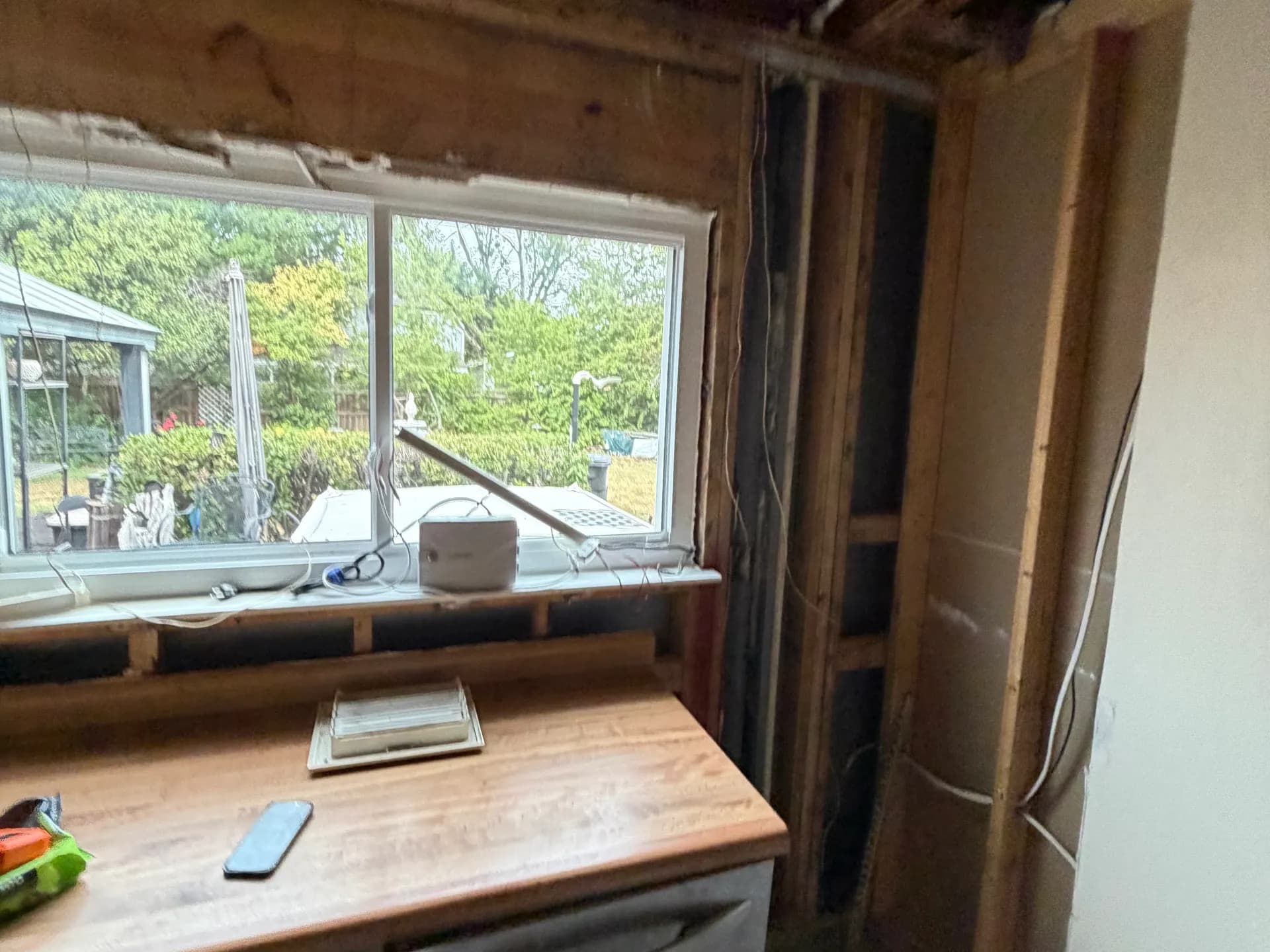
Rebuilding after water damage
Water Damage Repair in San Antonio
Water damage repair starts once the moisture readings say the structure is dry. Then we put back the drywall, insulation, flooring, cabinets and trim that had to come out, so the room looks like home again.
What water damage repair covers
Drywall and insulation
New board and insulation where wet sections were cut out, taped, textured and ready for paint.
Flooring
Carpet, pad, laminate, vinyl, tile or wood replaced where water ran under it and it couldn't be saved.
Cabinets and counters
Base cabinets that swelled or delaminated, plus the counters and backsplash that came off with them.
Baseboards, trim and doors
The pieces that came off first during tear-out go back last, matched as closely as we can to what's still on the wall.
Paint and finish
Primer, paint and texture so the repaired wall doesn't stand out from the rest of the room.
Xactimate estimate
Our operations manager is Xactimate-certified and builds the repair estimate in software adjusters already use.
Water damage repair is the second half of the job
Most people searching for water damage repair are standing in a house that's been taken apart. There's a two-foot strip of drywall missing along the hallway, the carpet's gone, the kitchen sink base is sitting in the garage, and a row of fans just left. The water's out. The house isn't fixed.
That's the point where repair takes over. The first half, the water damage restoration, removes the water and the materials it ruined and dries what's left. The second half rebuilds. We do both, which means the people putting your walls back already know which studs got wet and which ones never did.
Why repairs wait for the moisture readings
This is the part we won't rush, even when everyone wants the walls closed up by the weekend.
Framing, subfloor and the bottom plate of a wall can feel dry to the touch long before they are. Close them in with fresh drywall and paint while they're still holding water, and that moisture has nowhere to go. It sits in the wall cavity, in the dark, at whatever temperature your house runs. You've just built mold a nice home. The EPA says no type of mold will grow without water or moisture, and a sealed wet wall gives it both water and time.
So the rebuild starts when the meter says so, not the calendar. During structural drying, moisture monitoring tracks the framing and subfloor until the readings show they're dry. The ANSI/IICRC S500, the industry standard for water damage restoration, sets out the procedures for that drying work. Then, and only then, new material goes up.
What we rebuild after water damage
Every water loss tears out something a little different. A water heater leak in a garage closet is mostly drywall and baseboard. A washing machine leak on a second floor can mean a ceiling below, plus the laundry room floor. The usual scope, roughly in the order it goes back:
- Insulation in exterior walls and ceilings where wet batts came out.
- Drywall, hung, taped, mudded and textured to match. Water lines on walls and ceiling water damage are the most common reason we're there.
- Cabinets and counters, often in kitchens and bathrooms. Particleboard cabinet boxes swell when they get wet, and they don't shrink back.
- Flooring. Carpet and pad, laminate, vinyl plank, tile, or hardwood where it cupped past saving.
- Trim, doors and paint to finish the room.
The scope comes from what we documented during the tear-out, not from a standard package.
One team from extraction to a finished room
Plenty of homeowners end up with two companies: one that dries the house and leaves, and a contractor who shows up weeks later and has to figure out what happened from photos. We think that's a bad deal for you. The details of a water loss live in the heads of the people who worked it.
We rebuild the projects we restore. The crew that pulled the water out and cut the drywall knows how high the water wicked, which cabinets got wet and where the moisture readings took longest to come down. That knowledge goes straight into the rebuild. And if it's 2 a.m. and the water's still coming in, we're available 24/7, and the crew comes ready to work, so restoration starts on the first visit.
Built by people with construction backgrounds
Co-founder Ricky Ballard is a Marine Corps veteran who started in restoration as a technician and carpenter, then went on to build spec and custom homes and handle remodels and additions. Our employees bring more than 15 years of combined experience across our companies. Read more in our story.
Estimates, permanent repairs and your carrier
Every repair estimate goes through our operations manager, who is Xactimate-certified and brings more than six years of reconstruction experience. That matters for water damage repair because carriers and adjusters work in Xactimate every day, so the estimate lands in a format they can review line by line.
Timing matters too. The Texas Department of Insurance tells homeowners to make temporary repairs to protect the house and belongings, but not to make permanent repairs until the insurance company sees the damage. That fits the order we work in anyway: dry and document first, rebuild after.
Your carrier decides what the policy covers and what it pays, and your deductible applies. We don't interpret policies, negotiate claims or act as adjusters. We help document the damage and work with your insurance carrier throughout the restoration process. Our insurance claims page has more.
Water damage repair across the San Antonio area
We're veteran-owned and family-operated, based in San Antonio, and we rebuild homes from Converse and Cibolo to Canyon Lake. If the walls are open and you'd like to change the layout while they are, our remodeling work can fold into the rebuild, kept separate from anything tied to your claim.
Related services
Reconstruction
We rebuild the projects we restore, from drywall and floors to kitchens and baths.
Learn moreFire Damage Repair
After the smoke and soot cleanup, the rebuild of what burned: framing, drywall, insulation, cabinets and finishes.
Learn moreWater Damage Restoration
Extraction, structural drying and moisture monitoring, the steps that come before repair.
Learn moreRemodeling
Changes beyond putting things back, planned while the walls are already open.
Learn moreInsurance Claims
How we help document the damage and where our part in the claim ends.
Learn more
Frequently Asked Questions
When the structure is dry, and not before. Moisture readings on the framing, subfloor and remaining drywall decide that, not a set number of days. Rebuilding over wet framing traps the moisture inside the wall, where mold can grow out of sight.
If the drying is still underway, structural drying with moisture monitoring is the step you're in. Repairs follow it.
No. Fixing the leak itself is a job for a plumber or appliance technician. We handle the water damage it caused: extraction, drying and then the rebuild of the drywall, flooring, cabinets and finishes that had to come out.
Your policy and your carrier decide that, and your deductible applies. The Texas Department of Insurance says most homeowner and renters policies cover sudden and accidental water damage, while gradual leaks usually aren't covered.
We help document the damage and work with your insurance carrier throughout the restoration process, and our estimates are built in Xactimate, which adjusters use every day. We don't interpret policies or promise what a claim will pay.
You can. It's your house and your choice. Our view is that keeping one team makes the rebuild simpler, because the people who tore out the damage know exactly what came out and why. We rebuild the projects we restore, so you don't have to hand the job off.
Areas we serve
We handle water damage repair in San Antonio and across these counties and cities.
House dried out but still torn apart?
Call or send a request. We'll check the moisture readings, document what came out and rebuild it, start to finish.