
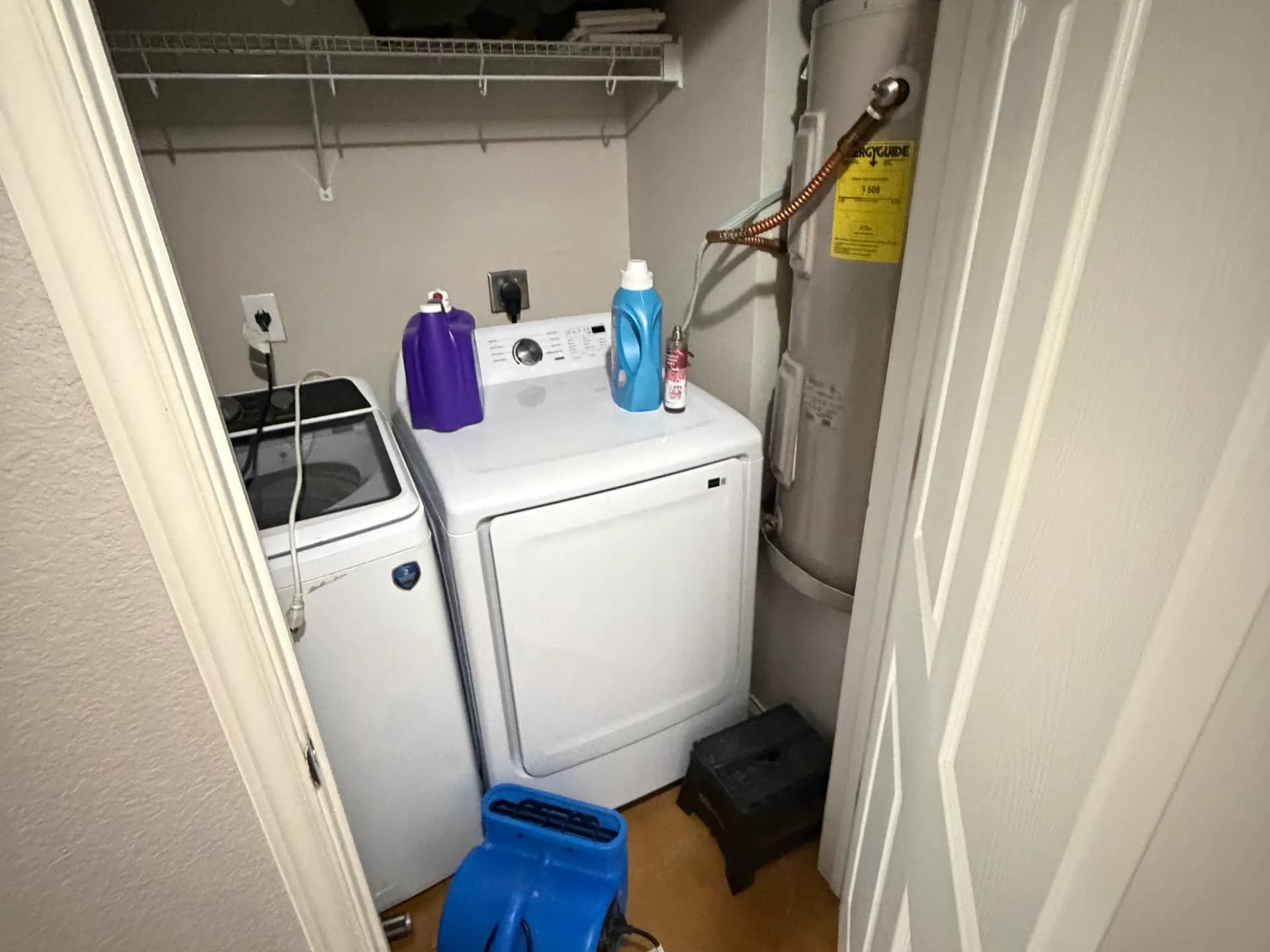
When the tank gives out
Water Heater Leak Water Damage Cleanup
A water heater can leak a slow drip for weeks or dump its whole tank at once. Once the water and the power or gas are off and a plumber has the heater, we extract the water and dry the floor, walls and framing around it, 24/7.
What water heater leak cleanup includes
24/7 response
Tanks don't fail on a schedule. Call any hour, and the crew arrives ready to start work.
Garage and closet floors
Water comes off the slab, out of the closet and from under the baseboards in the rooms next door.
Wall bottoms and framing
Drywall wicks water up from a wet floor, so we measure the walls and dry the framing behind them.
Boxes and belongings
Wet boxes stacked in a garage get moved, and contents pack-out can store what's salvageable.
Moisture monitoring
Readings over the drying period, not a guess, tell us when the area is dry.
Damage documentation
We help document the damage and work with your insurance carrier throughout the restoration process.
Water heater leaking? Shut it down first
A tank-style water heater keeps refilling as long as the cold supply is open, so a leaking tank won't run out of water on its own. Work through this before you call anyone:
- Stop the water. Most heaters have a shutoff valve on the cold line going into the top of the tank. If it won't turn, or you can't find it, shut off the main. The Texas Department of Insurance puts it plainly: if you have a sudden leak, shut your water off at the main.
- Cut the energy. For an electric heater, switch off its breaker, but only if you can reach the panel without standing in water. The CDC is firm on that. For gas, follow the instructions on the heater's label to turn the control off.
- If you smell gas, get out. Ready.gov says that if you smell gas or hear a blowing or hissing noise, open a window, get everyone out quickly and call the gas company from a neighbor's home. Only a qualified professional should turn the gas back on.
- Mind the heat. Water coming out of the tank can be hot enough to burn. Give it time and keep kids and pets away.
- Take pictures, then make two calls: a plumber for the heater, and us for the water.
The plumber handles the heater, and we handle the water
Let's be clear about who does what. Texas Damage Response doesn't repair, replace, drain or relight water heaters, and we don't do plumbing or gas work. A plumber takes care of the heater.
What the water reached is ours. That's water extraction to get it off the floor, structural drying for the drywall, baseboards and framing, and moisture monitoring until the numbers say it's dry. With the water shut off, we don't have to wait for the new heater to go in before we start. Our crew comes ready to work on the first visit.
Garage, hall closet or attic: where the water goes
Where your heater sits decides what gets wet. Around Central Texas, the heater usually lives in one of three places.
Garage water heaters
A garage heater on a slab sounds like the best place for a leak, and sometimes it is. But garage slabs aren't always level, and the water finds the low side. It soaks cardboard boxes, runs under the bottom of the garage drywall, and slips under the door into the laundry room or kitchen. Stored stuff is usually the biggest mess. If a lot of it got wet, contents pack-out can wrap, inventory and store what's salvageable while we dry the space.
Hall closet and utility closet heaters
This one is trickier. A closet heater in the middle of the house is surrounded by finished rooms, so the water heads straight into hallway carpet, under bedroom baseboards and across wood or laminate floors. If yours has hardwood floors nearby, the clock matters even more. Expect us to take moisture readings in every room that shares a wall with the closet.
Attic water heaters
Less common, but they're out there, and when one leaks the water comes down through the drywall below. That's a ceiling water damage job as much as anything, with wet insulation to deal with on top of the drywall.
A slow drip and a burst tank are different problems
A burst tank is loud and obvious. The whole tank ends up on the floor, and more keeps coming while the supply stays open. You know right away.
The slow leak is the sneaky one. A weeping fitting or a drip from the relief valve line can soak the closet floor, the bottom plate of the wall and the drywall behind the heater for weeks without much showing. By the time the baseboard swells or the room smells musty, the framing has been wet a long time. The EPA says to dry water-damaged areas within 24 to 48 hours to prevent mold growth, and a slow leak blows past that window before anyone notices. If mold has started, that part of the job is mold remediation.
The difference matters for insurance, too. The Texas Department of Insurance says most policies cover sudden and accidental water damage and usually won't cover damage from gradual leaks. Which one you have is your carrier's decision. We help document the damage and work with your insurance carrier throughout the restoration process, and the claim and the deductible stay yours. Our insurance claims page explains where we fit.
Drying the closet and putting it back together
Drying around a water heater usually means pulling baseboards and, where the drywall has wicked water up, cutting out the wet bottom section so air can reach the studs and the bottom plate. Saving drywall that's saturated isn't worth the risk of trapping moisture in the wall.
Once the readings confirm everything is dry, we can rebuild it. We rebuild the projects we restore, so new drywall, baseboards, paint and flooring go back in through our reconstruction team, with the plumber's new heater in place. We do this for homes in San Antonio, Seguin and New Braunfels, among other towns.
Related services
Water Damage Restoration
Emergency water extraction, structural drying, moisture monitoring and complete mitigation for San Antonio homes, 24/7.
Learn moreWater Extraction
Standing water out of floors, carpet and pad, 24/7, before it soaks in any deeper.
Learn moreStructural Drying
Air movement, dehumidification and moisture monitoring that dry walls, subfloors and cabinets to a measured finish line.
Learn moreBurst Pipe Water Damage
Extraction, drying and moisture monitoring after a burst or frozen pipe.
Learn moreCeiling Water Damage
Stained, sagging or dripping ceilings dried from above, then rebuilt and painted.
Learn moreWater-Damaged Drywall
Wet walls measured, cut out where they can't be saved, dried to the studs and finished again.
Learn moreHardwood Floor Water Damage
Wet hardwood extracted, dried and measured board by board to save what can be saved.
Learn moreWashing Machine Leak
Laundry room floods cleaned up and dried, including the rooms on the other side of the wall.
Learn moreAC Leak Water Damage
Ceilings, walls and floors dried and repaired after an AC drain line or pan overflows.
Learn moreFlood Damage Cleanup
Floodwater from outside cleaned out, contaminated materials removed, and the house dried, 24/7.
Learn moreSewage Cleanup
Sewer and drain backups contained, cleaned out, disinfected and dried, any hour.
Learn moreEmergency Restoration
What to do in the first hour of a water emergency, and how to reach us any time.
Learn moreContents Pack-Out
Garage and closet belongings wrapped, inventoried and stored securely while the area dries.
Learn moreWater Damage Repair
Drywall, baseboards, paint and flooring rebuilt once the drying is done.
Learn more
Helpful guides
Does homeowners insurance cover water damage? What TDI says
Does homeowners insurance cover water damage? TDI says most policies cover sudden leaks, not slow ones or floods. Texas Damage Response explains the details.
Learn moreHow to choose a restoration company after water or fire damage: questions to ask
How to choose a restoration company: Texas Damage Response's checklist of questions to ask, what to get in writing and the Texas rules on deductibles.
Learn moreRenters and water or fire damage: what renters insurance usually covers
Does renters insurance cover water damage or fire damage? TDI says it usually covers your belongings, not the building. We explain what to check and do first.
Learn more
Frequently Asked Questions
If water is spreading across the floor, yes. Shut off the cold supply or the main, cut the power or turn the gas control off, and call. A tank keeps refilling until the water is off.
A small drip you caught early is less urgent, but don't sit on it. Slow leaks are how framing and drywall stay wet for weeks. We're available 24/7 for emergency restoration.
No. A plumber repairs or replaces the heater. We handle the water damage around it: extracting the water, drying the floor, walls and framing, monitoring moisture and rebuilding what had to come out.
The two jobs can run side by side. With the water shut off, we can start drying while the replacement heater is on order.
It depends on your policy and on how the leak happened. The Texas Department of Insurance says most policies cover sudden and accidental water damage but usually not damage from gradual leaks. Your carrier makes that call.
We help document the damage and work with your insurance carrier throughout the restoration process. We don't interpret policies or negotiate claims, and your deductible applies. Our insurance claims page has more.
Areas we serve
From San Antonio, we clean up water heater leaks in garages, closets and attics across these counties and cities.
Water heater leaking right now?
Shut off the water and the power or gas, then call us 24/7. A plumber handles the heater. We handle everything the water reached.