
After a fire or storm
Emergency Board-Up and Roof Tarping in San Antonio
After a fire or a storm, a broken window or a hole in the roof lets in rain, animals and people. We board up the openings and tarp the roof damage as temporary protection, 24/7, and then get to work on the water, smoke and repairs inside.
What board-up and tarping covers
Call any hour
Fires and storms don't keep business hours. We answer 24/7, and the crew arrives ready to start covering the house on the first visit.
Broken windows
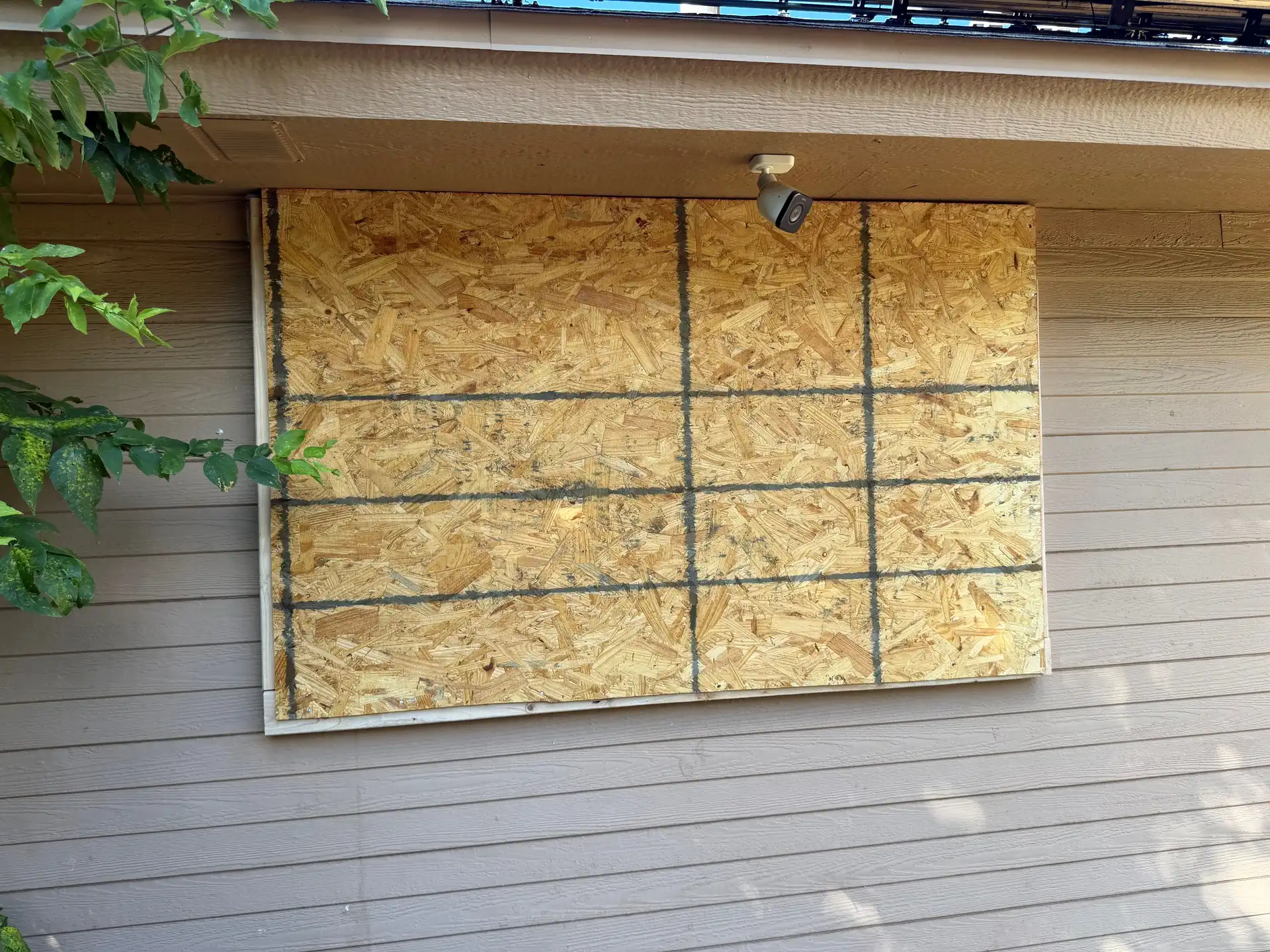
Plywood goes over windows that were shattered by hail, wind, flying debris or the heat of a fire.
Doors and other openings
Damaged doors, holes in exterior walls and other gaps get boarded so the house can be closed up.
Roof damage
A tarp goes over the damaged section of roof, including vent holes firefighters cut, to slow rain getting in until a roofer can repair it.
Photos before we cover
We photograph the openings and the roof before they're covered, so the damage is on record for your claim.
The work that follows
Once the house is covered, we move inside: water extraction and drying, fire and smoke cleanup, contents pack-out and reconstruction.
Why the house gets covered first
A fire or a bad storm can leave a house open to the weather. Hail breaks a window, wind tears off part of the roof, or the fire department breaks glass and cuts into the roof to fight a fire. The U.S. Fire Administration's After the Fire guide says firefighters may have broken windows and cut holes in the roof to slow the fire and clear the smoke. Those openings are still there once the trucks leave.
Emergency board-up and roof tarping close them up for now. There are three reasons to do it quickly:
- Weather. The next rain comes in through the same hole and soaks drywall, insulation and floors that might have been saved.
- Security. An open window or door is an invitation. USFA notes that in some cases you may need to board up windows and doors so no one can get in.
- Your claim. Insurers expect homeowners to protect the property from further damage, as the Texas Department of Insurance explains below.
What we board up and tarp
Board-up and tarping at Texas Damage Response is temporary protection. We cover:
- Broken or blown-out windows, with plywood over the opening
- Damaged exterior doors and door frames
- Holes in exterior walls from a fire, falling limbs or wind
- Roof damage from a storm or a fire, including vent holes cut by firefighters, with a tarp over the damaged area
We don't do roofing, roof repair, window replacement or glass work. A tarp slows the water down and a sheet of plywood keeps people out, but neither one is a repair, and neither can promise that no rain or intruder ever gets past it. A roofer repairs the roof, and a glass company or contractor replaces the windows. Covering the house buys time for that to happen without the inside getting worse.
After a fire: wait for the all-clear
Don't go back into a burned house until the fire department says it's safe. That's straight from USFA, which also warns that floors and walls may not be as safe as they look. Once the house is released, board-up is usually the first thing on a fire job, before the fire damage cleanup starts.
USFA also suggests calling your police department to let them know the home will be empty, and asking your insurance company what you should do to keep the home safe until it's repaired. If you'll be staying somewhere else for a while, a boarded house and a heads-up to the police both help.
After a storm: stay off the roof
A wet, hail-damaged roof is a bad place for anyone without the right gear. NIOSH reports that falls are the leading cause of construction worker deaths on the job, and those are people who climb roofs for a living. Leave the ladder in the garage. From the ground or from inside, you can take pictures of the damage, put buckets under drips and move belongings away from wet spots.
Then call us. We tarp the roof damage, board up any broken windows or doors, and start on the water that already came in. Our storm damage restoration page covers that interior work, from wet attic insulation to soaked ceilings and floors.
Board-up, tarping and your insurance claim
The Texas Department of Insurance tells homeowners after hail or windstorms to prevent more damage and to cover broken windows and holes to keep rain out. After a fire, TDI's wildfire claim tips say the same thing in other words: take steps to secure your home and prevent more damage, and make only temporary repairs. TDI's advice for both:
- Take pictures and video of the damage before anything is covered or moved.
- Save all receipts. TDI notes your policy may pay for temporary repairs, and your carrier is the one who decides.
- Don't throw anything away until your insurance company tells you to.
We help document the damage and work with your insurance carrier throughout the restoration process. Your carrier decides what's covered, and the deductible is yours to pay. We don't interpret policies or act as an adjuster. Our insurance claims page explains how documentation works with us.
What happens after the house is covered
Board-up and tarping start the job. With the openings covered, we move inside. Water from the storm or from firefighting hoses comes out first, and our water damage restoration crew dries the structure with moisture readings. The EPA advises drying water-damaged areas within 24 to 48 hours to prevent mold growth, so the drying doesn't wait for the roofer. On a fire job, fire damage restoration handles the soot, smoke and odor, and contents pack-out can wrap, inventory and store your belongings while the work goes on.
When the roof and windows are repaired, the boards and tarps come off and we rebuild. We rebuild the projects we restore, so the drywall, insulation, paint and flooring that had to come out go back in through our reconstruction team. We're an IICRC-certified, veteran-owned and family-operated company based in San Antonio, and our emergency restoration line is open 24/7.
Related services
Emergency Restoration
Water, fire, smoke or mold damage that can't wait? Call 24/7, day or night.
Learn moreStorm Damage Restoration
Water that a storm drove inside, from the attic down to the floors, extracted, dried and rebuilt.
Learn moreFire Damage Cleanup
Charred debris hauled out, soot and smoke residue cleaned, and the firefighting water dried.
Learn moreWater Damage Restoration
Rain or hose water inside the house extracted and dried, with moisture readings.
Learn moreReconstruction
We rebuild the walls, ceilings and floors that came out after the fire or storm.
Learn more
Frequently Asked Questions
No. We board up openings and tarp roof damage as temporary protection only. A roofer repairs the roof, and a glass company or contractor replaces the windows.
While those repairs get scheduled, we handle the inside: water extraction and drying, fire and smoke cleanup, and the rebuild afterward.
A tarp slows the rain getting in through the damaged area, but it's a temporary cover and can't promise the roof stays dry in every storm. It holds things over until a roofer makes the repair.
If water already got in, we start drying the attic, ceilings and walls under it right away instead of waiting for the roof to be fixed.
Firefighters may break windows and cut holes in the roof to fight a fire, and those openings let in rain and anyone walking by. The U.S. Fire Administration notes that in some cases you may need to board up windows and doors so no one can get in.
Wait until the fire department says the house is safe to enter. Then call us, and the board-up becomes the first step of the fire cleanup.
Your carrier decides that, based on your policy. The Texas Department of Insurance tells homeowners to prevent more damage and make temporary repairs, to save every receipt, and notes that a policy may pay for temporary repairs.
We help document the damage and work with your insurance carrier throughout the restoration process. Your deductible applies.
Areas we serve
From our San Antonio base, we board up and tarp homes after fires and storms across these counties and cities.
Broken windows or a damaged roof?
Call us 24/7. We board up the openings, tarp the roof damage and start on what got wet or smoky inside.