
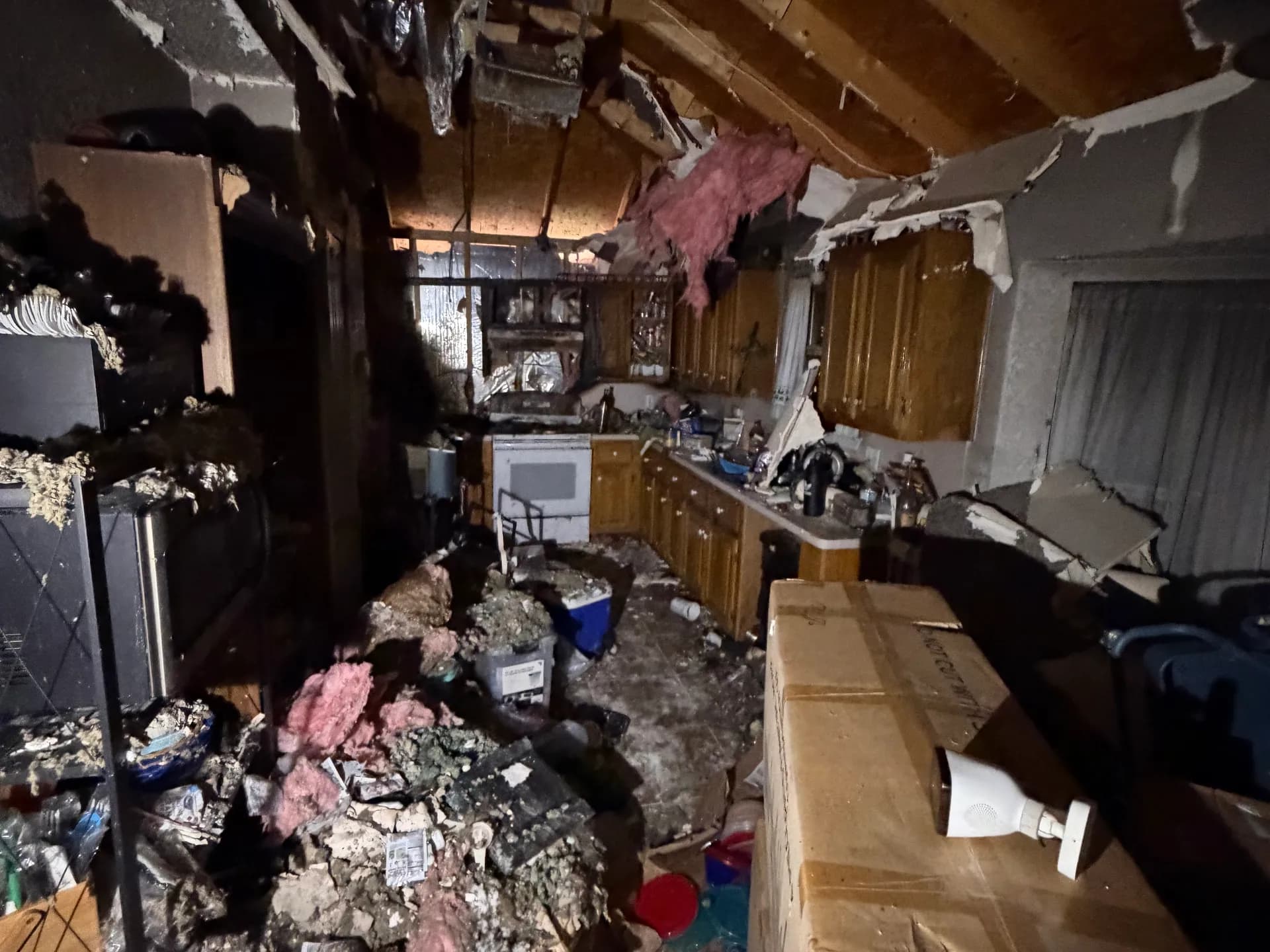
Kitchen and grease fire cleanup
Kitchen Fire Damage Cleanup in San Antonio
A grease fire can be out in thirty seconds and still coat every cabinet, wall and ceiling in the kitchen. We clean up the grease, soot and smoke odor, pack out what's in the way, and rebuild what the fire ruined.
What kitchen fire cleanup covers
Grease and protein residue
The sticky film from burning oil and the near-invisible residue from burned food both hold odor, and both have to come off.
Cabinets, hood and ceiling
Soot collects on cabinet faces and inside the doors, on the range hood and across the ceiling right above the stove.
Smoke in the next rooms
We follow the smoke down the hall and into the living room, because a kitchen fire rarely keeps its smell in the kitchen.
The fire department's water
Water used to knock the fire down gets extracted and dried before it soaks into cabinets and subfloor.
Contents pack-out
Dishes, pantry items and small appliances can be wrapped, inventoried and stored while the kitchen is cleaned.
Rebuild when cleaning won't do
Charred cabinets, scorched drywall and damaged counters get rebuilt by the same team that did the cleanup.
Small fire, big mess
Kitchen fires are the ones most families actually live through. The U.S. Fire Administration says cooking is, by far, the leading cause of home fires and home fire injuries. Most of them never leave the stovetop. That's the good news.
The bad news is what a short fire leaves behind. Hot oil throws off smoke that's loaded with grease, and it cools onto the coldest, closest surfaces it can find: the cabinet faces, the underside of the upper cabinets, the range hood, the ceiling, the window over the sink. A pan fire that burned for under a minute can leave a kitchen that looks fine from the doorway and feels tacky everywhere you touch. Kitchen fire cleanup is mostly about that film, and the smell it carries.
Grease residue, protein residue and soot
Not every kitchen fire leaves the same residue, and the type changes how the cleanup goes. This is what we tend to find.
- Grease residue. Oil fires leave a yellow-brown, sticky film. It grabs dust, it smears when it's wiped, and it holds onto odor.
- Protein residue. Burned meat, beans or anything left on a hot burner can leave a film you can barely see, sometimes just a faint discoloration on paint. The smell is the giveaway. It's sharp, it lingers, and people often can't figure out where it's coming from.
- Soot. When cabinets, a microwave or plastic utensils catch, you get darker, heavier soot on top of the grease, and it often reaches well past the kitchen.
Most real kitchen fires leave some mix of all three. The ANSI/IICRC S700, the industry standard for professional fire and smoke damage restoration, lays out the principles and procedures for this kind of work. For you, the useful takeaway is simpler: what you can see isn't always what's causing the smell.
What not to wipe yourself
The urge to grab a sponge right away makes sense. Our advice is to hold off on the big surfaces until someone who does this work has looked at them.
A wet rag on greasy soot tends to push it into the paint and spread it into wide gray streaks, and scrubbing can work it into the grain of wood cabinets. The wrong cleaner can make a residue harder to lift, too. Those smears are often harder to clean than the original film, and sometimes they're the reason a wall needs repainting that otherwise wouldn't have.
So what can you do? A few things won't make it worse:
- Wait until the fire department says the house is safe to enter. Ready.gov says to check with them first, and not to try reconnecting utilities yourself.
- Leave the pan where it is if the fire was on the cooktop. The USFA's cooktop tips say to slide the lid over a small grease fire, turn off the burner, not move the pan, and leave the lid on until the pan has cooled.
- For an oven fire, the USFA says to turn it off and let the contents cool before cleaning.
- Take photos of everything before anything gets moved or thrown out. Ready.gov's guidance is not to throw away damaged goods until after you've made an inventory.
- Call your insurance company, then call us.
The water from putting it out
If the fire department came, they probably brought water, and a kitchen holds it in all the wrong places. It runs under the base cabinets, soaks the toe kicks, gets under vinyl or laminate and wicks up the back of the drywall. Under a sink base, it can sit for days without anyone noticing.
That water is a water damage job on top of the fire job. We handle water extraction and structural drying on the same job as the cleanup, with moisture readings telling us when the cabinets and subfloor are actually dry. Waiting on that part is how a kitchen fire turns into a mold problem a few weeks later.
Smoke odor that leaves the kitchen
Kitchens are usually open to the living area, and smoke takes that path. It also gets into the return vent if the air conditioning was running, which is how a stovetop fire ends up smelling like it happened in the back bedroom.
The fix is the same as with any smoke smell. The residue has to come off the surfaces holding it before deodorizing can do anything useful. Our smoke odor removal page goes deeper on why sprays and candles don't solve it.
Pack-out, then the rebuild
A kitchen is full of stuff. Plates, glassware, pantry shelves, the drawer everyone has. All of it sits right where the cleaning needs to happen, so our contents pack-out service wraps, protects, inventories and stores those items securely until the kitchen is ready. The inventory doubles as a record for your claim.
Some things don't clean up. Cabinet boxes that charred, a ceiling that scorched, laminate counters that blistered near the cooktop. When cleaning won't bring a surface back, it gets replaced, and we rebuild the projects we restore. Our fire damage repair work picks up right where the cleanup ends, with the same crew that already knows what came out of your kitchen.
Insurance after a kitchen fire
Your policy and your carrier decide what's covered and what gets paid, and the deductible is yours. We don't interpret policies, and we aren't adjusters. We help document the damage and work with your insurance carrier throughout the restoration process. Our insurance claims page explains how that works with us.
Related services
Fire Damage Restoration
Cleanup for fire, smoke, soot and odor damage, including the water used to put the fire out.
Learn moreFire Damage Cleanup
The hands-on work after a house fire: debris out, soot and smoke residue cleaned, the firefighting water dried.
Learn moreSmoke Odor Removal
Smoke odor removal after a fire: we clean the residue behind the smell, then treat the odor that's left.
Learn moreFire-Damaged Drywall
Burned drywall cut out, smoke-stained walls cleaned and sealed, soaked board dried or replaced, then new drywall hung and finished.
Learn moreFire Damage Repair
Cabinets, drywall and finishes rebuilt once the cleanup is done.
Learn moreContents Pack-Out
Dishes, pantry items and small appliances wrapped, inventoried and stored while we work.
Learn moreStructural Drying
Drying cabinets, subfloor and drywall soaked by the water used to put the fire out.
Learn more
Helpful guides
Space heater and fireplace safety for Texas cold snaps
Space heater safety for Texas cold snaps: the 3-foot rule, switching off at bedtime, yearly chimney checks, and the heat sources to skip when the power goes out.
Learn moreFire damage restoration cost: what cleanup costs and what to do first after a house fire
Fire damage restoration cost explained: the national averages, what moves the price and what to do first after a house fire, from Texas Damage Response.
Learn more
Frequently Asked Questions
Sometimes. If the fire stayed in the pan, the smoke was light and the film is limited to the stovetop and hood, careful cleaning may handle it.
Once the residue reaches the cabinets, walls or ceiling, or the smell is in other rooms, it's a bigger job than it looks. Wiping greasy soot with a wet rag often smears it deeper, and that can turn a cleaning job into a repainting job.
Protein residue is the usual answer. Burned food can leave a thin film that's barely visible, sometimes just a slight yellowing on paint, and it carries a strong smell that hangs on for a long time.
Smoke also travels through open floor plans and the air conditioning return, so the residue may be in rooms you haven't thought to check. Getting the residue off surfaces is what ends the smell.
Not always. Cabinets with a layer of grease and soot can often be cleaned. Cabinets that charred, warped from heat or soaked up water from firefighting usually can't.
We'll tell you which is which once we've seen them, and if any need replacing, we rebuild the projects we restore, so the same team handles the cleanup and the new cabinets.
Areas we serve
From our San Antonio base, we clean up kitchen fires across these counties and cities.
Grease and soot all over the kitchen?
Call 24/7 before you start scrubbing. We'll clean up the residue, deal with the water and the smell, and rebuild what can't be saved.