
Water Damage Restoration
Structural Drying and Moisture Monitoring in San Antonio
Getting the standing water out is only half the job. Structural drying removes the moisture soaked into your walls, subfloors and cabinets, and moisture monitoring shows when they're dry, not just dry to the touch.
What the drying work includes
Finding where the water went
Before drying starts, we check the walls, floors and cabinets around the leak.
Air movement
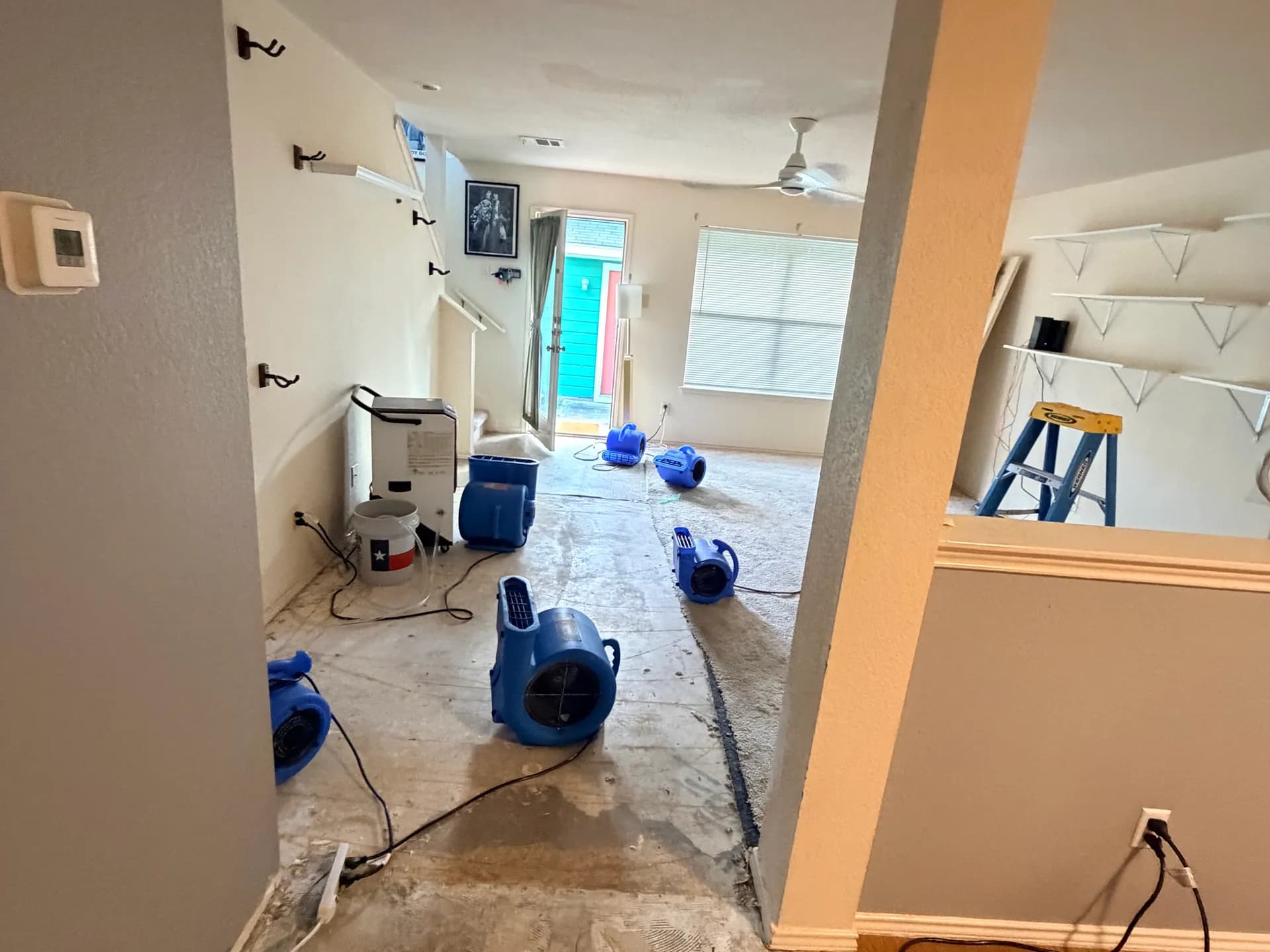
Moving air across wet drywall, framing and flooring keeps the moisture coming out.
Dehumidification
Pulling the evaporated water out of the air so the humidity doesn't climb.
Moisture monitoring
Repeat readings at the same spots, written down, so nobody has to guess at progress.
A measured finish line
Drying ends when the readings reach a dry standard for each material.
Damage documentation
We help document the damage and work with your insurance carrier throughout the restoration process.
How structural drying works
Drying picks up where water extraction leaves off. Extraction pulls out the standing water. What's left has soaked into the house itself: drywall, framing, subfloors and the bottoms of cabinets. Getting it out is the heart of water damage restoration, and it takes two forces working together.
Air movement speeds up evaporation. Wet materials dry from the surface, and moving air carries the evaporating water away instead of letting it hang in a damp, still pocket.
Dehumidification gets that water out of the house. Evaporation only moves it into the air. Without dehumidification the humidity climbs, the drying stalls, and rooms that never got wet can start soaking up moisture of their own.
Moisture monitoring and the dry standard
Moisture monitoring is how you know the drying worked. We take readings in the wet materials, then repeat them at the same spots as the work goes on, so the numbers show whether the house is drying or stuck.
The finish line has a name. The IICRC S500, the industry standard for water damage restoration, calls it the dry standard: a close estimate of the moisture a material held before the water got in. One accepted way to set it, Restoration & Remediation magazine notes, is to measure the same kind of material in a part of the home the water never touched.
Touch can't do this job. It tells you about the paint and nothing about the framing behind it.
Where water hides: walls, subfloors and cabinets
Water doesn't stay where it lands. It runs downhill, slips under things and soaks into whatever will hold it.
- Walls: drywall wicks water up from a wet floor, and the framing behind it stays wet long after the paint looks fine.
- Subfloors: water slides under vinyl, laminate and hardwood and sits on the subfloor or slab. Hardwood may cup as it absorbs moisture from below.
- Cabinets: the bases trap water underneath, out of sight.
- Ceilings: a leak upstairs or a clogged AC drain line in the attic can pool water on top of the drywall. If a ceiling sags, stay out from under it.
A burst pipe inside a wall is the classic case: most of its water ends up where nobody can see it. That's why the readings start before the drying does.
Why fast drying matters for mold in San Antonio
Mold needs moisture. The EPA's guide to mold and moisture advises drying water-damaged areas and items within 24 to 48 hours to prevent mold growth. It also warns that mold can hide on the back side of drywall and under carpet and pad, and that if the water problem isn't fixed, the mold problem will most likely come back. Cleaning mold off a wall that's still wet is a rerun waiting to happen. If mold has already started, our mold remediation covers containment, removal, cleaning and treatment.
San Antonio's air makes drying harder. NOAA's Comparative Climatic Data puts the city's average morning relative humidity at 83 percent for the year, and 87 percent from May through July. The EPA suggests keeping indoor humidity below 60 percent. Outdoor air that wet brings its own moisture inside, so opening the windows is rarely a drying plan here. Dehumidification does the heavy lifting.
Why we won't quote a drying time before we measure
Everyone wants to know how long drying will take. Fair question. But a timeline given over the phone, before anyone has taken a reading, is a guess, and we'd rather not guess with your house.
The IICRC S500 sorts each water loss into a class based on how much surface got wet and how porous the wet materials are (Cleanfax explains the key terms). Dense hardwood gives up water more slowly than drywall, and water that sat longer has soaked in deeper. Humid air slows evaporation too. Drying ends when the readings say so, not on a date.
What does drying cost?
Industry average: $3–$4 per sq ft for drying services on a clean water (Category 1) cleanup, according to Bob Vila's national cost guide (updated May 2023). It's a national market figure, not our price, and your cost turns on the same variables as the drying time.
Related services
Water Damage Restoration
Emergency water extraction, structural drying, moisture monitoring and complete mitigation for San Antonio homes, 24/7.
Learn moreWater Extraction
Standing water out of floors, carpet and pad, 24/7, before it soaks in any deeper.
Learn moreBurst Pipe Water Damage
Extraction, drying and moisture monitoring after a burst or frozen pipe.
Learn moreCeiling Water Damage
Stained, sagging or dripping ceilings dried from above, then rebuilt and painted.
Learn moreWater-Damaged Drywall
Wet walls measured, cut out where they can't be saved, dried to the studs and finished again.
Learn moreHardwood Floor Water Damage
Wet hardwood extracted, dried and measured board by board to save what can be saved.
Learn moreWater Heater Leak
Water out of the garage, closet and walls after a water heater leaks or lets go.
Learn moreWashing Machine Leak
Laundry room floods cleaned up and dried, including the rooms on the other side of the wall.
Learn moreAC Leak Water Damage
Ceilings, walls and floors dried and repaired after an AC drain line or pan overflows.
Learn moreFlood Damage Cleanup
Floodwater from outside cleaned out, contaminated materials removed, and the house dried, 24/7.
Learn moreSewage Cleanup
Sewer and drain backups contained, cleaned out, disinfected and dried, any hour.
Learn moreMold Remediation
Containment, removal, cleaning and treatment when moisture has already led to mold.
Learn moreInsurance Claims
How we help document the damage and work with your insurance carrier.
Learn more
Helpful guides
Attic water heaters and AC units: why Texas ceilings take the hit
A water heater in the attic leaking, or an AC drain that backs up, soaks your ceiling first. See why Texas homes put that gear overhead and what to check.
Learn moreSlab leak water damage: signs, first steps and drying in Texas clay soil
Slab leak signs include a moving water meter, warm floor spots and damp carpet. See the first steps, why Texas clay raises the stakes, and how drying works.
Learn moreWater mitigation cost: what extraction, drying and moisture monitoring usually cost
Texas Damage Response explains water mitigation cost: national averages for extraction and drying, what moves the price, and what your insurer decides.
Learn more
Frequently Asked Questions
Structural drying removes the water that soaks into a building after a leak: the moisture inside drywall, framing, subfloors and cabinets. It uses air movement to speed evaporation and dehumidification to pull that water out of the air, with moisture monitoring until each material reaches a dry standard. It comes right after water extraction and is part of our water damage restoration service.
Nobody can answer that honestly until someone measures the wet materials. A wet bathroom floor and a soaked hallway with hardwood, drywall and cabinets are different jobs, and the week's humidity changes the pace too.
What stays fixed is the finish line: drying ends when moisture readings reach the dry standard for each material. Starting fast still matters. The EPA advises drying water-damaged areas and items within 24 to 48 hours to prevent mold growth.
With moisture monitoring. Before drying starts, we take readings in the walls, floors, subfloor and cabinets around the wet area, working outward until the materials read dry. Water from a burst pipe or a leaking dishwasher often travels farther than the stain suggests, and the readings show how far.
During drying, we repeat the readings at the same spots. You watch the numbers drop instead of taking anyone's word for it.
Wet walls, floors or cabinets?
Call any time, day or night. We'll find where the water went, dry it out and keep checking until the readings say it's done.