Prevention
Attic water heaters and AC units: why Texas ceilings take the hit
A water heater in the attic leaking, or an AC drain that backs up, soaks your ceiling first. See why Texas homes put that gear overhead and what to check.
By Ricky Ballard8 min read
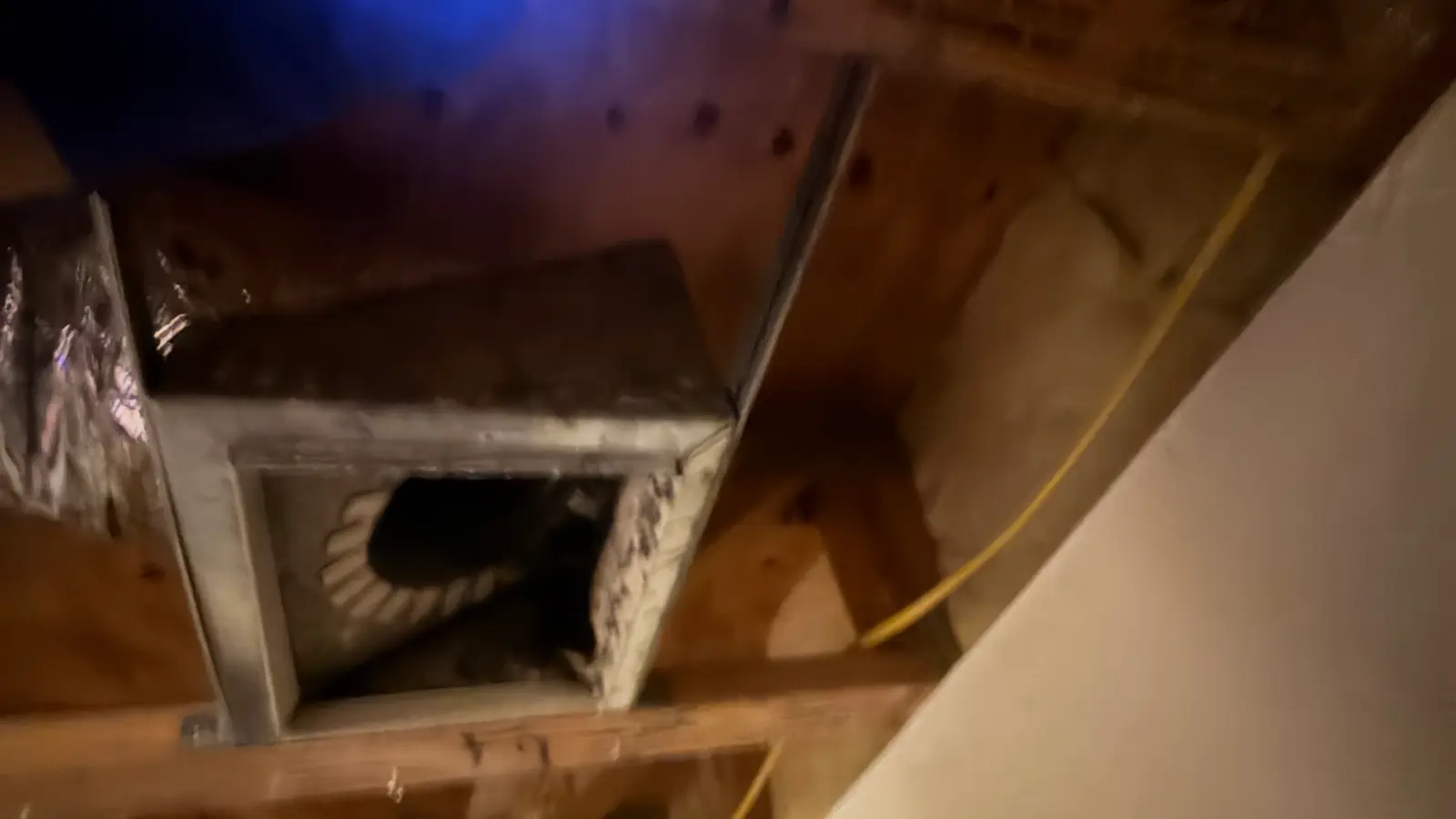
Texas ceilings take the hit because the water heater and the air conditioner's indoor unit often sit in the attic, right above the rooms you live in. When either one leaks, gravity does the rest: the water runs through the insulation and lands on the back of your ceiling drywall.
That layout is normal here, and it works fine until something gives. If you have a water heater in the attic leaking right now, skip to the section on a ceiling that's already wet. If you don't, the rest of this guide covers what's up there, what the building code expects under it, and what to check before the next long cooling season.
Why so much Texas equipment ends up in the attic
Start with the foundation. An NAHB analysis of Census Bureau construction data found that 97.9 percent of new single-family homes started in 2024 in the West South Central states sat on concrete slabs. That's the Census division made up of Texas, Oklahoma, Arkansas and Louisiana.
No basement means no basement mechanical room. A Building America information sheet from Building Science Corporation, published through the U.S. Department of Energy, says that in slab-on-grade designs "available space can become a limitation," and it names conditioned attics as a convenient place for the mechanical equipment and ducts. The air handler goes up. The ducts follow it, and in plenty of homes the water heater joins them.
It's a sensible design. The trouble is what sits underneath. A tank water heater holds dozens of gallons under pressure, and an air conditioner pulls water out of humid air all summer. Both sit over drywall that can't hold water for long.
The two backstops the building code asks for
Builders don't just set a tank on the attic floor and hope. Texas law adopts the International Residential Code, as it stood in 2012, as the municipal residential building code (Local Government Code section 214.212), and cities can amend it, so the exact rules depend on where and when your house went up. The model code sets these requirements.
Under the water heater: a pan with a drain
The 2021 edition of the code says a tank water heater in a spot where a leak "will cause damage" goes in a pan at least 1.5 inches deep. Its drain rules call for a pipe at least 3/4 inch across that ends over a drain or outside the house, 6 to 24 inches above the ground. Read the fine print, though. The same section says that where a pan drain wasn't installed before, a replacement water heater doesn't need one.
That exception matters more than it looks. A pan with no drain is a shallow tray. It can catch a slow drip for a while, but it can't send the water anywhere, and nobody sized it for a tank that splits.
Under the air handler: a backup for the condensate drain
Your AC's coil sheds water all cooling season, and a primary drain line carries it off. Lines clog, so the code's condensate section (M1411.3.1 in the 2021 edition) requires a backup wherever an overflow would damage the building. That section lists the options: a second pan under the unit with its own drain, an overflow line set higher on the main pan, or a water-level switch that shuts the system off before the pan spills. If a condensate pump in the attic does the work, the same chapter wants it connected so the equipment stops running when the pump fails.
The code says a backup drain must empty at "a conspicuous point of disposal to alert occupants" that the main drain has stopped. In plain English, it's supposed to drip somewhere you'll notice, which in a lot of Texas houses means a pipe over a window or near the eaves. Water dripping from that pipe on a hot afternoon is a warning sign.
What an attic leak looks like from downstairs
You won't always see the equipment fail. You'll see what it does to the house, and that's enough if you know what you're looking at.
| What you notice | What it can mean |
|---|---|
| A pipe dripping outside, over a window or near the eaves, during cooling season | The backup condensate drain is working because the main line has stopped |
| The AC shuts off on a hot day and won't stay on | A water-level switch may have tripped on a full pan; an HVAC technician should check it |
| A yellow or brown ring near a ceiling vent, the air return or a hallway closet | A slow leak soaking the drywall from above |
| Drips from a light fixture, smoke alarm or vent | Water has found an opening in the drywall and may be near wiring |
| A ceiling that sags, bulges or looks soft | Drywall holding water, which is a safety problem (see the wet-ceiling section below) |
| Rust streaks or standing water in the water heater pan | An attic water heater leaking at the tank or its fittings |
None of these signs tells you how much water is up there. A stain the size of a dinner plate can sit under a much wider patch of soaked insulation. Our guide to water damage in a ceiling walks through telling an old stain from an active leak.
A twice-a-year attic check
Pick two dates and put them on the calendar: one in spring, before the AC starts running hard, and one in fall, after the cooling season winds down. A flashlight is the only tool you need. You're looking for three things: water where it shouldn't be, drains that go nowhere, and safety devices nobody has tested. A lot of attic leaks give some warning before they ever reach the ceiling, like a damp pan, a rusty fitting or a drain line that slipped loose. Catch those early and the drywall never gets involved. It's a short trip up the ladder, and it beats replacing a ceiling.
- Look in both pans. Standing water in the pan under the air handler means the main drain isn't keeping up. Rust or mineral crust in the water heater pan points to a slow leak.
- Follow each pan's drain. Make sure there is one, that it's connected, and that it runs downhill to a drain or outside. Remember the replacement exception, because an older home can have a newer heater sitting in an undrained pan.
- Keep the condensate side clean. The EPA's guide to mold and moisture says to keep air conditioning drip pans clean and the drain lines "unobstructed and flowing properly." If you'd rather not touch the line yourself, an HVAC technician can clear and check it during a seasonal service visit.
- Ask about the safety switch. If your system has a water-level switch, have the technician confirm it actually shuts the unit off.
- Find your shutoffs now. The Texas Department of Insurance tells homeowners to know how to turn the water off at the main valve or at the valves near appliances. For an attic heater, that includes the shutoff on its cold-water line, if yours has one.
- Check the ceiling from below. Walk the rooms under the equipment and hold the flashlight low across the ceiling. Faint rings and small bubbles show up better in raking light.
If the ceiling is already wet
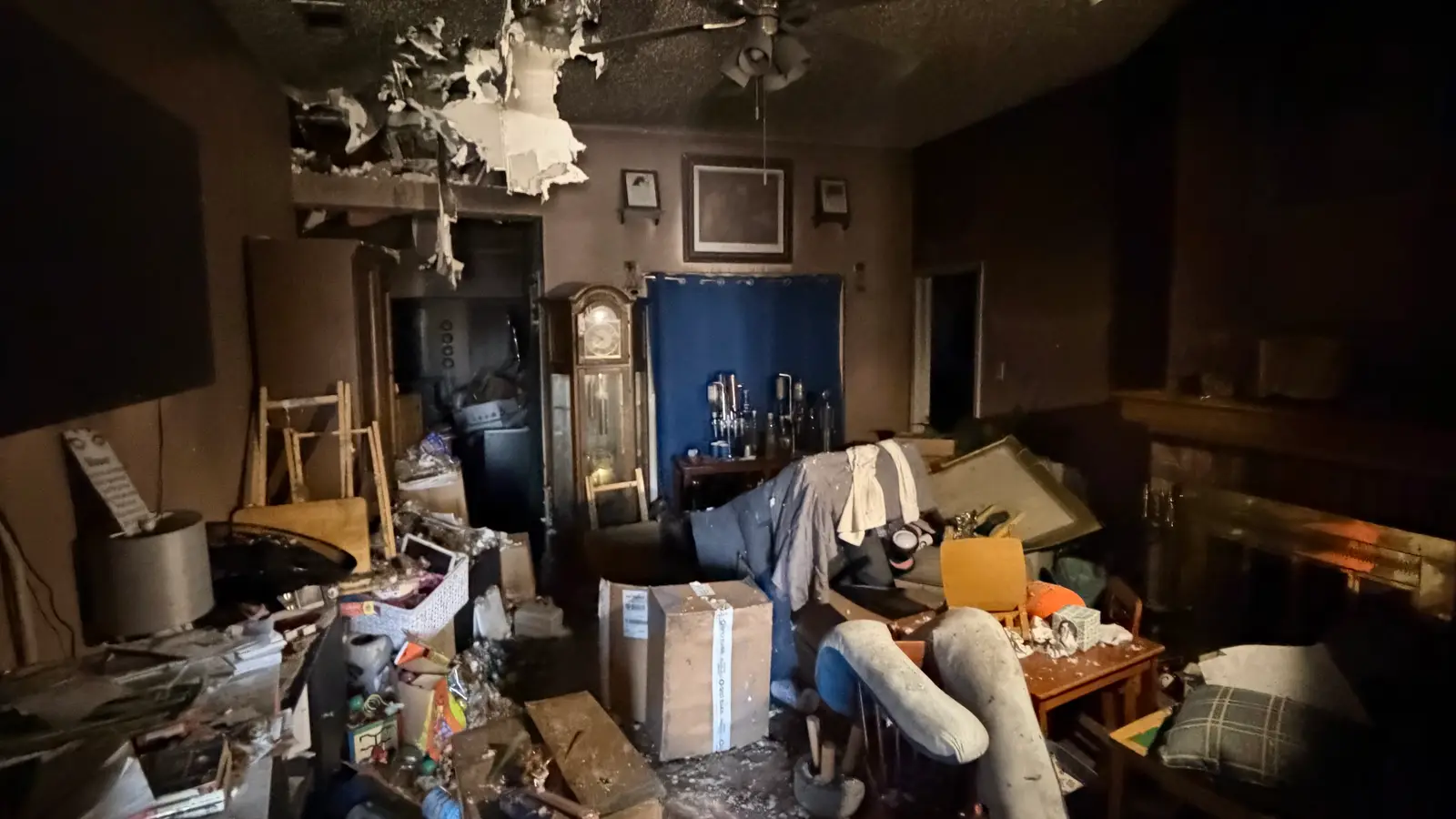
Safety comes before the ceiling. FEMA and the American Red Cross put it bluntly in Repairing Your Flooded Home: wet plaster or wallboard is heavy and dangerous if it falls, so stand away from a sagging ceiling, not under it. The same guide says that if you'd have to step in water to reach your breaker box, you should call an electrician.
Then stop the water. With a water heater in the attic leaking, shut off its supply or the main. With an AC problem, turn the system off at the thermostat so the coil stops making condensate. Put buckets under the drips. Move anything you can carry out of the room. Before anything gets thrown out, take pictures: TDI advises photos or video of the damage before making repairs, and our page on documenting water damage for your insurance carrier explains how we help document the damage and work with your carrier.
What can you save? The EPA's cleanup table for clean-water damage says you can dry wallboard in place if it shows no obvious swelling and the seams are intact. The same table lists wet fiberglass and cellulose insulation as discard and replace. That second line is the one people forget, because soggy insulation keeps feeding water into the drywall below it.
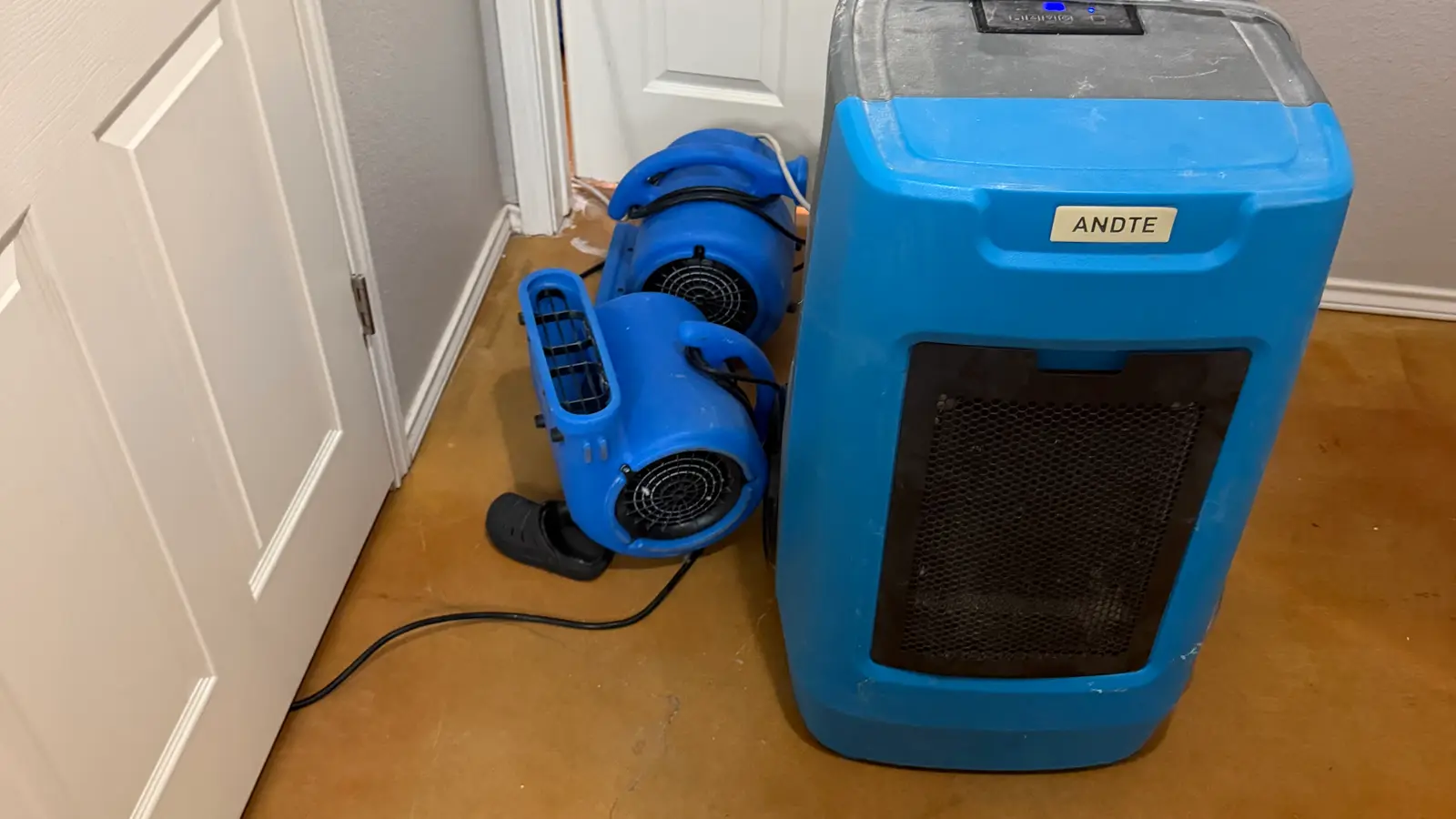
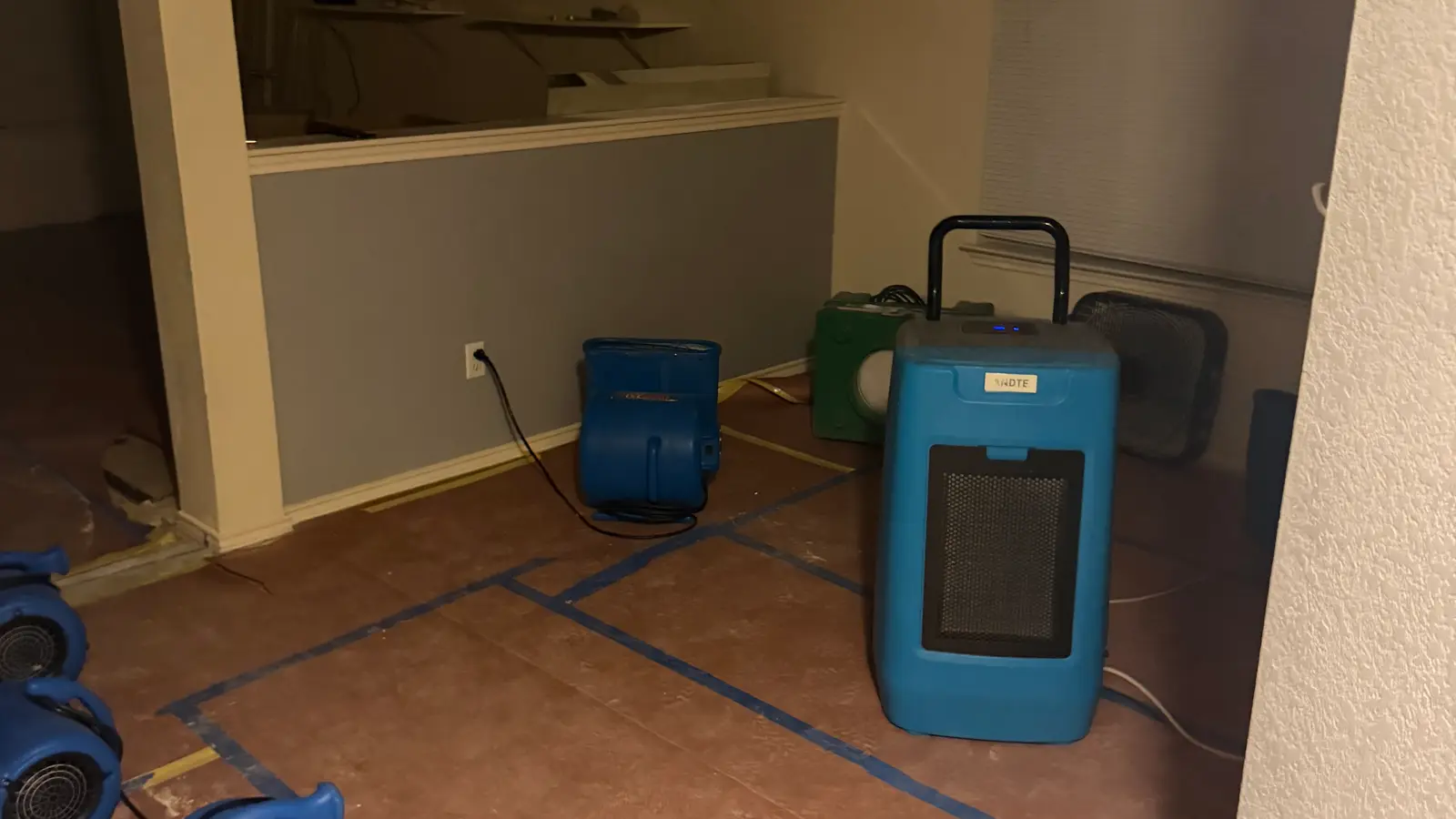
Speed matters too. The EPA advises drying water-damaged areas within 24 to 48 hours to prevent mold growth, and the attic isn't exempt. Our post on attic mold covers what happens when that window gets missed. On our side, drying wet ceilings starts with moisture readings in the drywall, the framing and the rooms below, since attic water can travel along the framing before it shows. If it reached the floor, emergency water extraction comes first.
Who fixes what
Whether the problem is a water heater in the attic leaking or a clogged condensate line, three trades can end up in the same hallway, and it helps to know who does what. A plumber repairs or replaces the water heater and its valves. An HVAC technician clears the condensate line, deals with the pan and tests the safety switch. Our job is the water damage: water damage restoration for the ceiling, walls and floors the leak reached, moisture readings until each material is dry, and help documenting it for your carrier.
If the AC turns out to be the source, our post on an AC leaking water inside the house goes deeper on condensate problems. Is the ceiling under your attic wet right now? Phone Texas Damage Response at whatever hour it happens, or request service online. Our company is veteran-owned and operated out of San Antonio, and drying out wet ceilings is exactly the work we do.