Water Damage
Water mitigation cost: what extraction, drying and moisture monitoring usually cost
Texas Damage Response explains water mitigation cost: national averages for extraction and drying, what moves the price, and what your insurer decides.
By Ricky Ballard7 min read
Water mitigation cost is usually figured by the square foot of wet area, not as one flat price for the house. Two national cost guides put the biggest pieces of the job at these averages:
- Water extraction, from Fixr's cost guide (updated January 2025): Industry average: $3.75–$7.50 per sq ft
- Drying services on a clean water cleanup, from Bob Vila's cost guide (updated May 2023, so it's the oldest figure here): Industry average: $3–$4 per sq ft
Those are market averages, not quotes, and your own water mitigation cost will turn on details no national guide can see. Moisture monitoring, the third part of mitigation, doesn't get its own price in either guide, or in Today's Homeowner's cost guide. That's a pity, because the readings are what tell everyone the drying has finished.
What the mitigation part of the bill pays for
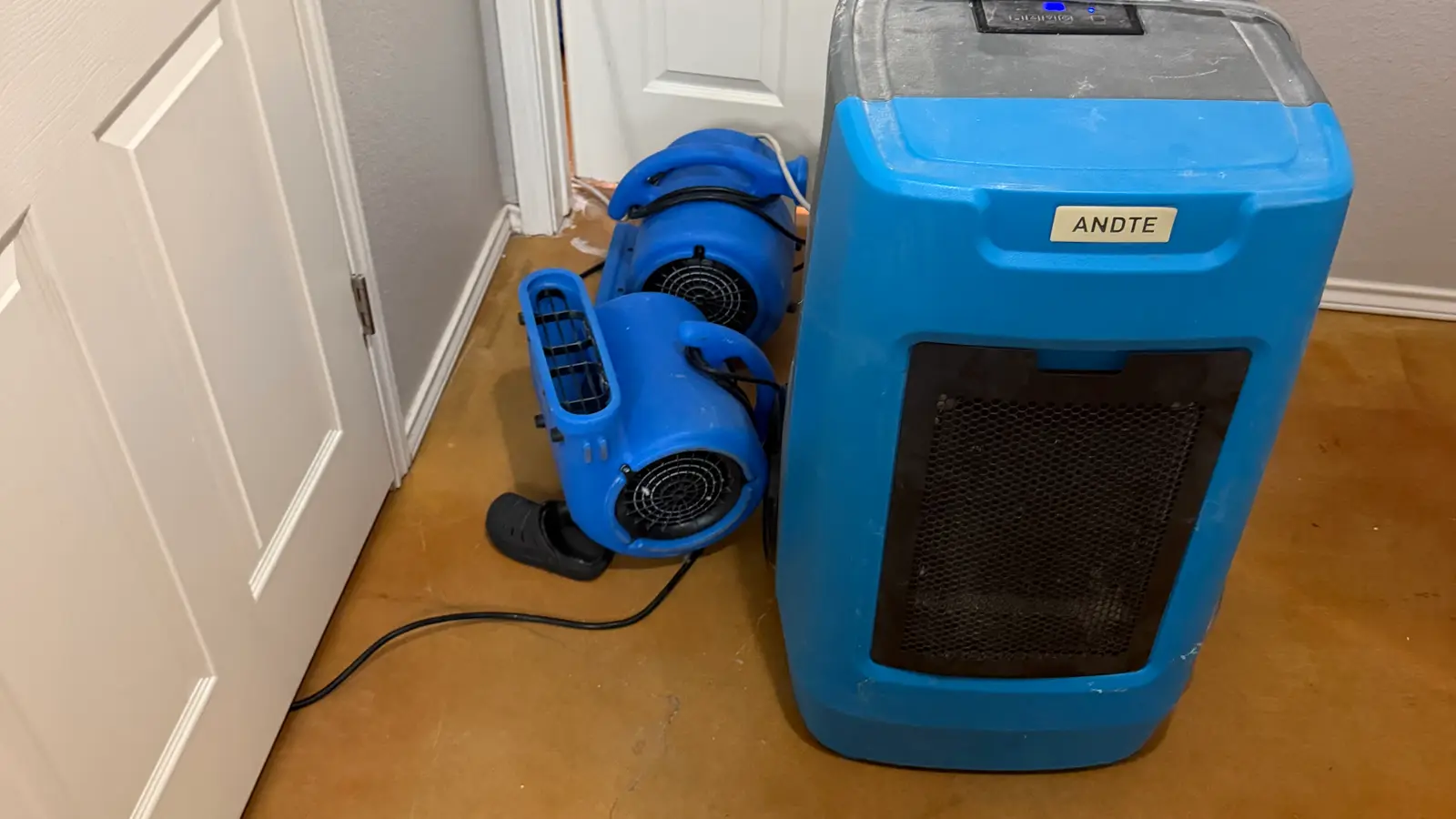
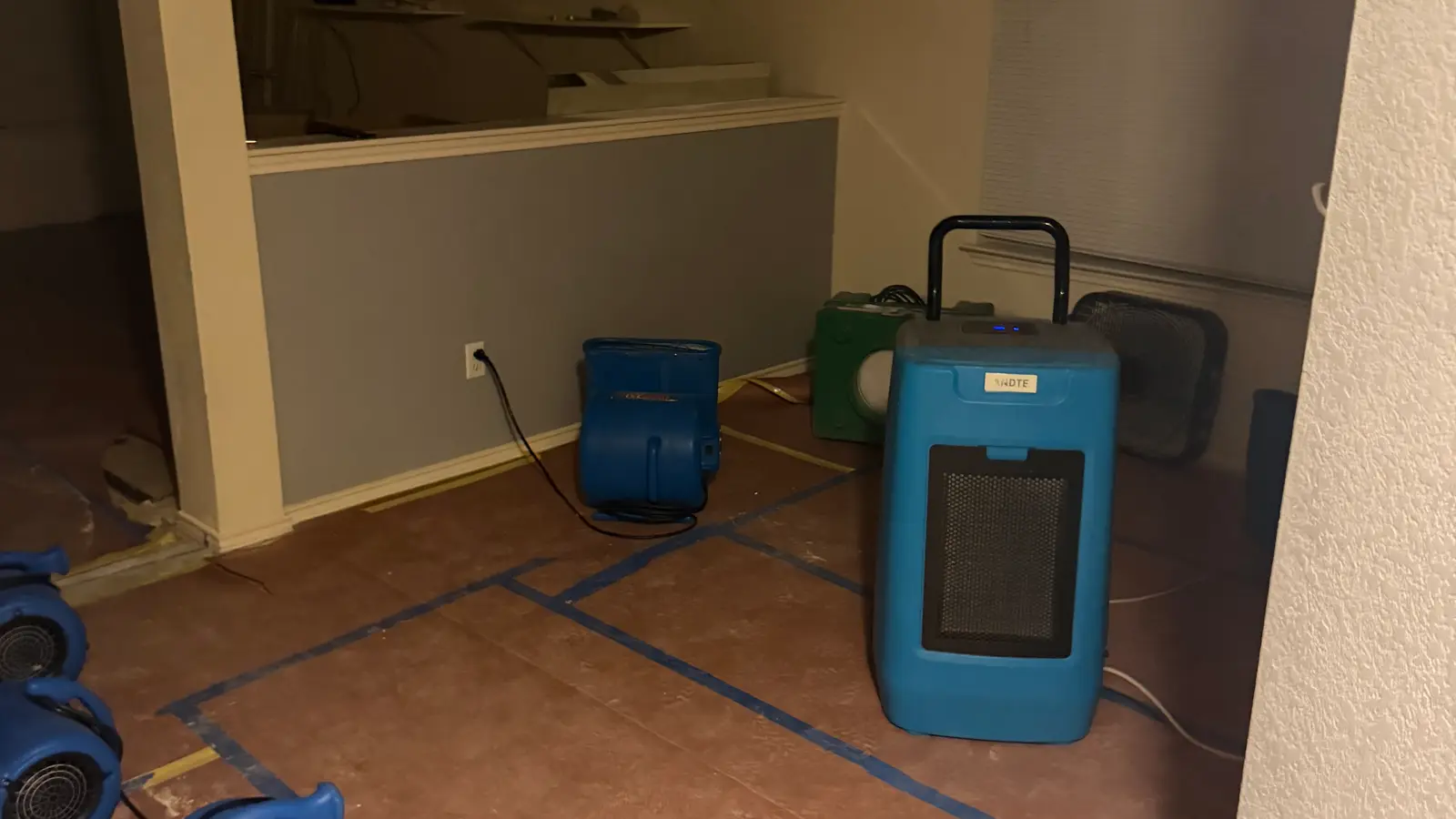
Mitigation is the part of a water job that keeps the damage from growing. The Texas Department of Insurance (TDI) gives homeowners what amounts to a mitigation checklist: stop the water flow as soon as you can, remove pools of water, start drying the area to prevent more damage and mold growth, and make temporary repairs to protect your house and belongings. On a professional job, those steps turn into the lines of a bill. Water extraction, drying and moisture monitoring do most of the work, with belongings moved off wet floors along the way.
Some costs sit outside the mitigation total, so expect to see them separately:
- The pipe or appliance repair itself. That's a plumber's or repair tech's bill, and a water mitigation estimate shouldn't include it.
- Replacing materials that can't stay. Today's Homeowner notes that even clean water damage may mean replacing carpet, hardwood floors, bathroom cabinets or drywall.
- Mold work. Fixr calls mold remediation the most costly repair type it prices.
- Emptying whole rooms. That's a separate service, a contents pack-out.
That's why a mitigation number and a whole-job number can look so different, and why it pays to ask which of these an estimate includes. Our water damage restoration service includes complete water mitigation. For the bigger picture, our guide to water damage restoration cost prices the full job, and water mitigation vs restoration shows where one phase ends and the next begins.
National averages for each part of the job
Three national guides price the pieces of water mitigation cost below, all per square foot of affected area and each from a different publisher and year. Check the dates.
| Part of the job | Publisher and update date | National average |
|---|---|---|
| Water extraction, clean water through black water | Fixr, January 31, 2025 | Industry average: $3.75–$7.50 per sq ft |
| Drying services, clean water cleanup | Bob Vila, May 30, 2023 | Industry average: $3–$4 per sq ft |
| Clean water (Category 1) cleanup | Today's Homeowner, September 3, 2025 | Industry average: $3–$4 per sq ft |
| Moisture monitoring | None of the three | No separate figure |
Keep three things in mind when you read it. First, the ranges move with the job: Fixr says its extraction range depends on the volume of water, the equipment used and the affected area, and that where the water comes from influences what you pay. Second, the drying figures assume clean water. Today's Homeowner, which draws on the RSMeans construction database and restoration contractors, says the remedy for clean water damage is drying alone, and its Category 1 figure matches the Bob Vila drying range.
The third point trips people up. The per-square-foot figure applies to the wet area, and the wet area can be bigger than the stain, since water runs under flooring and wicks up drywall. National averages don't know your zip code either. Bob Vila notes that water restoration costs vary across the country.
What makes one mitigation bill bigger than another
Two leaks that wet the same number of square feet can still produce different bills. Four factors do most of the moving.
The water's source
Clean water from a supply line costs the least to handle. Today's Homeowner puts it simply: clean water is cheaper to fix, and contaminated water is more expensive. Fixr's extraction range runs from clean water at the low end to black water at the top.
How much got wet, and how deep
The industry rates the spread of water in four classes. Bob Vila says damage class plays a large role in restoration cost, and Today's Homeowner explains why a Class 3 loss costs more: the water has likely permeated the floors, subfloor, drywall and ceiling. Our explainer on the classes of water damage walks through all four.
Where it happened
Location changes the math. Bob Vila says the location of the damage has a large impact on cost per square foot, and Fixr notes that the room itself can change what you pay. A wet tile bathroom floor and a wet carpeted bedroom aren't the same job, even at the same size.
How long the water sat
Time costs you twice. Fixr says the water type and how long it sat before removal both affect the price per square foot. And the longer materials stay wet, the closer they get to mold. The EPA advises drying water-damaged areas and items within 24 to 48 hours to prevent mold growth.
Two smaller factors round out the list. Hidden damage takes time to find, and Bob Vila points out that structural damage can hide, so diagnostics take time. Some companies also add emergency fees, according to Bob Vila. Ask how a company bills nights and weekends before the work starts, not after.
Why the moisture readings are worth paying for
In our view, moisture monitoring is the best value on a mitigation bill, even though no cost guide gives it a line of its own. Readings repeated at the same spots show whether the house is drying or stalled, and that decides when the drying can stop.
Drying can go wrong in two directions. Stop too early, and water left in the framing or under the floor keeps feeding mold where nobody can see it. The EPA notes that mold may hide on the back side of drywall, wallpaper or paneling, and inside walls around pipes. Run too long, and you're paying for drying the materials no longer need. Readings guard against both mistakes.
They also become part of your paperwork. Our structural drying and moisture monitoring service keeps those readings from the first visit to the last, and our guide to how professionals dry a house shows where they fit in the drying.
Who pays: insurance, deductibles and receipts
Insurance may pay for mitigation, or it may not, and that call belongs to your carrier and its adjuster. Most homeowner and renters policies cover sudden and accidental water damage, according to TDI, but policies usually won't cover damage from gradual leaks.
TDI's claim advice lines up with the mitigation steps above: take pictures or videos of the damage before making repairs if you can, keep receipts for any materials you buy to make them, and don't make permanent repairs until your insurance company sees the damage. TDI also says you usually must report hidden water damage within days after you first see it.
Then there's the deductible. TDI defines it as the amount you have to pay before the insurance company will pay. On home policies, TDI says, it applies to each claim, and it may be a specific dollar amount or a percentage. Either way, it's yours. You own the claim, and the deductible stays your responsibility under your policy.
Our part is narrower. We help document the damage and work with your insurance carrier throughout the restoration process. We don't act as an adjuster, and we don't interpret policies. If you're unsure what your policy covers, ask your agent or your carrier, or contact the Texas Department of Insurance (TDI). Our insurance claims page explains how the documentation works.
Getting a number for your own house
National averages are a starting point. Your number depends on what's wet, how wet and for how long, and only readings answer those questions. Whoever you call, ask these:
- Which rooms and materials did you count as wet, and how did you measure them?
- What category and class did you assign? Those two ratings explain much of the price, so the answer shouldn't be vague.
- How will you know the drying is over? The right answer mentions moisture readings and a dry standard for each material, not a set number of days on the calendar.
- Will I get the photos and readings for my carrier?
- Do nights or weekends cost extra?
For a number that fits your house instead of a national average, call any time, day or night, or request service online. Our structural drying work starts with moisture readings, so you'll see what's wet before the drying begins.