
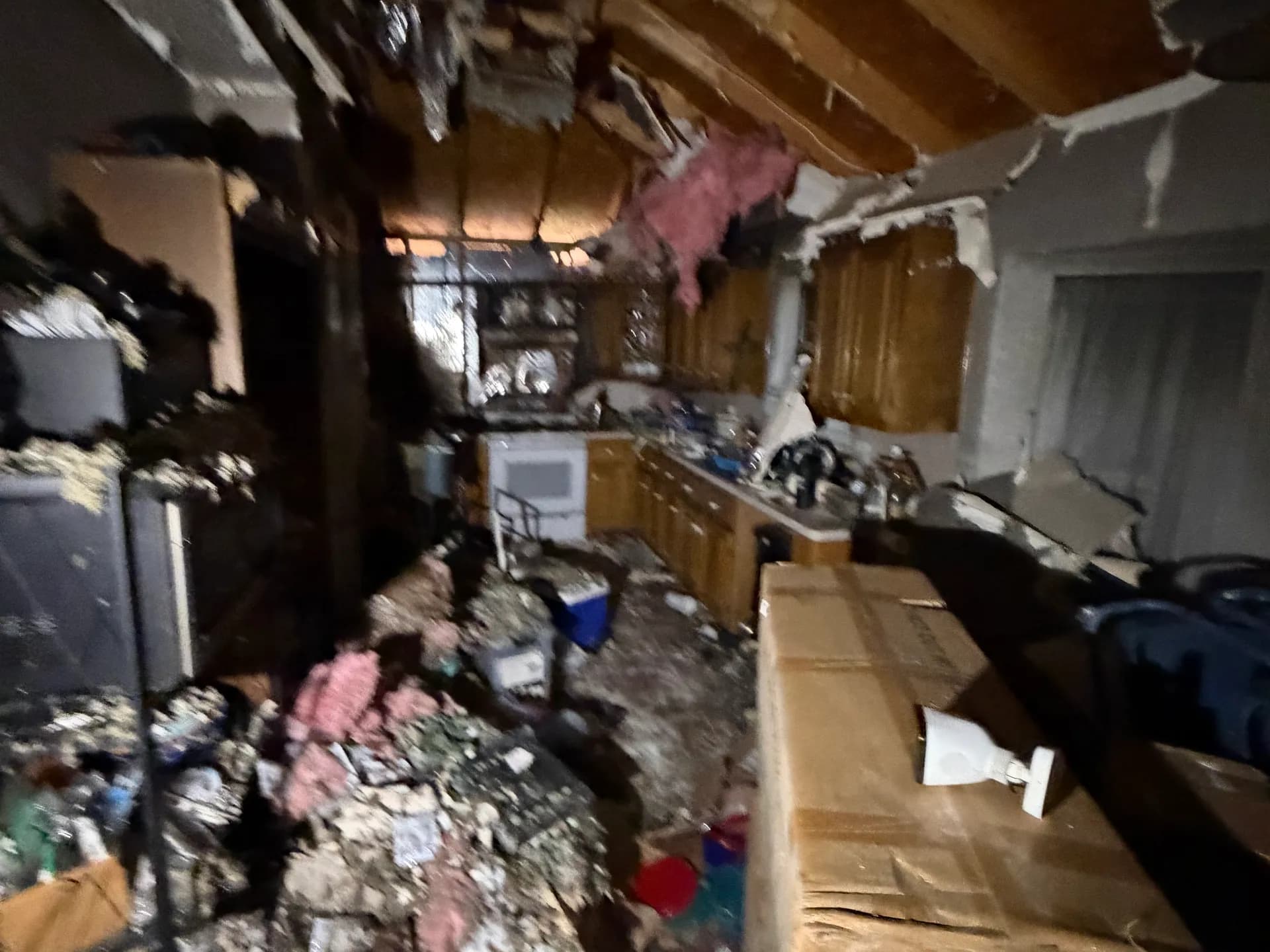
Fire, smoke, soot and odor cleanup
Fire and Smoke Damage Restoration in San Antonio
Our fire damage restoration work in San Antonio is cleanup: soot on the walls, smoke residue in rooms the flames never reached, the smell, and the water used to put the fire out. Call us 24/7, and we'll help document the damage for your insurance carrier.
What our fire and smoke cleanup covers
Soot cleanup
Soot settles on walls, ceilings, cabinets and trim, and it smears if you wipe it the wrong way. We clean it off the surfaces it coated.
Smoke residue in every room it reached
A fire in one room can leave a film three rooms away. We clean that residue throughout the house, not only where the flames were.
Smoke odor removal
The smell comes from residue, so we remove the source instead of covering it with fragrance.
Water from putting the fire out
Firefighting leaves floors and drywall soaked. We extract the water and dry the structure, since wet materials left too long can grow mold.
Contents pack-out
If smoke reached your belongings, we can pack, inventory and store them while we clean, then bring them home.
Damage documentation
We help document the damage and work with your insurance carrier throughout the restoration process.
Fire Damage Restoration services
Fire Damage Cleanup
The hands-on work after a house fire: debris out, soot and smoke residue cleaned, the firefighting water dried.
Learn moreSmoke Odor Removal
Smoke odor removal after a fire: we clean the residue behind the smell, then treat the odor that's left.
Learn moreKitchen Fire Cleanup
Grease, soot and smoke odor cleaned out of the kitchen and the rooms around it, then the damaged parts rebuilt.
Learn moreFire-Damaged Drywall
Burned drywall cut out, smoke-stained walls cleaned and sealed, soaked board dried or replaced, then new drywall hung and finished.
Learn more
Fire damage restoration starts where the flames stopped
The burned room is the part everyone sees. Often the bigger job is everything the smoke reached. The U.S. Fire Administration's After the Fire guide warns that smoke can ruin things the fire never touched, and that the water used to put the fire out can leave them soggy. Anything you want to save, it adds, will need careful cleaning.
That cleanup is our job. Texas Damage Response provides professional cleanup for fire, smoke, soot and odor damage to help restore your property. The work usually comes in four parts: soot and smoke residue on surfaces, the odor, the water from firefighting, and belongings the smoke reached. A small kitchen fire might involve two of them. A fire that filled the house with smoke can involve all four.
Soot and smoke residue cleanup
Soot is what's left of whatever burned, carried through the house as fine particles. Depending on the material, it can be dry and powdery or oily and sticky. Texas A&M AgriLife Extension's guide, How to Remove Smoke Smell from a Home, describes smoke residue as microscopic particles that cling to walls, furniture, floors and clothing. The particles have to come off by cleaning, it says, because they work their way into the smallest cracks.
Why smoke damage shows up rooms away
Smoke is hot, and hot air moves. It pushes through doorways, climbs stairwells and slips under closet doors, then cools and settles as a film. That's how a stovetop fire ends up graying a bedroom ceiling at the far end of the hall. Real smoke damage restoration follows that film through the whole house. Cleaning only the room that burned leaves the rest of the problem in place, and the smell with it.
Kitchen fires leave a sticky film
A grease fire can burn out almost as soon as it starts and still coat the cabinets, the range hood and the ceiling with an oily residue. That film holds odor, and a quick wipe with a household cleaner tends to smear it around. Kitchen fire cleanup takes more patience than most people expect. It's worth doing right the first time.
Smoke odor: what removes it and what only hides it
Odor goes away for good when its source goes. The same Texas A&M guide puts it simply: removing the smell permanently means removing the source of the problem. Scented candles and perfumed sprays only mask the odor for a while, and open windows only dilute it.
Porous materials are the hard part. Once smoke soaks into carpet, drapes and upholstered furniture, the guide notes there may be little anyone can do about the odor unless you remove or replace those items. Our take is simple. If a product makes the house smell like flowers, it's covering the problem. We clean away the residue that carries the smell, and we won't promise an odor result before we've seen your house. Smoke odor removal has its own page with more detail.
Water from putting out the fire is water damage too
Putting out a house fire takes a lot of water, and it stays behind after the fire is out. It soaks carpet and pad, wicks up into drywall and drips into the rooms below. After that, it's a leak like any other, on the same clock. The EPA says to dry water-damaged areas and items within 24 to 48 hours to prevent mold growth.
The water is often the part that can't wait. Our water damage restoration service covers water extraction and structural drying with moisture monitoring, so the soaked floors and the sooty walls become one job instead of two. If materials stayed wet too long before anyone could get inside, mold remediation may join the plan.
Smoke-damaged belongings and contents pack-out
Smoke gets into clothes, furniture, books and electronics, and those items sit right where the cleanup needs to happen. Our contents pack-out service covers careful packing, inventory, transportation, storage and the return of your belongings once the house is ready for them. That lets us clean the house without working around a full room of furniture.
The inventory matters more than people expect. It gives you a room-by-room record of what you had, and TDI tells homeowners to make a list of damaged property anyway.
After a house fire: what to do first
The first day after a fire is a blur. The steps below draw on the U.S. Fire Administration's After the Fire guide and the claim tips the Texas Department of Insurance (TDI) published for Texas wildfires.
- Stay out until the fire department says it's safe to go in, and be careful even then: USFA warns that floors and walls may not be as safe as they look.
- If the power, gas or water is off, leave it off. Don't turn utilities back on yourself.
- Call your insurance company as soon as possible and ask what to do first.
- Take pictures or video of the damage. Then start a list of everything damaged, room by room.
- Don't throw anything away until your insurance company tells you to, even items that look ruined.
- Save every receipt for money you spend because of the fire. Your insurer may need them later.
- Call us at (210) 726-4411, day or night, to start the cleanup.
Fire and smoke insurance claims: what TDI says
Your policy decides what's covered, so start there. In general terms, TDI says homeowners insurance pays for fire damage to your home up to the policy limits, and smoke damage typically counts too. If covered damage keeps you out of the house, your homeowners or renters policy may pay for a hotel or rental, within the limits your policy sets.
You own the claim, and the deductible is yours. TDI warns homeowners to avoid any contractor who offers to waive it. Our part is narrower: we help document the damage and work with your insurance carrier throughout the restoration process. We aren't public adjusters, and we don't interpret policies or decide coverage. Your carrier and its adjuster do that. TDI also suggests being home when the insurance company comes to inspect the damage. Our insurance claims page explains where we fit in your carrier's process.
What fire damage restoration costs: industry averages
No two fires cost the same, and nobody can price yours from a web page. For a reference point, Fixr's national cost guide, updated January 2025, gives two figures. Its fire damage restoration rate, which takes in soot cleanup and water damage restoration among other work, goes by area (Industry average: $4–$6.50 per sq ft). Smoke removal on its own (room cleanup, odor removal and deodorizing) gets a whole-house figure (Industry average: $200–$1,200 per home).
These are national industry averages, not San Antonio figures, and they aren't our prices. Your number depends on how far the smoke traveled, how much soot settled, how much water needs drying and whether your belongings need a pack-out. For a real figure on your house, request service.
Where we handle fire and smoke cleanup
We're based in San Antonio and available 24/7 for fire restoration and smoke cleanup anywhere in San Antonio, from Stone Oak to the South Side, and across the rest of Bexar County. The service area reaches neighboring counties too, including New Braunfels, Boerne and Seguin. Not sure whether we cover your street? Call and ask. With smoke in the house, a quick phone call beats guessing.
What a house fire leaves behind
| What the fire left | Where it shows up | What the cleanup involves |
|---|---|---|
| Soot | Walls, ceilings, cabinets and trim, plus the inside of closets and drawers | Cleaning it off each surface without smearing it deeper |
| Smoke residue | Rooms the flames never reached, often far down the hall | Following the film room by room and cleaning it where it settled |
| Smoke odor | Drywall, carpet, upholstery, clothing and other porous materials | Removing the residue that carries the smell, since fragrance only covers it |
| Water from firefighting | Carpet and pad, drywall and the rooms below | Water extraction and structural drying (the EPA advises drying within 24 to 48 hours) |
| Smoke-exposed belongings | Furniture, clothing, documents, electronics and keepsakes | Contents pack-out: packing, inventory, storage and return while we clean |
Why call Texas Damage Response after a fire
Texas Damage Response is a veteran-owned and operated company based in San Antonio, committed to serving Texas homeowners with integrity, professionalism and dependable service. We offer emergency restoration 24/7. Fires don't wait for business hours, and neither do we.
One call covers the whole cleanup: soot and smoke residue, the odor, the water from firefighting, and a pack-out if your belongings are in the way. We'll explain what the job involves in plain terms and help document the damage for your insurance carrier as the work moves along. Call (210) 726-4411 or send us a message to request service.
Related services
Reconstruction
Once the cleanup is done, we rebuild what the fire damaged.
Learn moreWater Damage Restoration
Extraction and structural drying for the water used to put the fire out.
Learn moreContents Pack-Out
Packing, inventory, storage and return of your belongings during the cleanup.
Learn moreInsurance Claims
How we help document the damage and work within your carrier's process.
Learn moreEmergency Restoration
24/7 response when water, fire or mold damage can't wait.
Learn more
Helpful guides
Space heater and fireplace safety for Texas cold snaps
Space heater safety for Texas cold snaps: the 3-foot rule, switching off at bedtime, yearly chimney checks, and the heat sources to skip when the power goes out.
Learn moreFire damage restoration cost: what cleanup costs and what to do first after a house fire
Fire damage restoration cost explained: the national averages, what moves the price and what to do first after a house fire, from Texas Damage Response.
Learn moreSmoke odor removal cost: what professional deodorizing usually costs
Smoke odor removal cost depends on how far smoke spread, what it soaked into and the soot it left. Texas Damage Response breaks down the national average.
Learn more
Smoke or soot in your home? Call us day or night.
We clean up fire, smoke, soot and odor damage across San Antonio and help document the damage for your insurance carrier.
Frequently Asked Questions
Not until the fire department says it's safe to go back in. The U.S. Fire Administration warns that floors and walls may not be as safe as they look, and that the soot and dirty water left behind may contain things that could make you sick.
Once you're cleared to enter, staying through the cleanup depends on the damage: how far the smoke spread, whether the water from putting out the fire soaked the floors, and whether the utilities are back on. If covered damage keeps you out, TDI says your homeowners or renters policy may pay for a hotel or rental. We'll tell you what we see after we've walked through the house.
It depends on the house, and anyone who quotes a timeline before seeing yours is guessing. A small kitchen fire and a fire that pushed smoke through every room are different jobs.
The schedule comes down to how far the smoke traveled, how much soot settled, how much water needs extraction and drying, whether belongings need packing out, and when your carrier's adjuster can inspect. Drying follows moisture readings, not the calendar. Once we've seen the damage, we'll walk you through each step, and our process page lays them out in order.
Yes. Smoke goes wherever moving air carries it: through doorways, down hallways, up stairwells and into closets and drawers. It cools and settles as a film on walls, ceilings and fabrics, and the U.S. Fire Administration warns that smoke can ruin things the fire never touched.
That's why smoke cleanup has to cover the whole house, not just the burned room. A back bedroom can end up smelling like the kitchen. Our smoke odor removal page covers the smell itself.
In general terms, yes, but your policy has the final word. The Texas Department of Insurance says homeowners insurance pays for fire damage up to the policy limits, that smoke damage typically counts too, and that the deductible is yours.
You own the claim. We help document the damage and work with your insurance carrier throughout the restoration process, but we don't interpret policies or make coverage decisions. Your carrier and its adjuster decide what the policy pays for. TDI's advice is to report the claim to your insurance company as soon as possible and keep a list of everyone you talk to there. Our insurance claims page explains how the process works with us.
Yes. Water from firefighting is water damage, and we handle it that way: water extraction first, then structural drying with moisture monitoring. The EPA says to dry water-damaged areas and items within 24 to 48 hours to prevent mold growth, so the water often comes first.
Handling both on one job also keeps the documentation in one place.
Areas we serve
We handle fire and smoke cleanup in each county and community below, with San Antonio as home base.