
Air conditioner leaks
AC Leak Water Damage Cleanup in San Antonio
When an AC is leaking water, it's usually a clogged condensate line or a drain pan that overflowed, and in a lot of San Antonio homes that pan sits in the attic, right over your ceiling. An HVAC technician fixes the unit. We dry and repair the water damage it left behind.
What AC leak water damage cleanup includes
Attic insulation and ceilings
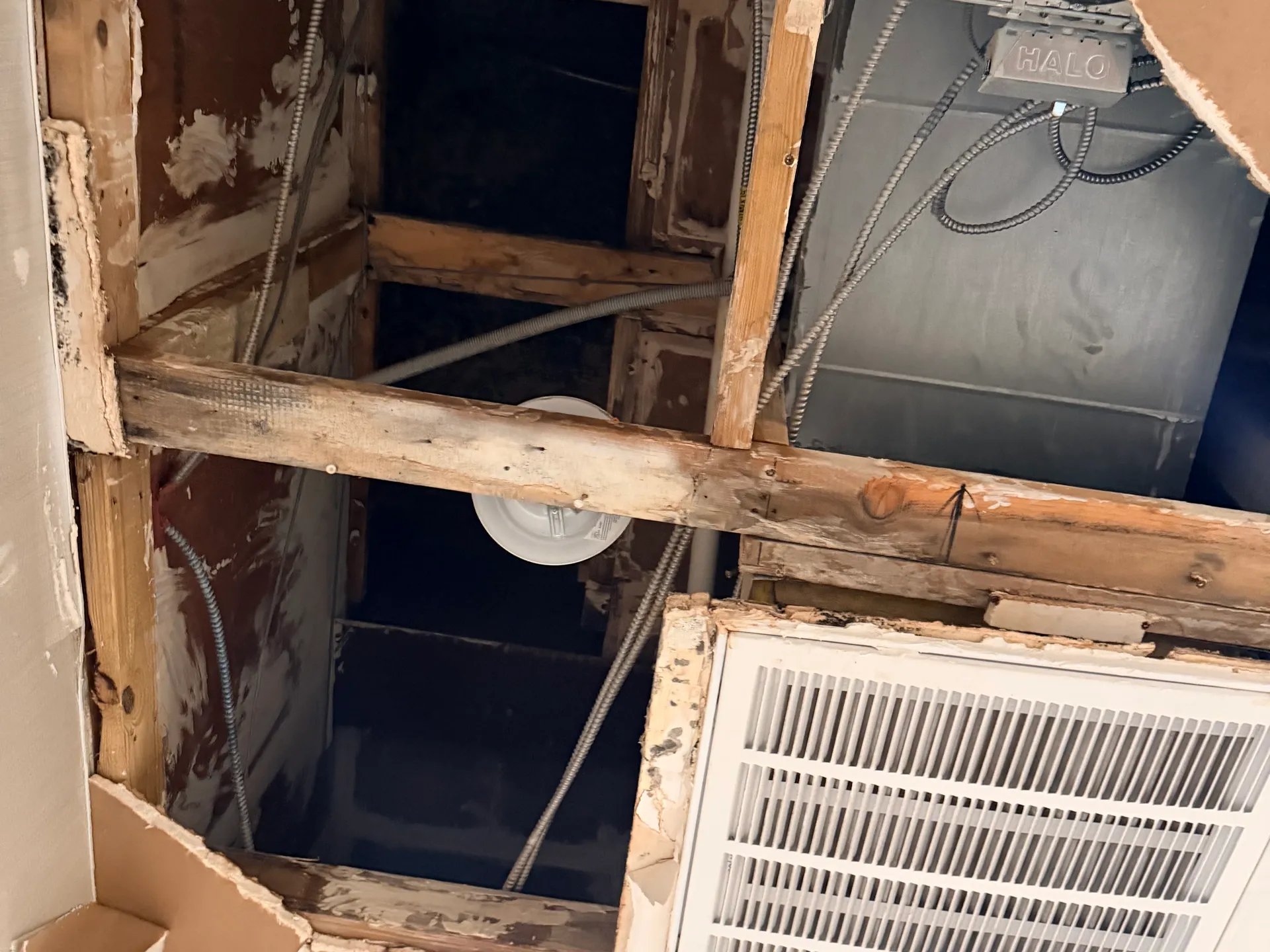
We check the insulation and drywall under the air handler, where an overflowing pan does most of its damage.
Closet and hallway floors
Units in an interior closet leak onto carpet, wood and baseboards, and the water heads for the next room.
Finding slow leaks
A drip that ran for weeks leaves damp framing behind. Moisture readings show where.
Structural drying
Drywall, framing and subfloor get dried to measured readings, not just until they feel dry.
Mold when it's already there
If a long leak has started mold in the attic or a wall, mold remediation handles that part.
Ceiling and wall repair
We rebuild the projects we restore, from a patched ceiling to new drywall and paint.
Why an AC leaks water in the first place
Your air conditioner is a dehumidifier as much as a cooler. As warm, humid air crosses the cold coil, moisture condenses out of it and drips into a drain pan, then runs out through a condensate line to the outside or a drain. In a San Antonio summer, that's a steady stream of water, and here the AC runs most of the year.
The trouble starts when that water can't leave. Common culprits:
- A condensate line clogged with algae, sludge or debris
- A rusted or cracked drain pan
- A disconnected or sagging drain line
- Ice on the coil that melts faster than the pan can drain it
The ENERGY STAR maintenance checklist says it plainly: a plugged drain can cause water damage in the house and affect indoor humidity levels. The EPA advises keeping air conditioning drip pans clean and the drain lines unobstructed and flowing properly. That's HVAC maintenance, and it belongs to your HVAC technician.
AC leaking through the ceiling from the attic
Plenty of Texas homes put the air handler in the attic. It saves floor space, and it means an overflowing pan drains straight onto the insulation and the back of your ceiling drywall. You find out when a stain shows up in the hallway or a bedroom, often right below the unit or near a supply vent.
By then the insulation has been holding water against the drywall for a while. Wet blown-in insulation gets heavy and compressed, the drywall softens, and a sagging spot can follow. If you see the ceiling bowing, keep everyone out from under it. Our ceiling water damage page covers that safety side in more detail.
Attics are hot and they don't breathe much, so moisture up there tends to linger. If a slow drip has been going long enough to start mold on the decking or framing, attic mold removal takes over that part of the job.
Closet and garage units leak onto the floor
Not every system is in the attic. An air handler in a hall closet or the garage leaks down instead, and the water goes where water goes: under the closet door, into hallway carpet and pad, under baseboards and across hardwood floors that don't forgive much. A unit on a platform in the garage can soak the drywall behind it and the stuff stored nearby.
These leaks are easy to miss because the closet door stays shut. A musty smell, a damp carpet edge in the hall or a swollen baseboard is often the first clue.
Your HVAC tech fixes the unit, and we fix what the water hit
Two different jobs, two different trades. Texas Damage Response doesn't service AC units, clear drain lines or replace pans. An HVAC technician does that.
Until they get there, turn the system off at the thermostat so the coil stops making water, and set out a bucket or towels if you can reach the drip safely. Take pictures before anything gets cleaned up. Then call us, 24/7. Our crew comes ready to work on the first visit:
- Moisture readings in the ceiling, walls and floor around the leak, including the attic insulation when the unit is up there
- Water extraction for anything standing on the floor or soaked into carpet
- Removing wet insulation and drywall that can't be dried in place
- Structural drying with monitoring until the framing and subfloor read dry
- The rebuild: ceiling drywall, texture, paint, baseboards and flooring, through our reconstruction team
Speed still matters with a "small" AC leak. The EPA says to dry water-damaged areas and items within 24 to 48 hours to prevent mold growth, and a drip in an attic can be going for days before anyone sees a mark.
Slow AC leaks and your insurance
A lot of AC leaks are slow, and that matters for a claim. The Texas Department of Insurance says most homeowner and renters policies cover sudden and accidental water damage, and that policies usually won't cover damage from gradual leaks. Whether your leak counts as one or the other is your carrier's decision.
We help document the damage and work with your insurance carrier throughout the restoration process. We don't interpret policies or negotiate with your carrier, and your deductible is yours. Read more on our insurance claims page. We handle AC leak water damage in San Antonio, Schertz, Boerne and Austin, among other towns.
Related services
Water Damage Restoration
Emergency water extraction, structural drying, moisture monitoring and complete mitigation for San Antonio homes, 24/7.
Learn moreWater Extraction
Standing water out of floors, carpet and pad, 24/7, before it soaks in any deeper.
Learn moreStructural Drying
Air movement, dehumidification and moisture monitoring that dry walls, subfloors and cabinets to a measured finish line.
Learn moreBurst Pipe Water Damage
Extraction, drying and moisture monitoring after a burst or frozen pipe.
Learn moreCeiling Water Damage
Stained, sagging or dripping ceilings dried from above, then rebuilt and painted.
Learn moreWater-Damaged Drywall
Wet walls measured, cut out where they can't be saved, dried to the studs and finished again.
Learn moreHardwood Floor Water Damage
Wet hardwood extracted, dried and measured board by board to save what can be saved.
Learn moreWater Heater Leak
Water out of the garage, closet and walls after a water heater leaks or lets go.
Learn moreWashing Machine Leak
Laundry room floods cleaned up and dried, including the rooms on the other side of the wall.
Learn moreFlood Damage Cleanup
Floodwater from outside cleaned out, contaminated materials removed, and the house dried, 24/7.
Learn moreSewage Cleanup
Sewer and drain backups contained, cleaned out, disinfected and dried, any hour.
Learn moreAttic Mold Removal
For attic leaks that ran long enough to start mold on the decking or framing.
Learn moreWater Damage Repair
Ceiling drywall, texture, paint and flooring put back once everything is dry.
Learn moreOur Process
How a water damage job runs from the first call to the finished room.
Learn more
Helpful guides
Does homeowners insurance cover water damage? What TDI says
Does homeowners insurance cover water damage? TDI says most policies cover sudden leaks, not slow ones or floods. Texas Damage Response explains the details.
Learn moreHow to choose a restoration company after water or fire damage: questions to ask
How to choose a restoration company: Texas Damage Response's checklist of questions to ask, what to get in writing and the Texas rules on deductibles.
Learn moreRenters and water or fire damage: what renters insurance usually covers
Does renters insurance cover water damage or fire damage? TDI says it usually covers your belongings, not the building. We explain what to check and do first.
Learn more
Frequently Asked Questions
Yes. Turning the system off at the thermostat stops the coil from producing more condensate, so the pan stops filling. In July that's not fun, but it keeps the leak from getting bigger.
Leave it off until an HVAC technician has cleared the drain line or fixed the pan, then call us for the water damage it left.
It can. Mold needs moisture, and a leaking pan keeps insulation, drywall and framing damp, often somewhere warm and out of sight. The EPA says to dry water-damaged areas within 24 to 48 hours to prevent mold growth.
If mold has already started, our mold remediation service handles containment, removal and cleaning of the affected areas.
No. An HVAC technician repairs the unit, the drain line and the pan. We handle the water damage around it: drying ceilings, walls and floors, then rebuilding what had to be removed.
If the leak came through the ceiling, our ceiling water damage page explains how we dry the cavity above it.
Areas we serve
From San Antonio, we dry and repair AC leak water damage in homes across these counties and cities.
AC dripping through the ceiling?
Turn the system off and call us 24/7. Your HVAC tech handles the unit, and we dry and repair the ceiling, walls and floors.