
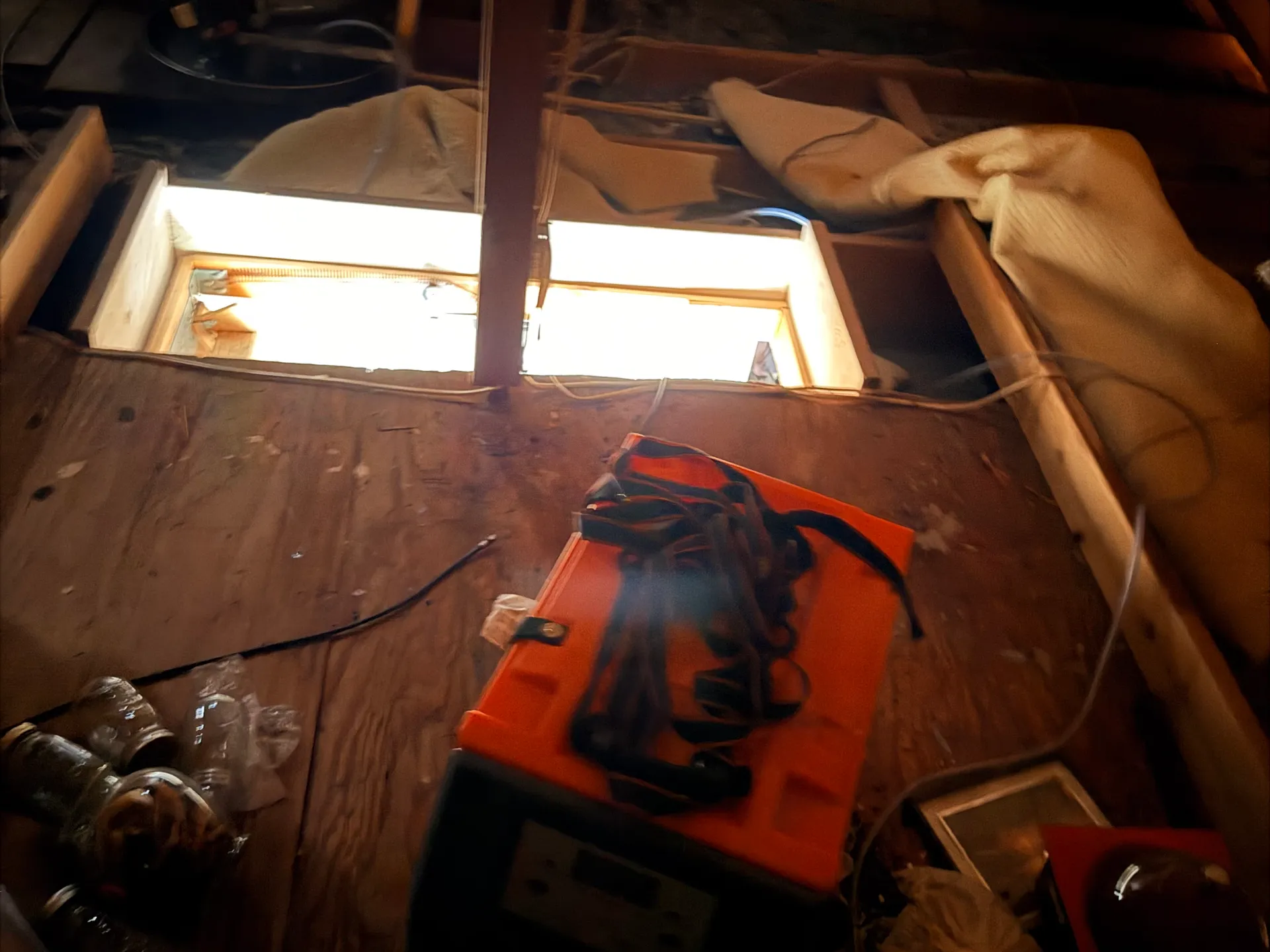
Attic mold remediation
Attic Mold Removal in San Antonio
Attic mold usually starts with a roof leak, a bath fan blowing into the attic or sweating AC equipment. We contain the attic, remove the mold from the decking and framing, clean and treat the wood, then help you find what fed it.
What attic mold removal includes
The attic closed off first
Containment keeps spores we disturb up in the attic instead of letting them drop through the ceiling hatch into the house.
Decking and rafters
Mold comes off the underside of the roof sheathing, the rafters or trusses, and the framing around them.
Wet insulation out
Insulation that soaked up a leak or grew mold doesn't clean up. It comes out so the wood under it can dry.
Cleaning and treatment
The wood that stays gets cleaned, then treated. Treatment follows removal and cleaning. It never replaces them.
The moisture source, named
We show you what's feeding the mold, so the roofer or HVAC company you hire knows exactly what to fix.
Damage documented
We help document the damage and work with your insurance carrier throughout the restoration process. Your carrier decides coverage.
Why Texas attics grow mold
A San Antonio attic in August is about as close to a greenhouse as most houses get. Heat builds under the roof all afternoon, and moist air finds its way up from the living space. Give that air a cold surface or a wet one, and you've got the two things mold wants.
The EPA is blunt about the cause: no type of mold will grow without water or moisture. So attic mold removal is never just about the stains on the wood. It's about where the water came from. In the attics we see, the answer is usually one of four things.
Roof leaks
A lifted shingle, a cracked pipe boot or failed flashing lets water drip onto the decking every time it rains. Nobody goes up there, so it can go on for months. The EPA lists roof materials above ceiling tiles, wet from roof leaks or insufficient insulation, among the places mold hides.
Bathroom and kitchen fans that end in the attic
This one surprises people. A bath fan is supposed to push steam outside, but some ducts stop short, come loose or were never run past the attic floor. Then every shower sends warm, wet air straight onto the rafters. The EPA's moisture-control guidance says to use exhaust fans in bathrooms and kitchens to remove moisture to the outside, and it adds a pointed "not into the attic."
AC equipment and ducts in the attic
Plenty of Texas homes have the air handler and the ductwork up in the attic. Cold metal and cold duct jackets sitting in hot, humid air sweat, and a clogged condensate line or a rusted drain pan adds a slow drip of its own. The EPA's guide lists condensing pipes and the inside of ductwork among the places mold hides, and attics are where a lot of that hardware lives.
Poor ventilation
Blocked soffit vents, insulation packed against the eaves or too little exhaust at the ridge can all keep humid air trapped. Ventilation problems rarely cause mold alone. They make every other moisture source worse.
How we handle attic mold remediation
The order is the same as any mold job, and there's a reason for it. The industry standard for this work, the ANSI/IICRC S520, describes the procedures to follow and the precautions to take during mold remediation. Attics just make each step more awkward: tight spaces, nails through the decking and heat that can make midday work miserable.
- Containment. The attic access gets sealed off from the rooms below, and any openings to the living space get closed. Disturbing mold releases spores, and gravity is not on your side when the mold is above your bedroom ceiling.
- Removal. Mold comes off the decking, rafters and framing. Moldy or soaked insulation and other porous material come out entirely, since the EPA says absorbent materials may have to be thrown away once they become moldy.
- Cleaning. The wood that stays gets cleaned, along with the surrounding surfaces where disturbed spores settle.
- Treatment. The affected areas get treated last. A spray-only job skips the first three steps, and we won't sell one.
If the wood is still wet, it has to dry before anything else can hold. Our structural drying service handles that with moisture monitoring, so nobody is guessing about whether the framing is dry.
The moisture source has to be fixed, and that's another trade's job
We remove the mold. We don't repair roofs, reroute duct, service air handlers or rewire fans. Those are jobs for a roofer, an HVAC company or another qualified trade, and you should hire one.
What we can do is tell you what we found. A water trail running down a rafter from a pipe boot, a bath-fan duct lying loose on the insulation, rust under the air handler. That's the information a roofer or HVAC tech needs, and it's the difference between a fix and a guess. The EPA warns that if you clean up mold without fixing the water problem, the mold will most likely come back. In an attic, skipping that step usually means paying for the same job twice.
The best attic jobs are the ones where the repair and the remediation get lined up together, so the attic is clean and the source is gone in the same stretch of weeks.
Do you need a mold test first?
We don't offer mold testing or mold assessment, and we're not going to sell you either one. Visible mold on an attic deck doesn't need a lab to confirm it. The EPA says that in most cases, if visible mold growth is present, sampling is unnecessary.
Attic mold and your homeowners insurance
Whether a claim covers attic mold usually comes down to how the water got there. The Texas Department of Insurance says most homeowner and renters policies cover sudden and accidental water damage. It also says most policies don't cover water damage from gradual leaks or seepage, and that includes damage from mold. A roof that's dripped every storm for a year can land on the wrong side of that line.
Your policy and your carrier decide what's covered, and the deductible is yours. We don't interpret policies or negotiate claims. We help document the damage and work with your insurance carrier throughout the restoration process, and our insurance claims page explains where our part stops.
Attic mold removal around San Antonio
Texas Damage Response is veteran-owned and family-operated, an IICRC-certified company based in San Antonio. We take attic mold calls 24/7 across the metro and out to Boerne, New Braunfels and Schertz. The crew shows up ready to work, so containment can start on the first visit instead of after a second appointment.
If remediation means pulling insulation or a stretch of ceiling drywall below the attic, we can put that back too. Our reconstruction team rebuilds the projects we restore.
Related services
Mold Remediation
Safe containment, removal, cleaning and treatment of mold-affected areas.
Learn moreStructural Drying
Drying wet framing and decking, with moisture monitoring before anything gets closed back up.
Learn moreAC Leak Water Damage
When the air handler's drain line or pan lets go and water reaches the ceiling below.
Learn moreReconstruction
Insulation, ceiling drywall and finishes put back after the mold work is done.
Learn more
Helpful guides
Mold remediation cost: industry averages and what changes the price
Mold remediation cost turns on how much area the mold covers, how hard it is to reach and what has to come out. The published averages, and how to read a quote.
Learn moreMold removal vs mold remediation: what's the difference?
Mold removal vs mold remediation: removal is one task, remediation is the whole job built around it. Texas Damage Response explains why the difference matters.
Learn more
Frequently Asked Questions
It can affect people in the house, even though it's up above the ceiling. Air moves between the attic and the living space through the hatch, light fixtures and gaps in the ceiling, and any ducts running through the attic make that easier. People with asthma, allergies or weakened immune systems tend to feel it most.
We're a restoration company, not a medical one, so if someone at home has symptoms, talk to their doctor. On the house side, the answer is the same whatever the mold looks like: remove it and fix the moisture behind it.
We'd advise against it. Spraying may change how the wood looks, but the EPA says dead mold may still cause allergic reactions in some people, so killing mold isn't the same as removing it. And a spray does nothing about the leak, the bath fan or the sweating duct that fed it.
Attic work also adds its own risks: heat, poor footing on joists, and spores drifting down into the house if the area isn't contained.
No. We don't do roofing, HVAC, duct or electrical repair. Those belong with a roofer, an HVAC company or another qualified trade.
What we do is remove the mold, dry what's wet, and show you exactly where the water is coming from so the repair goes to the right place. If insulation or drywall comes out during remediation, our reconstruction team can put it back.
Usually not, and we don't offer testing. The EPA says that when mold is visible, sampling is unnecessary in most cases, and the CDC says it does not recommend mold testing.
Areas we serve
From San Antonio, we handle attic mold removal across these counties and cities.
Found mold on the attic decking?
Call 24/7. We'll contain the attic, remove the mold from the wood and show you what's been feeding it.