Mold
Mold removal vs mold remediation: what's the difference?
Mold removal vs mold remediation: removal is one task, remediation is the whole job built around it. Texas Damage Response explains why the difference matters.
By Ricky Ballard7 min read
Mold removal is one task: getting mold off a surface or out of a material. Mold remediation is the whole job built around that task, from closing off the area before anyone touches the mold to fixing the moisture that let it grow.
Plenty of contractors use the two words for the same service, and on its own that's not a problem. The mold removal vs remediation question starts to matter when a quote uses one word and covers less than the other, or when someone promises a result nobody can deliver. The sections below show how to tell them apart, and what each word should mean for your house.
Mold removal vs mold remediation, side by side
The simplest way to see the difference is to line up what each word covers. Removal describes an action. Remediation describes a process with a beginning, a middle and an end. The EPA uses the word that way in its mold remediation guide, which says the purpose of mold remediation is to remove the mold to prevent human exposure and damage to building materials and furnishings.
That definition puts removal at the center of remediation, not in competition with it. What remediation adds is everything that makes the removal last: containment before the work starts, cleaning after it, and a fix for the water or humidity that fed the mold in the first place.
| Question | Mold removal | Mold remediation |
|---|---|---|
| What it means | Getting mold off a surface or out of a material | The full job: containment, removal, cleaning and treatment, plus the moisture behind the mold |
| Containment | Not part of the word | Comes first, to limit the release of mold into the air and surroundings (EPA) |
| Porous materials | Depends on who's doing the work | Often cut out, since the EPA says moldy absorbent materials such as ceiling tiles and carpet may have to go |
| The moisture source | Not part of the word | Part of the plan, which the EPA says should include steps to fix the water or moisture problem |
| When it ends | When you can't see the growth anymore | When someone has fixed the moisture problem and no visible mold, mold-damaged materials or moldy odors remain (EPA) |
| Can it remove every last spore? | No | No, and the EPA explains why |
Why nobody can promise every last spore
"It is impossible to get rid of all mold and mold spores indoors," the EPA says. Spores float in indoor air and settle in house dust, the EPA explains, and they don't grow unless they find moisture. That's not a loophole in remediation. It's the reason remediation spends as much effort on moisture as on mold.
It also tells you how to read certain promises. "100% mold removal." "Zero spores left." "Every spore, gone." Taken literally, none of those can happen, by the EPA's own account. A better promise sounds smaller and means more: the visible mold and the materials it ruined come out, what stays gets cleaned, and the moisture problem gets fixed so the spores that remain have nothing to grow on.
Killing mold isn't the same as getting rid of it
A third word sneaks into a lot of mold conversations: kill. Sprays, foggers and bleach all get sold on that promise, and it's easy to see the appeal, since spraying a wall takes minutes and feels like progress. The trouble is what stays behind. The EPA says dead mold may still cause allergic reactions in some people, so killing it isn't enough. It has to come out.
The EPA's remediation guide goes a step further: "It is necessary to clean up mold contamination, not just to kill the mold." In the next line, the EPA gives the reason: "Dead mold is still allergenic, and some dead molds are potentially toxic." A kill-only job leaves that dead mold right where it was, in the wall or the carpet pad, which makes it neither removal nor remediation.
That's why treatment comes last in a remediation job, after removal and cleaning, and never in place of them. Bleach has limits of its own, and our post on whether bleach kills mold covers them. If you do clean with bleach, the CDC says never to mix it with ammonia or other cleaners, because the mix produces a poisonous gas.
Three situations, three different jobs
Labels matter less than the situation in front of you. Three common cases show how far apart the jobs can get, from a quick scrub on a bathroom tile to a project that has to start with drying.
Spots on a hard surface. Dark specks on tile grout or a window sill are the simplest case. The EPA's advice for hard surfaces is to scrub the mold off with detergent and water, then dry it all the way. Removal really is the whole job here, as long as the moisture habit behind it changes too. Run the bathroom fan, wipe the sill, fix the drip.
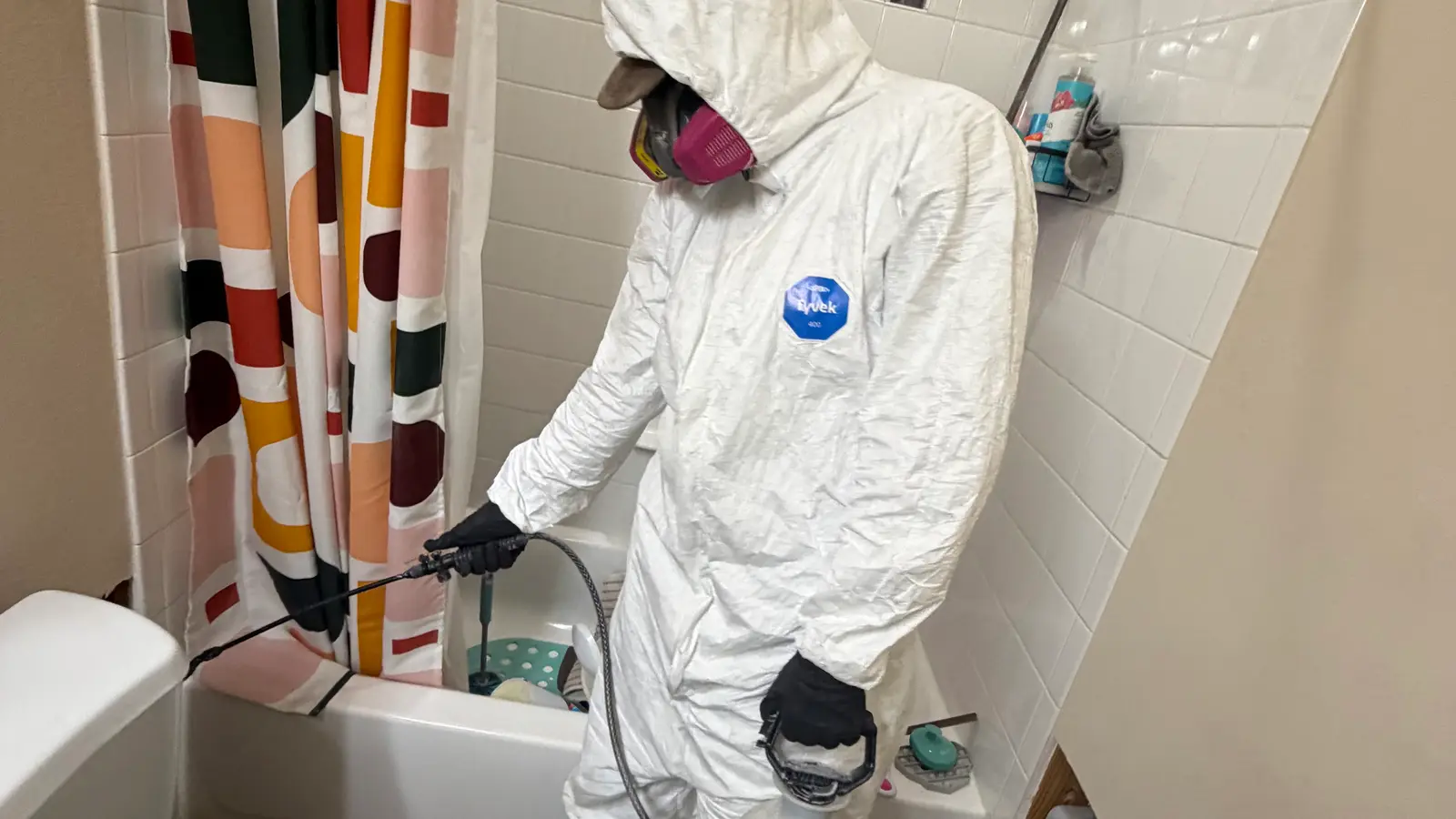
Mold on drywall after a slow leak. Drywall is porous, and the EPA warns that you may have to throw out absorbent materials once they turn moldy. The mold you can see may not be all of it, either. It can spread along the back of the drywall and into the wall cavity, and opening that wall disturbs it. The EPA notes that even pulling off wallpaper with mold underneath can lead to a massive release of spores. This is remediation: contain the area, cut out the damaged section, clean and treat what stays, and get the leak repaired by the right trade.
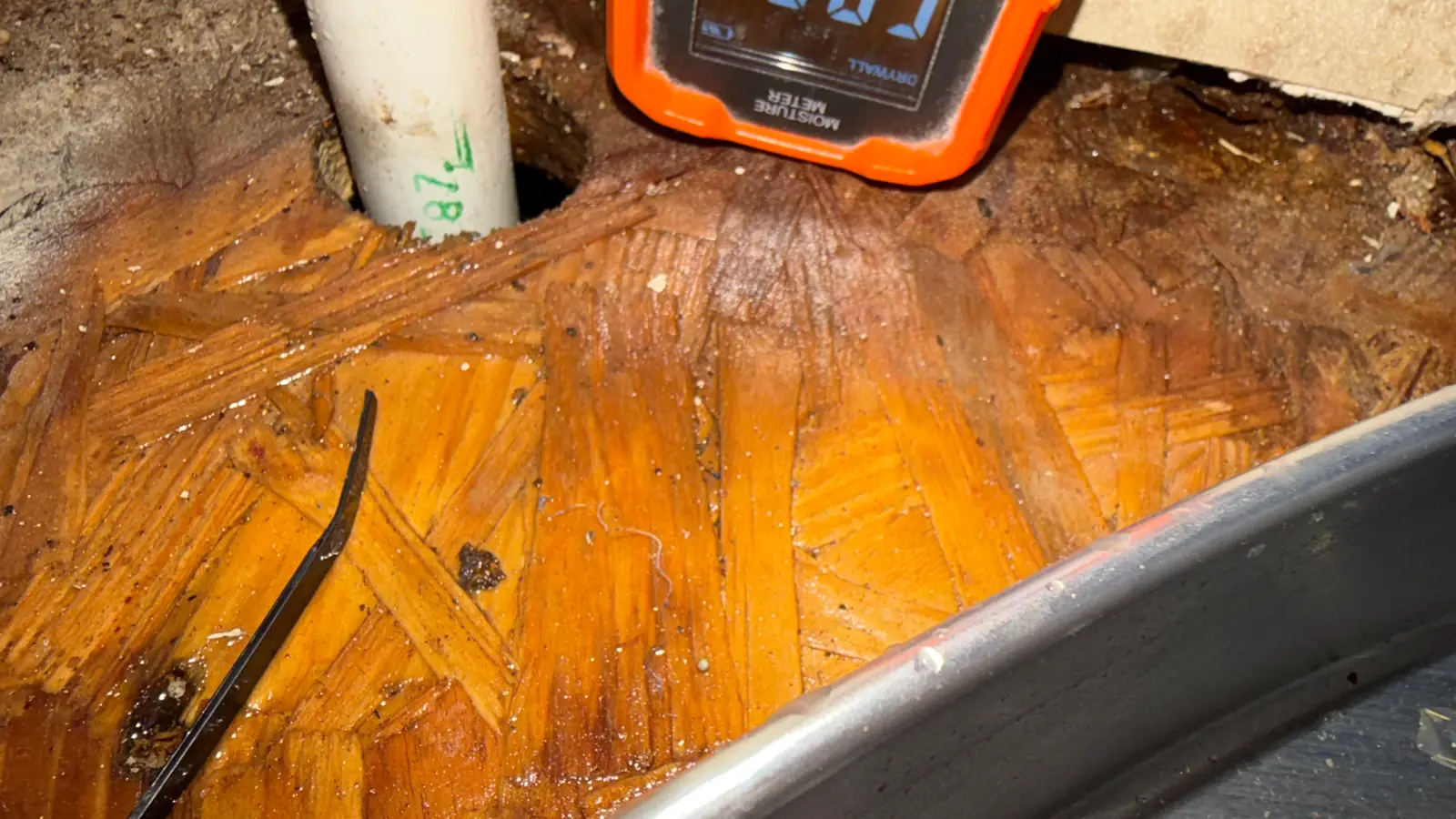
Mold after a burst pipe soaked the floor. Here the water comes first. The EPA says to dry water-damaged areas and items within 24 to 48 hours to prevent mold growth, so the clock starts the moment the pipe lets go. Before any mold work can end, the wet carpet pad, subfloor and lower drywall have to dry out, which is where drying the moisture source comes in. If mold has already started, remediation and water damage work run together.
What finished looks like
Removal ends when you can't see the mold anymore. Remediation has a higher bar. The EPA's remediation guide lists what should be true at the end: the water or moisture problem fixed for good, no visible mold, no mold-damaged materials and no moldy odors. The EPA adds that people should be able to occupy or re-occupy the space without health complaints or physical symptoms.
Then the EPA says something refreshingly honest: "Ultimately, this is a judgment call; there is no easy answer." We like that line. It puts the weight where it belongs, on whether the moisture problem is really gone and whether the space stays dry and smells clean in the weeks after the crew leaves.
A musty smell that comes back later is worth taking seriously. The EPA says you may suspect hidden mold if a building smells moldy but you can't see the source. In that case, the more useful question is where the water is getting in now.
How we use the words
On our mold remediation and mold removal page, the two terms name one job, done in a fixed order: containment, removal, cleaning and treatment. We use both words because people search for both, and because the job includes both. The moisture is part of it too. If the walls or floors around the mold are still wet, drying comes first, and the leak itself goes to the right trade, like a plumber for a broken pipe. When mold turns up during a water damage job, remediation becomes one step in our restoration process rather than a separate project.
Texas Damage Response is a veteran-owned and operated San Antonio company with a line that's open 24/7. If you're seeing or smelling mold, call us or send a request with a short description of where it is. Wondering about price? Our guide to mold remediation cost covers the published averages and what moves them. And if your job is already on the calendar, read up on how to prepare your home for mold remediation.