
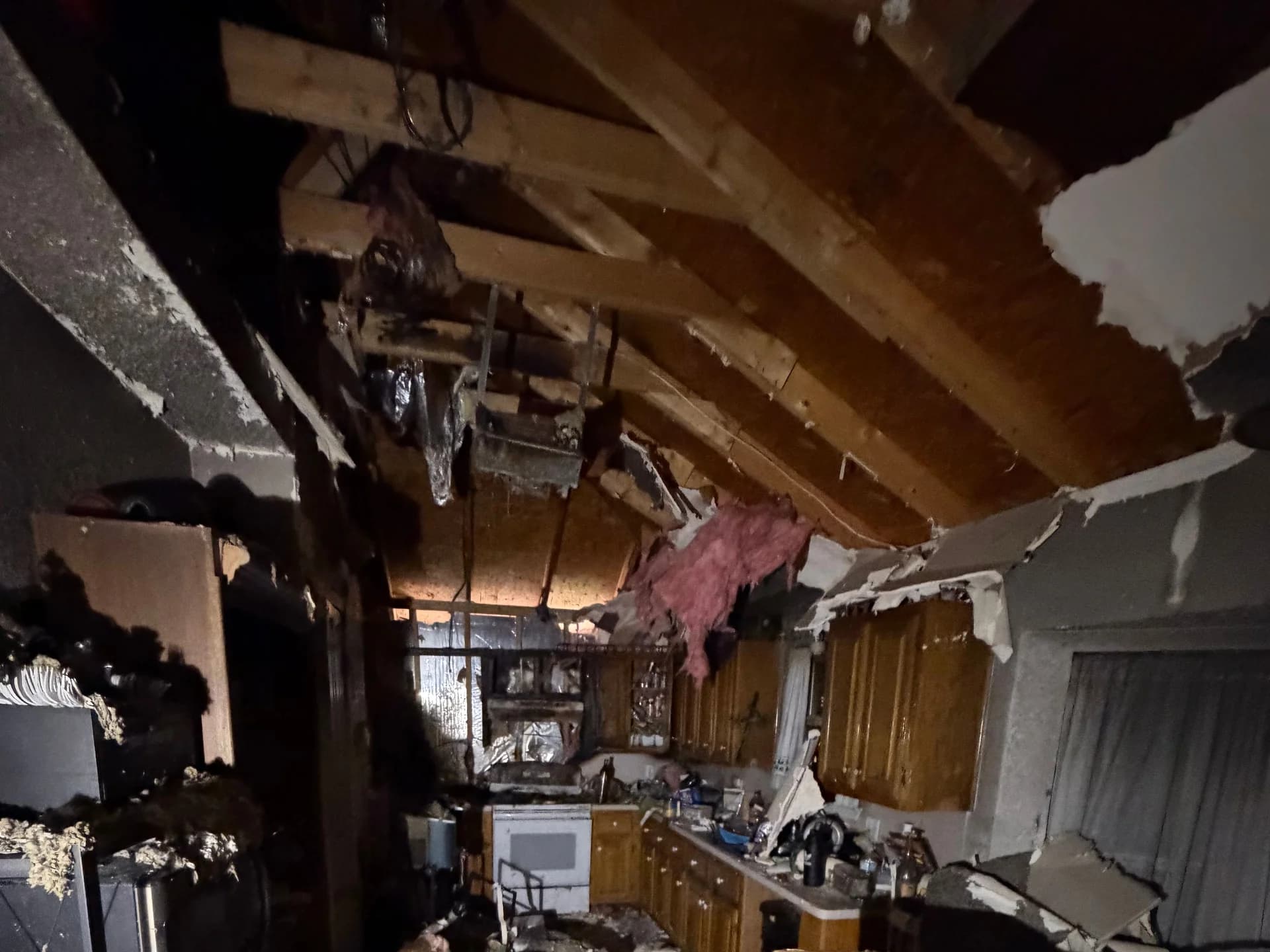
Walls and ceilings after a fire
Fire and Smoke Damaged Drywall in San Antonio
After a fire, some drywall can be cleaned, some has to be dried, and some has to go. We sort out which is which, seal what stays against odor, then hang, finish and paint the new board.
What fire damaged drywall work covers
Burned and charred board
Drywall that charred, blistered or went soft from heat gets cut back to sound material and replaced.
Smoke and soot on walls
Stained walls and ceilings that are still solid get cleaned of soot and smoke residue instead of torn out.
Board soaked by the hoses
Drywall the fire department's water reached gets dried or cut out, the same as any other water damage.
Odor in the walls
We check the board and the insulation behind it, because both can hold smoke odor after the surface looks clean.
Sealing before paint
Cleaned walls get an odor-blocking primer before the finish coats, so stains and smell are less likely to bleed back through.
Hang, finish, texture and paint
New board goes up, gets taped and finished, matched to the texture around it and painted.
Three kinds of fire damaged drywall
Walk through a house the day after a fire and the drywall tells three different stories. Near the fire, it's burned. A few rooms away, it's gray with smoke and soot. And anywhere the fire department sprayed, or where their water ran down the inside of a wall, it's wet. Each one gets handled differently, and most fires leave some of all three.
- Burned or heat-damaged. Charred paper, blistered paint, board that's crumbly or soft when you press on it. That drywall comes out. Cleaning can't fix board the heat has already broken down.
- Smoke and soot stained. The wall is solid, but it's dull, gray or streaked, often darker near the ceiling and around outlets and vents. This is the drywall that can often be cleaned and kept.
- Soaked by firefighting water. Swollen, stained from below, sagging on a ceiling. That's water damage on top of the fire, and it follows water damage rules.
Before anyone sorts anything, the house has to be safe. The U.S. Fire Administration's After the Fire guide says not to enter a damaged home unless the fire department says it's safe. Don't be surprised to find holes in a few walls when you do go in. The same guide explains that firefighters may cut into walls to make sure the fire is completely out and not hidden inside them.
Smoke damaged drywall: when it can be cleaned
A lot of smoke damage on walls is cleanable. If the board is firm and the residue is sitting on the paint, cleaning it off and sealing it is usually the better path than tearing out a wall that's structurally fine. It keeps more of your house intact, too.
What decides it is how the wall responds to cleaning. Soot from different fires behaves differently. A fast, hot fire tends to leave a dry, powdery soot. Burning plastic, foam or cooking oil leaves something darker and oilier that smears. They don't come off the same way, which is why we look at the residue before picking a method. If a wall still looks stained or still smells after a proper cleaning, that's usually the sign it should be replaced.
Why wiping soot off your walls can make it worse
The first instinct is a bucket and a sponge. Please hold off. An expert answer on Ask Extension, drawn from Cornell University faculty, puts it simply: soot is a greasy substance, so be careful not to spread the stains. A wet rag on soot tends to drag it into long gray streaks and push it into the paint and the paper face of the board.
The University of Florida's disaster handbook recommends a chemical sponge or another non-water-based cleaner for soot on walls, and warns that water-based cleaners on plaster cause the stain to bleed into the wall. In practice, dry removal comes first and anything wet comes after. If you've already scrubbed a patch, don't worry about it. Just stop there, take a photo and let us look.
Burned drywall gets replaced
Drywall that burned, charred or got cooked by heat comes out. We cut it back past the damage to sound board, and we look at what's behind it while the wall is open: the studs, the insulation and how far the smoke got into the cavity.
Opening a wall often turns up wiring, outlet boxes and switches near the fire. We don't do electrical work, so anything electrical inside an opened wall is for a licensed electrician to check before new drywall covers it up. If framing burned too, that's part of our fire damage repair work, and it gets sorted out before any new board goes on.
Drywall soaked by the fire department's water
Putting out a house fire takes a lot of water, and drywall soaks it up from the bottom and from above. A ceiling under a soaked attic can sag. Walls wick water up from wet carpet. Once that's happened, it's a water damage job inside the fire job.
The EPA says to dry water-damaged areas within 24 to 48 hours to prevent mold growth, so we don't let wet walls wait on the smoke cleanup. Board that can be dried gets dried, and board that's too far gone gets cut out above the wet line so the cavity can dry. Our water damaged drywall page goes through that process in detail.
If firefighters broke windows or opened the roof to vent the smoke, which USFA says they may do, the house needs to be closed up before anything inside can dry. Our board-up and roof tarping service covers that temporary protection.
Smoke odor held in drywall and insulation
Drywall is gypsum wrapped in paper, and paper takes on smoke. So does the insulation behind it. The University of Florida handbook notes that smoke can permeate walls and other surfaces, and that if it isn't properly removed, smoke odor comes back from time to time, especially in warm or damp weather. In San Antonio, that describes most of the year. A wall can look clean in October and smell like a campfire the first hot week of spring.
That same handbook says insulation may retain odors. When we have a wall open, we check the insulation, and smoke-soaked insulation comes out rather than getting closed back in. Our smoke odor removal page covers the rest of the house, and how to clean the residue first and treat the odor second.
Sealing cleaned walls before repainting
On walls that stay, the step between cleaning and paint is a sealing primer. Sealing smoke-exposed walls with an odor-blocking primer before the finish coats is common practice in this work, and Trim-Tex, a maker of drywall finishing products, points to primers that seal in odors as part of smoke repairs. Regular wall paint over smoke residue tends to let stains and smell come back through.
Primer goes on after the residue comes off, never instead of cleaning, and we won't promise it makes any smell disappear for good. What it does is give a cleaned wall its best chance of staying that way.
Rebuilding the walls: hang, finish, texture and paint
Once the burned and soaked board is out, the cavities are dry and the cleaned walls are sealed, the rebuild starts. We rebuild the projects we restore, so the crew that did the cleanup is the one that hangs the new drywall.
- Hang. New board goes up on sound framing, with insulation replaced where it came out.
- Tape and finish. Joints and seams get taped and mudded, and the patches are blended into the wall that stayed.
- Texture. We match the texture on the rest of the room, whether that's orange peel, knockdown or smooth, so the repair doesn't stand out.
- Prime and paint. Primer, then paint, on the new board and the sealed walls together, so the room finishes as one surface.
The ANSI/IICRC S700, the industry standard for professional fire and smoke damage restoration, covers restoration cleaning and fire odor management, and it leaves reconstruction outside its scope. That's the line we work along too: cleanup by the standard, then the rebuild through our reconstruction team. While the walls are open and drying, furniture and belongings can go out through contents pack-out, wrapped, inventoried and stored until the rooms are ready.
Insurance for fire damaged drywall
Your policy and your carrier decide what's covered and what gets paid, including whether a wall gets cleaned or replaced on the claim. The deductible is yours. We don't interpret policies, and we aren't adjusters. We help document the damage and work with your insurance carrier throughout the restoration process, with photos of each wall before it's cleaned or cut out. Our insurance claims page explains our part.
Texas Damage Response is an IICRC-certified company, veteran-owned and family-operated, based in San Antonio and available 24/7. Work starts on the first visit. If the fire just happened, our fire damage restoration and fire damage cleanup pages cover the rest of the house, and our kitchen fire cleanup page covers the grease and soot a stovetop fire leaves on walls and cabinets.
Related services
Fire Damage Restoration
Cleanup for fire, smoke, soot and odor damage, including the water used to put the fire out.
Learn moreFire Damage Cleanup
The hands-on work after a house fire: debris out, soot and smoke residue cleaned, the firefighting water dried.
Learn moreSmoke Odor Removal
Smoke odor removal after a fire: we clean the residue behind the smell, then treat the odor that's left.
Learn moreKitchen Fire Cleanup
Grease, soot and smoke odor cleaned out of the kitchen and the rooms around it, then the damaged parts rebuilt.
Learn moreWater Damaged Drywall
Drying or cutting out drywall the fire department's water soaked.
Learn moreFire Damage Repair
Framing, cabinets, flooring and finishes rebuilt after the cleanup.
Learn moreBoard-Up and Roof Tarping
Temporary protection over broken windows and roof openings so the house can dry.
Learn moreContents Pack-Out
Belongings wrapped, inventoried and stored while the walls are opened and rebuilt.
Learn more
Helpful guides
Space heater and fireplace safety for Texas cold snaps
Space heater safety for Texas cold snaps: the 3-foot rule, switching off at bedtime, yearly chimney checks, and the heat sources to skip when the power goes out.
Learn moreFire damage restoration cost: what cleanup costs and what to do first after a house fire
Fire damage restoration cost explained: the national averages, what moves the price and what to do first after a house fire, from Texas Damage Response.
Learn more
Frequently Asked Questions
Often, yes. If the board is still firm and the soot and smoke residue is sitting on the surface, it can usually be cleaned, sealed with an odor-blocking primer and repainted.
Drywall that charred, blistered or went soft from heat can't be cleaned back to sound, and it gets replaced. So does board that still stains or smells after a proper cleaning.
Usually not. Most fires leave a mix: burned board near the fire that has to come out, smoke-stained walls farther away that can often be cleaned, and wet drywall wherever the fire department's water reached.
We sort each wall into one of those groups, then replace only what needs replacing. We rebuild the projects we restore, so the same crew hangs and finishes the new drywall.
Dry removal first. Soot is greasy, and a wet rag tends to spread it into streaks and push it into the paint. University of Florida extension guidance recommends a chemical sponge or another non-water-based cleaner for soot on walls.
If the soot covers more than a small patch, or it came from burning plastic or a grease fire, it's worth having it looked at before you start. Smears are often harder to fix than the original soot.
Not by itself. Paint over smoke residue tends to let stains and odor bleed back through.
The wall has to be cleaned first, then sealed with an odor-blocking primer, then painted. If a wall still smells after cleaning, the board or the insulation behind it may need to be replaced instead.
Because some of the smoke is still in the drywall or the insulation behind it. University of Florida extension guidance notes that smoke odor that wasn't properly removed comes back from time to time, especially in warm or damp weather.
Heat warms the wall and the smell comes out. The fix is cleaning the residue, sealing what stays and replacing the board or insulation that's holding the odor.
Your policy and your carrier decide that, and the deductible is yours. We don't interpret policies or tell you what a claim will pay.
We help document the damage and work with your insurance carrier throughout the restoration process, including photos of each wall before it's cleaned or replaced.
Areas we serve
From our San Antonio base, we restore and rebuild fire damaged drywall across these counties and cities.
Smoke on the walls, or worse?
Call 24/7 before you start scrubbing. We'll sort what can be cleaned from what has to go, then rebuild the walls.