
Fire Damage Restoration
Smoke Odor Removal After a Fire
Smoke odor removal for San Antonio homes after a fire. We clean off the smoke and soot residue that keeps the smell coming back, then work on the odor that's left.
What smoke odor removal includes
Residue cleanup first
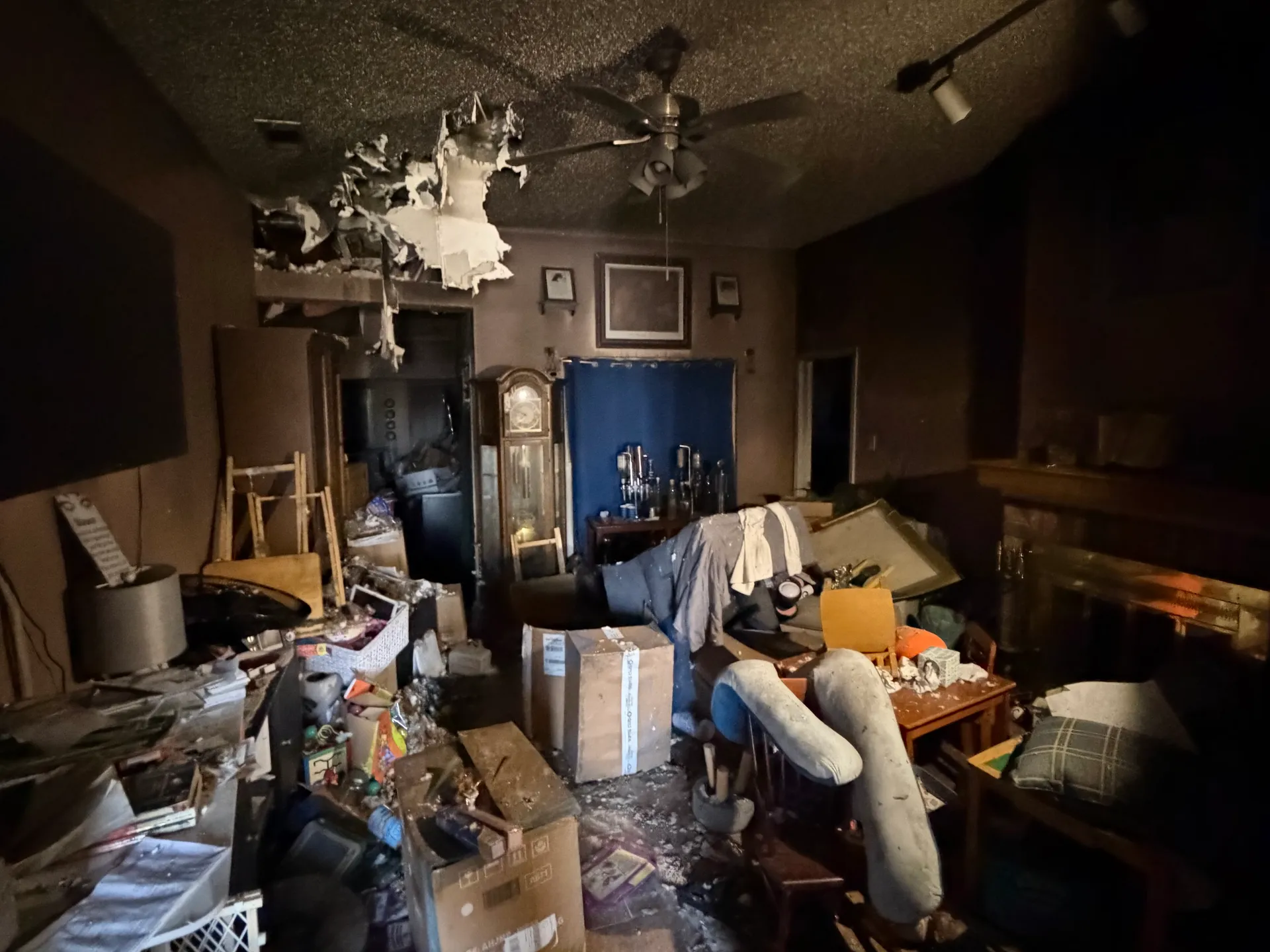
We clean smoke and soot residue off walls, ceilings and other surfaces. That residue is what keeps putting the smell back into the air.
Every room the smoke reached
Smoke rarely stays where the fire was. We follow it into the rooms it drifted to, not just the one that burned.
Documentation for your claim
We help document the damage and work with your insurance carrier throughout the restoration process.
Why smoke odor lingers after a fire
Smoke odor lingers because it isn't really an air problem. It's a residue problem. Smoke is full of fine particles and odor-causing compounds, and they settle on every surface they reach and soak into anything porous: drywall, wood, insulation, carpet, upholstery, clothing. As long as that residue stays in the house, it keeps giving off odor.
Smoke also travels. It drifts down hallways and into closets, cabinets and rooms the flames never touched. Kitchen fires are the everyday example. The U.S. Fire Administration calls cooking "by far, the leading cause of home fires," and a fire that never leaves the stovetop can still leave a back bedroom smelling like smoke.
Clean the residue first, then deodorize
Order matters more than any product. Deodorizing a room that still holds smoke residue is like mopping while the sink overflows, because the source keeps putting odor back. The residue has to come off first, from walls, ceilings and every other surface it reached. Then deodorizing can deal with what's left.
That's how we approach smoke odor removal. We clean the smoke and soot residue a fire leaves behind, then work on the remaining odor. If water from the fire hoses soaked floors and walls, our water damage restoration service handles extraction and drying on the same job.
Why sprays and candles don't fix it
Air fresheners, scented candles and odor sprays don't remove anything. They lay a stronger smell over the smoke. Once the fragrance fades, the smoke smell is still there, now with a note of vanilla. Masking is the tempting shortcut after a fire, and it doesn't hold up.
Your belongings hold smoke too
Couches, mattresses, curtains, rugs, clothes and books are porous, so they soak up smoke the same way drywall does. Cleaning saves some of them. Not all. Before anything goes to the curb, though, remember one line from the Texas Department of Insurance's wildfire claim tips: "Don't throw anything away until your insurance company tells you to."
Our contents pack-out service packs, inventories, moves and stores your belongings while we clean the house, then brings them back. That clears the work area. It also gives you an inventory of what you had. TDI's tips also ask for a list of damaged property, and that inventory is a good place to start one.
Insurance, cost and getting started
The Texas Department of Insurance's home insurance guide lists fire and the sudden, accidental release of smoke among the damages most policies cover. Your policy and your carrier decide what your claim pays for. The deductible is yours: TDI defines it as "the amount of a claim that you must pay yourself." We help document the damage and work with your insurance carrier throughout the restoration process. We aren't public adjusters, and we don't interpret policies.
What about cost? Fixr's national cost guide puts professional smoke removal, meaning room cleanup, odor removal and deodorizing, in this range (Industry average: $200–$1,200 per home), and it prices soot cleanup separately. That's a national market figure, not our price.
Texas Damage Response is veteran-owned and operated, based in San Antonio and available 24/7. Our fire damage restoration page covers the rest of the cleanup a fire leaves behind. Call (210) 726-4411 or request service.
Related services
Fire Damage Restoration
Cleanup for fire, smoke, soot and odor damage, including the water used to put the fire out.
Learn moreFire Damage Cleanup
The hands-on work after a house fire: debris out, soot and smoke residue cleaned, the firefighting water dried.
Learn moreKitchen Fire Cleanup
Grease, soot and smoke odor cleaned out of the kitchen and the rooms around it, then the damaged parts rebuilt.
Learn moreFire-Damaged Drywall
Burned drywall cut out, smoke-stained walls cleaned and sealed, soaked board dried or replaced, then new drywall hung and finished.
Learn moreContents Pack-Out
Packing, inventory, moving, storage and return of your belongings while the house gets cleaned.
Learn moreWater Damage Restoration
Water extraction and structural drying when firefighting water soaks floors and walls.
Learn more
Helpful guides
Smoke odor removal cost: what professional deodorizing usually costs
Smoke odor removal cost depends on how far smoke spread, what it soaked into and the soot it left. Texas Damage Response breaks down the national average.
Learn moreSpace heater and fireplace safety for Texas cold snaps
Space heater safety for Texas cold snaps: the 3-foot rule, switching off at bedtime, yearly chimney checks, and the heat sources to skip when the power goes out.
Learn moreFire damage restoration cost: what cleanup costs and what to do first after a house fire
Fire damage restoration cost explained: the national averages, what moves the price and what to do first after a house fire, from Texas Damage Response.
Learn more
Frequently Asked Questions
Often, yes, though no one can promise it before seeing the house. When the residue comes out of the surfaces and materials holding it, the smell usually goes with it.
The hard cases are porous materials that soaked up heavy smoke, like insulation or carpet padding. Cleaning can't always reach that deep. Sometimes a material has to go, and anyone who promises the smell will be gone before they've walked through your house deserves some skepticism.
As long as the residue stays. Smoke odor doesn't wear off on a schedule, because it comes from residue on surfaces and inside porous materials, and that residue won't leave on its own. Airing the house out can make the smell fade for a while. Close it back up, or let a hot afternoon warm the walls, and the smell returns.
Waiting it out rarely works. Getting the residue out, or the material holding it, is what ends it.
Not by itself. Fresh air thins out the odor floating in the room, which helps for an afternoon, but it never touches the residue on walls, ceilings, carpet and furniture. Shut the windows and the smell builds right back up.
San Antonio adds a practical limit. For much of the year, it's too hot to leave a house open for long. Ventilation helps while the cleanup happens, but it isn't a substitute for it.
Smoke smell still hanging on?
Call any time, day or night. We start with the residue behind the smell, not a can of air freshener.