
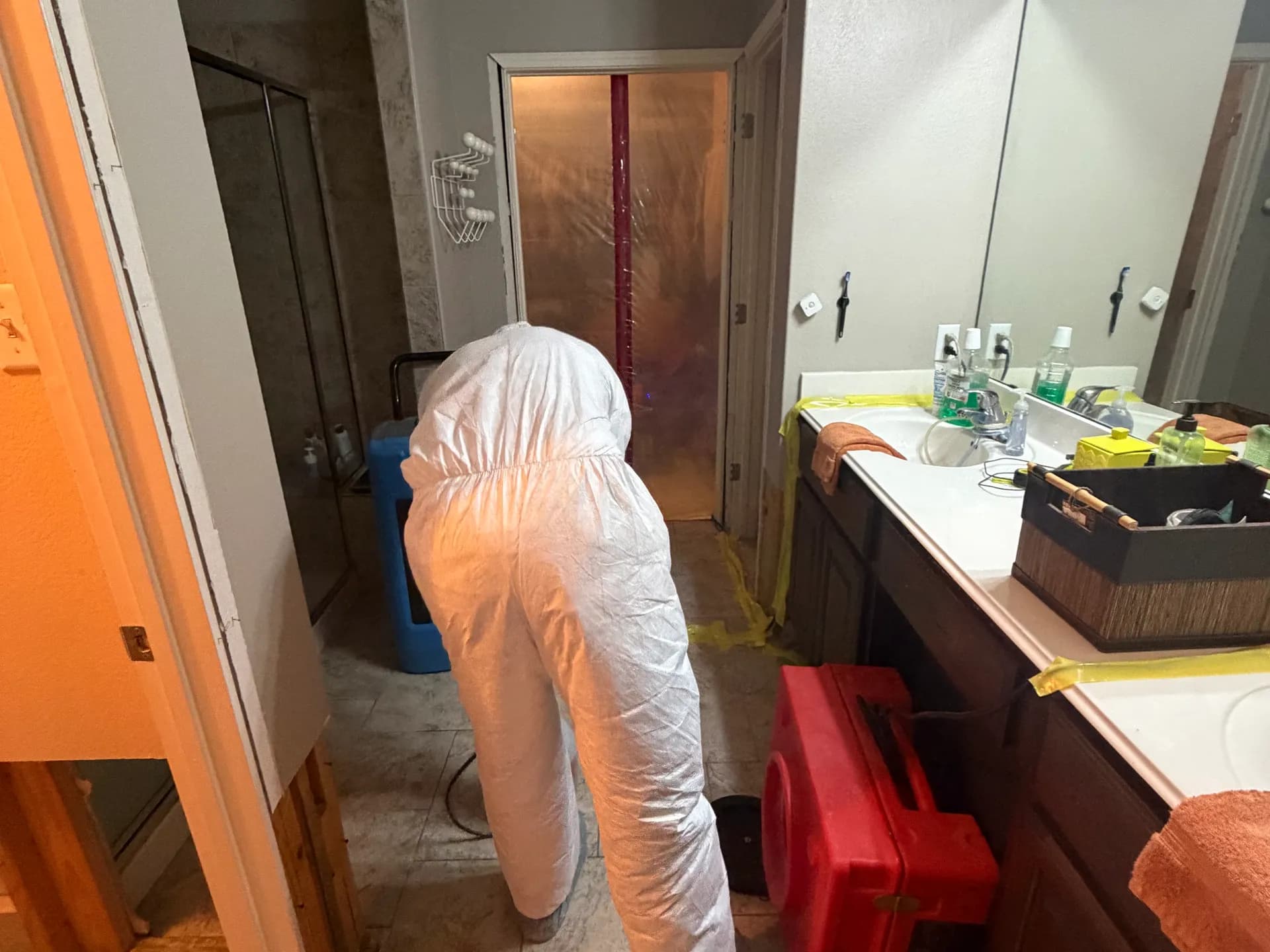
Category 3 water inside the house
Sewage Backup Cleanup in San Antonio
Sewage coming up through a floor drain, tub or toilet is contaminated water, and it needs more than a mop. Once a plumber has the line, we contain the area, remove what the sewage soaked, clean and disinfect, and dry what's left, 24/7.
What sewage backup cleanup includes
24/7 response
Backups happen at night and on holidays as often as any other time. Call any hour, and the crew arrives ready to start.
Containment first
We close off the affected rooms so the cleanup doesn't track sewage into the parts of the house it never reached.
Contaminated materials out
Carpet, pad, the lower section of soaked drywall and anything porous the sewage reached get removed and bagged.
Cleaning and disinfecting
Floors, tile, tubs and the framing left in place are cleaned and then disinfected.
Drying, verified by readings
Structural drying follows, and moisture readings decide when the walls and floors are dry.
Documentation
We help document the damage and work with your insurance carrier throughout the restoration process.
Why a sewage backup is Category 3 water
The industry standard for water damage, the ANSI/IICRC S500, sorts water by how contaminated it is, and sewage sits in the worst group. Restoration & Remediation magazine summarizes Category 3 as grossly contaminated water that can contain pathogenic, toxigenic or other harmful agents, and its examples start with sewage and toilet backflows that originate from beyond the toilet trap, regardless of visible content or color.
That last part matters. Water that rises out of a floor drain or shower can look fairly clear and still count as Category 3, because of where it came from. Whether it's a few gallons in a bathroom or a few inches across a hallway, the cleanup follows the same rules.
Sewage coming up the drain? Do this first
- Stop sending water down. Every flush, shower and load of laundry goes into the same blocked line and can come right back up. Hold off until a plumber clears it.
- Get people and pets out of the area. Close the doors to the affected rooms if you can do it without walking through the water.
- Stay away from wet outlets and cords. The CDC says never to turn power on or off, or use electrical tools, while standing in water.
- Call a plumber. In San Antonio, SAWS tells customers to call a licensed plumber to televise the line and clear any blockage on the homeowner's side of the main, and to report the backup to SAWS so the utility can check its side.
- Take photos of the water, the fixtures it came from and anything it soaked, before cleanup starts.
Then call us. We're available 24/7 and come ready to work on the first visit.
The plumber clears the line, and we clean up the house
Texas Damage Response doesn't do plumbing. We don't clear lines, run cameras or repair laterals. A licensed plumber handles the blockage, and SAWS takes care of problems on its side of the main.
The mess inside is ours. SAWS's own backup page says that if you need clean-up assistance, call a remediation (cleaning) company, and that's the work we do. If you're outside SAWS territory, in Schertz, Cibolo or New Braunfels for example, your own city or utility handles its side, and the cleanup inside the house is the same.
How sewage cleanup works, step by step
Every backup is a little different, but the order stays the same:
- Contain. We separate the affected rooms from the rest of the house so foot traffic and air movement don't spread contamination.
- Remove the sewage. Standing water and solids come out first.
- Tear out contaminated porous materials. Carpet and pad that sewage soaked go, along with the bottom section of drywall it wicked into, the insulation behind it, baseboards and often the toe kicks on vanities and cabinets.
- Clean and disinfect. Tile, the slab, tubs, toilets and the studs left in the wall are cleaned, then disinfected.
- Dry. Structural drying goes after the moisture left in framing and subfloor.
- Verify. Moisture readings, taken over the drying period, tell us when the materials are dry. The EPA advises drying water-damaged areas within 24 to 48 hours to prevent mold growth, so drying starts as soon as the tear-out is done.
After that, the rooms can be put back together. We rebuild the projects we restore, so drywall, trim, paint and flooring go back in through our reconstruction team.
Health concerns and who should stay out
Sewage can carry the kinds of harmful agents the S500 describes for Category 3 water, which is why we keep the area closed off until the cleanup is done. Kids, pets and anyone who is pregnant, elderly or has a health condition should stay out of the affected rooms. If you're unsure whether to stay in the house during the work, ask your doctor, and we'll show you which areas to avoid.
Floods can bring sewage in too. The CDC notes that floodwater may contain sewage and other germs and contaminants that can lead to illness. If outside water came in along with the backup, our flood cleanup page covers that situation.
Clothing, bedding and soft belongings that sewage reached are a judgment call item by item. Many can't be cleaned well enough to keep, and our crew will talk through each one with you. What's salvageable and dry can go out through contents pack-out while the rooms are worked on.
Insurance and sewer backups
Coverage for a sewer backup varies from one policy to the next. The Texas Department of Insurance's homeowners comparison worksheet lists backup of sewers and drains as its own line to check when you compare policies, separate from sudden plumbing leaks. Your agent or carrier can tell you whether yours includes it.
Don't count on the utility, either. SAWS states that it will not pay for repairs or replacement of damaged property, although it has a separate reimbursement process for certain plumber charges when the blockage turns out to be on its side.
We help document the damage and work with your insurance carrier throughout the restoration process. We don't interpret policies, negotiate claims or act as an adjuster. Your carrier decides coverage, and the deductible is yours. More on our insurance claims page.
Related services
Water Damage Restoration
Emergency water extraction, structural drying, moisture monitoring and complete mitigation for San Antonio homes, 24/7.
Learn moreWater Extraction
Standing water out of floors, carpet and pad, 24/7, before it soaks in any deeper.
Learn moreStructural Drying
Air movement, dehumidification and moisture monitoring that dry walls, subfloors and cabinets to a measured finish line.
Learn moreBurst Pipe Water Damage
Extraction, drying and moisture monitoring after a burst or frozen pipe.
Learn moreCeiling Water Damage
Stained, sagging or dripping ceilings dried from above, then rebuilt and painted.
Learn moreWater-Damaged Drywall
Wet walls measured, cut out where they can't be saved, dried to the studs and finished again.
Learn moreHardwood Floor Water Damage
Wet hardwood extracted, dried and measured board by board to save what can be saved.
Learn moreWater Heater Leak
Water out of the garage, closet and walls after a water heater leaks or lets go.
Learn moreWashing Machine Leak
Laundry room floods cleaned up and dried, including the rooms on the other side of the wall.
Learn moreAC Leak Water Damage
Ceilings, walls and floors dried and repaired after an AC drain line or pan overflows.
Learn moreFlood Damage Cleanup
Floodwater from outside cleaned out, contaminated materials removed, and the house dried, 24/7.
Learn moreMold Remediation
Containment, removal, cleaning and treatment if a backup sat long enough for mold to start.
Learn moreContents Pack-Out
Salvageable belongings wrapped, inventoried and stored securely while the rooms are cleaned.
Learn moreWater Damage Repair
Drywall, trim and flooring rebuilt after the area is cleaned and dry.
Learn more
Helpful guides
Does homeowners insurance cover water damage? What TDI says
Does homeowners insurance cover water damage? TDI says most policies cover sudden leaks, not slow ones or floods. Texas Damage Response explains the details.
Learn moreHow to choose a restoration company after water or fire damage: questions to ask
How to choose a restoration company: Texas Damage Response's checklist of questions to ask, what to get in writing and the Texas rules on deductibles.
Learn moreRenters and water or fire damage: what renters insurance usually covers
Does renters insurance cover water damage or fire damage? TDI says it usually covers your belongings, not the building. We explain what to check and do first.
Learn more
Frequently Asked Questions
A small toilet overflow on tile that stayed in one spot is one thing. Sewage that reached carpet, drywall or more than one room is Category 3 water under the IICRC S500, and the porous materials it soaked usually have to come out.
Professional cleanup means containing the area, removing contaminated materials, cleaning and disinfecting, and drying with moisture readings. We do that work 24/7.
Call both, plumber first. Until the line is cleared, any water used in the house can come back up. SAWS tells its customers to have a licensed plumber televise and clear the line and to report the backup to SAWS.
We don't do plumbing. We handle the cleanup inside the house, and we can start containment and removal while the plumber works on the line.
It depends on your policy. The Texas Department of Insurance lists backup of sewers and drains as a separate coverage line to check on a homeowners policy, so ask your agent or carrier what yours says.
We help document the damage and work with your insurance carrier throughout the restoration process. Your carrier decides coverage and payment, and your deductible applies.
Areas we serve
From San Antonio, we clean up sewage backups in homes across these counties and cities.
Sewage backing up into your home?
Stop using the water, call a plumber for the line, and call us 24/7 for the cleanup inside.