Mold
Mold remediation cost: industry averages and what changes the price
Mold remediation cost turns on how much area the mold covers, how hard it is to reach and what has to come out. The published averages, and how to read a quote.
By Ricky Ballard9 min read
A typical professional mold remediation job lands in this national range, according to This Old House, which says its cost data come from Angi: Industry average: $1,200–$3,750 per project. Your own mold remediation cost depends less on that average than on three questions: how much area the mold covers, how hard it is to reach, and how much material has to come out to get at it.
None of the figures here is a quote. Think of them as a yardstick. A yardstick only helps if you know why one job lands near the bottom and another runs past the top, so most of this guide is about the why.
The published averages, side by side
Three published benchmarks are worth knowing, and they don't all measure the same thing. Two come from This Old House's mold remediation cost guide, updated March 11, 2026, which says its cost data come from Angi: one figure for a whole typical job and one per square foot of affected area. The third is local. HomeBlue's San Antonio cost page, published March 1, 2022, gives a per-square-foot range that it says rests on its own research, including feedback from mold companies.
Read the two kinds of numbers separately. A per-project figure describes whole jobs, while a per-square-foot figure describes a rate. This Old House notes that smaller areas tend to fall on the higher end of the per-foot range because of minimum labor fees, so a small patch can cost more per square foot than a big one and still cost less in total.
| What it measures | Published range | Publisher and date |
|---|---|---|
| A typical professional job, national | Industry average: $1,200–$3,750 per project | This Old House, using Angi cost data, updated March 11, 2026 |
| Per square foot of affected area, national | Industry average: $10–$25 per sq ft | This Old House, using Angi cost data, updated March 11, 2026 |
| Per square foot, San Antonio | Industry average: $10–$19 per sq ft | HomeBlue, published March 1, 2022 |
For homes in San Antonio, the HomeBlue range is a handy local cross-check. It dates from 2022, though, so don't read it as a current price list.
What pushes the price up or down
In our view, four things explain most of the spread in mold remediation cost: how much area the mold covers, where it's growing, how deep it goes, and whether the materials around it are still wet. Each one changes the hours a job takes, and hours are the biggest part of the bill. This Old House calls labor the largest cost component in most remediation jobs, covering containment, removal and cleaning.
Materials and disposal ride along with the labor. A job that means opening a wall, pulling insulation and drying a subfloor costs more than one that ends with a scrubbed tile surface, even when the moldy patch measures the same.
How much area the mold covers
"The larger the affected area, the higher the price," This Old House says. Size also changes the setup. The EPA's mold remediation guidelines sort jobs into three sizes: under 10 square feet, 10 to 100 square feet, and more than 100. Containment scales with them. The EPA's table reads "None required" for the smallest group, then limited containment for medium jobs and full containment for large ones, with professional judgment on top. More containment means more setup time, and setup time is labor.
Where the mold is growing
"The more difficult it is to get to and remove the mold, the more the project will cost," according to This Old House. Its examples will sound familiar to anyone with a hot Texas attic. Cramped attics and tight crawl spaces cost more to work in. A bathroom can be cheap when the mold sits on the surface, and far less cheap when a hidden plumbing leak means tearing out cabinets and fixtures to reach it. Mold behind walls is the classic surprise. Nobody can price what they can't see, so expect the number to move if someone has to open a wall.
How deep it goes
Surface growth is the cheap kind. This Old House says mold that has penetrated building materials typically costs more to remediate than surface-level growth, and porous materials like drywall, insulation and carpet usually need full removal and replacement. The EPA agrees that you may have to throw away absorbent materials such as ceiling tiles and carpet once they turn moldy. Someone has to cut out, bag and haul off every square foot that leaves the house. All of that is labor.
Whether it's still wet
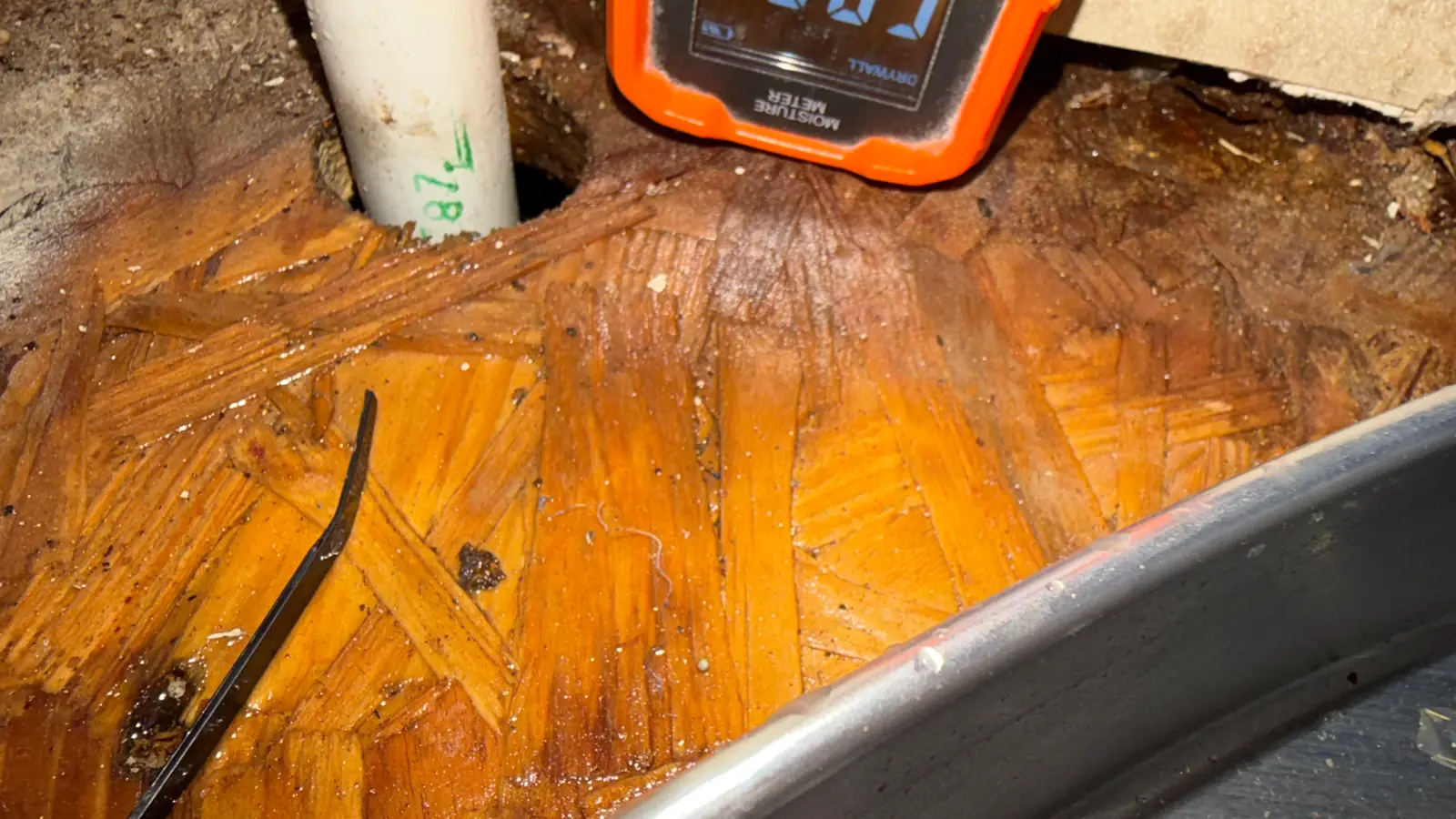
Mold needs moisture. The EPA's remediation guide says the plan should include steps to fix the water or moisture problem, or the problem may come back. When the leak has soaked the drywall, subfloor or framing around the mold, the job has to include drying the moisture source before the mold work can finish. A dry job and a wet job are different jobs, and they're priced that way.
What a mold remediation quote should spell out
When two quotes for the same bathroom are far apart, start by checking what each one includes. The total matters less than the scope behind it. This Old House suggests a blunt question for any contractor: "What is the scope of work outlined in the contract?" A good quote answers it before you ask, line by line, so you can compare like with like.
Expect the lines to follow the order of the work: containment first, then removal, cleaning and treatment, then the moisture, and last, the debris and your belongings. A missing line isn't always a problem, but it should never come as a surprise when the invoice arrives. Look for these:
- Containment. How the work area gets closed off, and how big the closed-off zone is. The EPA says the main point of containment is to protect the people living there, and the crew, from mold exposure.
- Removal by material. Which drywall, insulation, carpet or pad comes out, and roughly how much.
- Cleaning and treatment of the surfaces that stay.
- The moisture plan. Is drying included? Who fixes the leak? A broken pipe is a plumber's repair, not part of mold work.
- Disposal, which This Old House lists among the costs that can come on top of the job.
- Your belongings. Who moves what's in the room, and where it all goes.
- Exclusions, in writing. Repairs above all (more on those below).
Watch the wording too. A quote that says "mold removal" next to a single number may cover less than one that spells out remediation, so ask which steps it includes. If the two terms blur together, our plain guide to mold removal vs. mold remediation sorts them out. And when one bid comes in far below the rest, look for containment and the moisture plan on it first. If either is missing, the low number buys a smaller job.
Costs that sit outside the remediation price
A mold remediation cost estimate can be accurate and still leave you short, because other bills tend to arrive on their own.
Repairs. Once moldy drywall, flooring or cabinetry comes out, something has to go back in. This Old House says that when mold has damaged drywall, flooring, framing or cabinetry, those repairs are often priced separately from the remediation work.
The leak itself. A dripping supply line is a plumber's job and a roof leak belongs to a roofer, so that repair gets its own invoice. Skipping it is the most expensive choice on this list, because the EPA says that if you clean up the mold but don't fix the water problem, the mold problem will most likely come back.
Heating and cooling. If mold has reached the HVAC system, This Old House lists system cleaning as its own cost. In the meantime, the EPA says not to run a system you know or suspect has mold in it, since it could spread mold through the building.
Somewhere else to stay. Temporary housing is on This Old House's list of added costs. Whether you'll need it depends on the job and on who lives with you, and our guide on staying home during restoration walks through that decision.
Storage. If a room's contents have to leave, packing and storing them is another line item. Our contents pack-out and storage service covers that part.
Will insurance pay any of it?
Sometimes. The Texas Department of Insurance (TDI) draws the line between sudden and accidental water damage, which most homeowner and renters policies cover, and gradual leaks or seepage, which most home policies don't. TDI says that second group includes damage from mold. TDI also notes that most home policies don't include mold cleanup and testing after the damaged item comes out, though your insurer may let you add coverage for cleanup caused by a covered loss. Our post on whether homeowners insurance covers mold goes further into it.
What you can control is the paper trail, and the same TDI page lays out the basics:
- If possible, take pictures or videos of the damage before making any repairs.
- Don't throw away damaged items until your adjuster has seen them. If moldy material has to come out first, photos and a written list help document it.
- Make temporary repairs to protect the house, and keep receipts for the materials you buy.
- Wait on permanent repairs until your insurance company sees the damage.
The claim and the deductible are yours, and your carrier and its adjuster decide what's covered. We don't interpret policies. We help document the damage and work with your insurance carrier throughout the restoration process, and our page on insurance documentation explains how that works.
Getting a real number for your home
Every figure above is somebody else's average. Your number depends on things no website can see: how big the patch really is, what's behind it, and whether the water that caused it has stopped. Two homes with the same size patch can end up with different bills for exactly those reasons. A real price starts with the actual wall, attic or closet.
Our mold remediation page explains how the work runs, from containment through removal, cleaning and treatment, and why the moisture behind the mold matters as much as the mold. When you're ready to talk about your home, call 24/7 or send a request and tell us what you're seeing.