Water Damage
Slab leak water damage: signs, first steps and drying in Texas clay soil
Slab leak signs include a moving water meter, warm floor spots and damp carpet. See the first steps, why Texas clay raises the stakes, and how drying works.
By Ricky Ballard8 min read
The most reliable slab leak signs are a water meter that keeps moving while nothing in the house is running, a warm or damp patch in the floor, and the sound of water when every tap is off. If you notice them, confirm the leak at the meter, shut off the water, get a plumber to find and fix the pipe, then have the wet flooring and walls dried before mold gets a start.
Those are the basics. In Texas the details matter, because a house on a concrete slab may also sit on clay that swells when it gets wet. A leak under that kind of foundation isn't only a plumbing problem or a flooring problem. It can turn into a soil problem too.
Slab leak signs you can check from inside the house
A slab leak hides well. The pipe runs under or through the concrete, so the water shows up somewhere else first, if it shows up at all. The signs below come from This Old House's slab leak guide, and the meter check comes from the San Antonio Water System's leak checklist.
| What you notice | What it can point to |
|---|---|
| The meter moves with every fixture off | Water leaving the pipes somewhere. SAWS treats a moving triangle or spoke on a clock-face meter, or any flow above 0.0 on a digital one, as a leak. |
| A warm spot on tile, wood or carpet | A leaking hot water line. This Old House says these hot spots typically line up with the path of the pipe. |
| Running water you can hear with everything closed | Water moving through a line that shouldn't be carrying any. |
| A water bill that jumps with no change in habits | Steady use nobody can account for. |
| Damp carpet or pad near a wall or baseboard | Water working up through the slab, sometimes well away from the break. |
| A musty or earthy smell | Moisture that has sat long enough for mold or mildew. |
| Weak water pressure all over the house | Water escaping before it reaches the faucets. |
One sign by itself proves little. Two or three together, especially a moving meter plus a warm or damp spot, make a slab leak the prime suspect. Our guide on how to check for a hidden water leak walks through the meter test step by step. And if your house sits on piers instead of a slab, the water collects underneath in a different way, covered in our post on water in a crawl space.
Why Texas clay soil raises the stakes
A wide band of Central Texas sits on black clay that changes size with the weather. A USDA state soil sheet hosted by the Texas Water Development Board says the Houston Black series covers about 1.5 million acres of the Blackland Prairie, which extends from north of Dallas south to San Antonio. Its clays shrink and swell markedly with changes in moisture content. In metro areas, the sheet adds, that shrink-swell potential commonly limits building site development.
The NRCS official series description puts numbers on it: cracks half an inch to 4 inches wide at a depth of 12 inches during dry periods, open 90 to 150 cumulative days in most years. Texas A&M AgriLife Extension describes the region's black and reddish clays the same way. They shrink and swell when exposed to moisture, opening wide cracks and heaving fence posts and patios.
Now add a leak under the slab. The American Society of Civil Engineers' homeowner guide to shrink/swell soils lists plumbing line leaks as a localized source of water that may lead to localized foundation movements. It also says uniform changes in soil moisture do less damage than localized ones. A leak is about as localized as water gets: one wet zone of clay under one part of the house, swelling while the soil around it stays put.
That guide's list of interior warning signs overlaps with the leak signs above. It names sticking doors, cracks above doors and windows, cracked ceramic or vinyl tile, a sloping floor, and cracks in a concrete floor 1/16 inch across or wider. Seeing those next to a moving meter? Tell the plumber about both, and once the plumber has fixed the leak, consider having a structural engineer or foundation specialist look at the house. That's their call to make, not ours. Be wary of anyone who diagnoses a foundation over the phone.
First steps: confirm it, stop it, call a plumber
Right away
- Confirm it at the meter. Turn off every faucet and water-using appliance, then watch the meter. SAWS treats any movement as a leak, and if water fills the meter box so you can't read it, its checklist says to contact SAWS emergency operations.
- Shut off the water. SAWS asks customers with a significant leak to turn off the water at the meter. Once it's off, the clay and the floors stop taking on more.
- Photograph everything before it moves. The Texas Department of Insurance (TDI) says to take pictures or video of the damage before making repairs and to keep damaged items until your adjuster has seen them.
Then make the calls
- Call a licensed plumber for the pipe. This Old House is blunt: slab leak repair is not a DIY job. Finding a leak under concrete and fixing it is plumbing work, which we don't do. While you're on the phone, ask about one more step the ASCE guide recommends, verifying the repair with a pressure test before anyone calls the job finished.
- Tell your insurance company. TDI says you usually must report hidden water damage within days after you first see it, and a slab leak is about as hidden as water damage gets.
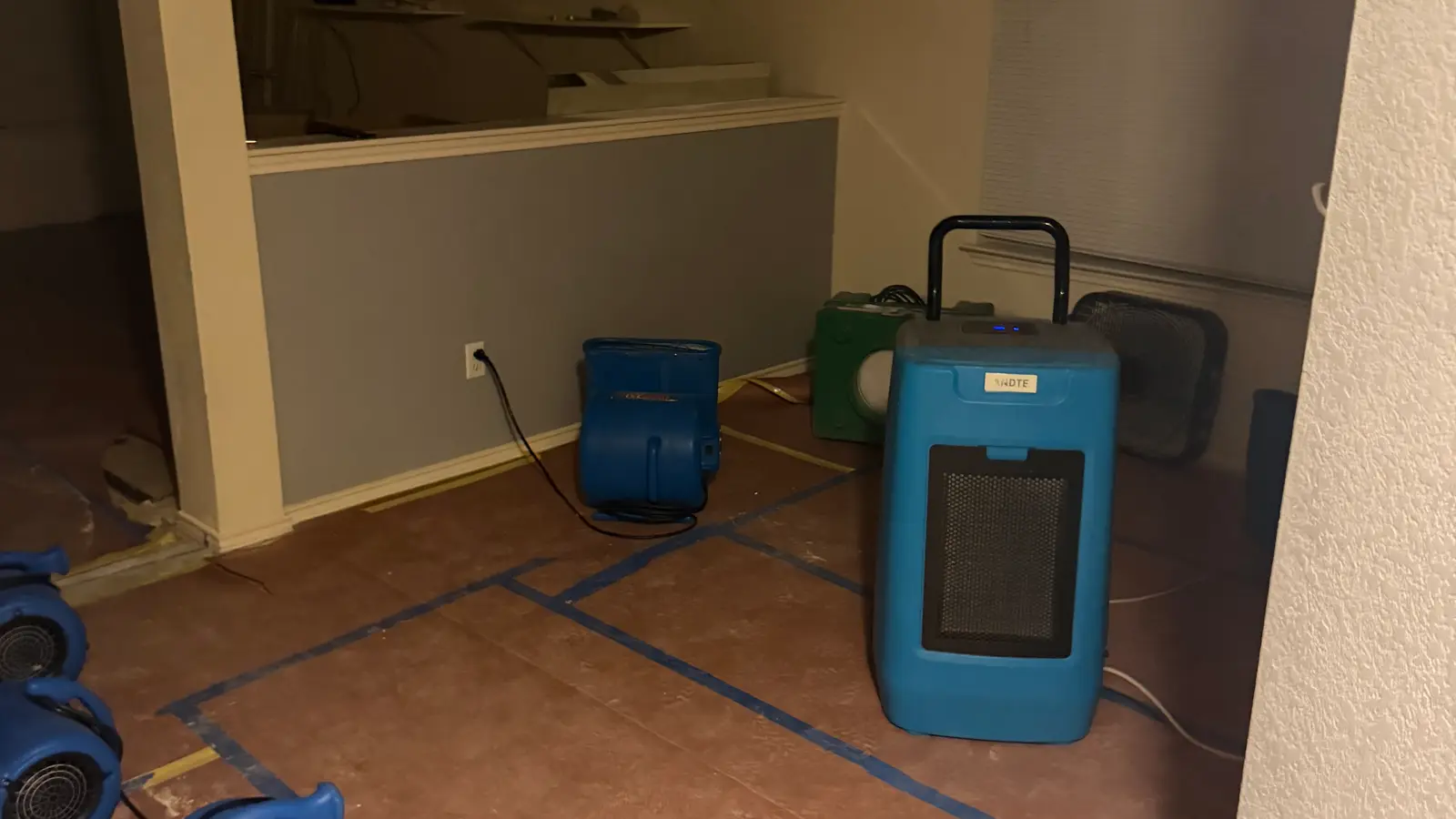
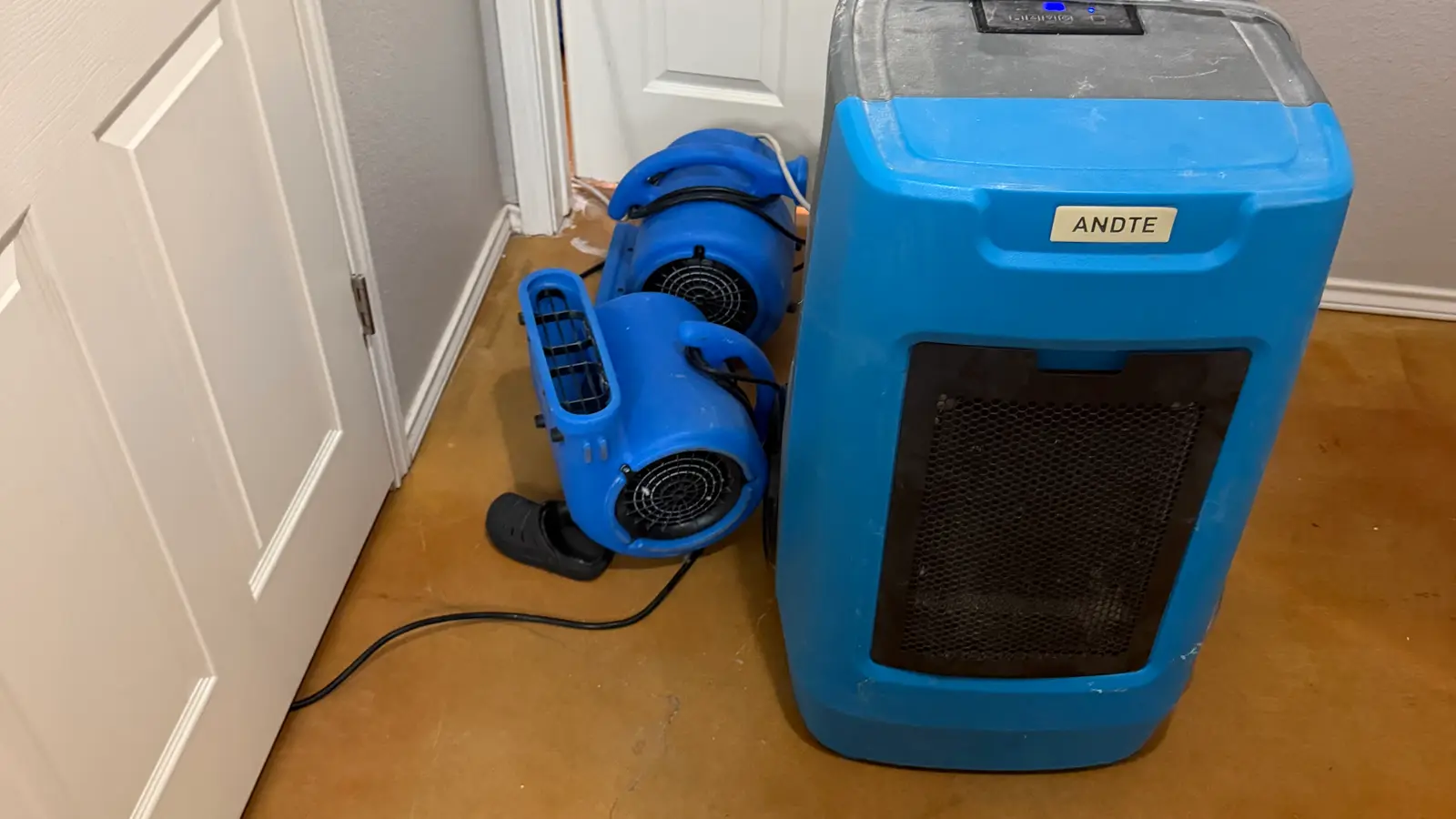
- Get the wet areas dried. With the water off, drying doesn't have to wait for the plumber to finish.
Drying a house that got wet from below
A slab leak soaks a house from the bottom up, the reverse of a pipe bursting in a ceiling. Water rises through the concrete and spreads under whatever flooring sits on top: carpet pad, tack strip, the underlayment of a floating floor, the underside of hardwood. Drywall then wicks it up the walls. By the time a damp line shows at the baseboard, the wet area under the flooring can be bigger than anyone guessed.
Concrete adds its own delay. When Restoration & Remediation magazine laid out the IICRC S500's drying classes in 2007, quoting the standard's third edition, it grouped concrete with hardwood, plaster, brick and stone, dense materials that release moisture slowly and "may require longer drying times and special methods." The ANSI/IICRC S500, now in its fifth edition (2021), is still the industry standard for water damage restoration.
That's why structural drying after a slab leak runs on moisture readings, not a calendar. Readings come first. They map how far the water traveled under the floor and up the walls, and repeat readings at the same spots show whether those materials are drying or stuck. Some flooring traps water against the slab and has to come up before the concrete can dry, and that decision belongs to the readings too. For more on the concrete itself, see our post on drying a concrete slab after water damage.
Don't let the slow part make you wait on the fast part. The EPA advises drying water-damaged areas and items within 24 to 48 hours to prevent mold growth, and TDI notes that mold can start growing within a day after a leak. A slab leak often runs for a while before anyone notices it. The mold clock may already be ticking.
Slab leaks and the insurance claim
Coverage for a slab leak depends on your policy, and your carrier makes that call. What we can share is how the TDI home insurance guide frames the general picture. It lists sudden and accidental release of water among the damages most policies cover, and a continuous water leak among the ones most don't. Foundations get a line too. The guide names damage to foundations or slabs among its endorsements, the add-ons companies offer to increase or add coverage.
Where does your leak land, then? That's a question for your agent, your adjuster or the policy itself. The same guide says to tell your company as soon as possible, and it notes that some policies have a one-year deadline unless you can show good cause for the delay.
Our part is narrower, and we like it that way. We help document the damage and work with your insurance carrier throughout the restoration process, with photos, moisture readings and notes an adjuster can use. We don't act as adjusters or interpret policies, and the claim and the deductible stay yours. Our page on insurance documentation explains how that works.
When to call for drying
Call once the plumber has the leak isolated, or sooner if water is already standing on the floor. We're based in San Antonio, veteran-owned and operated, and available 24/7 for water damage restoration, from extraction to the last moisture reading.
Three details make that first call more useful. Tell us where you've seen water or dampness and whether any floors feel warm. Share what the plumber found, or when the plumber is coming. And if you've already opened a claim, have the claim number handy so the documentation lines up from day one. Then call or request service online. The plumber fixes the pipe, and we'll dry out what the water reached.