Restoration Process
Water mitigation vs water restoration: what each phase covers
Water mitigation vs restoration: one stops the damage, the other puts the home back. Texas Damage Response explains what each phase covers and when it starts.
By Ricky Ballard7 min read
In water mitigation vs restoration, mitigation stops the damage, and restoration puts the home back. Mitigation is the emergency phase, everything from shutting off the water to drying the structure, while restoration is the larger goal of returning the house to the way it was before the water got in.
Plenty of people use the two words for the same thing, and on a normal day that's harmless. On the day of a leak, the difference matters. One phase can't wait an hour. The other should wait until your insurance company sees the damage, according to the Texas Department of Insurance (TDI), which tells homeowners not to make permanent repairs before then.
The two phases side by side
The table compares the phases on the questions that come up in the first week. The last row quotes TDI's tips page word for word.
| Question | Water mitigation | Restoration |
|---|---|---|
| What's the goal? | Stop the damage from spreading | Return the home to its condition before the loss |
| When does it happen? | Right away, inside the EPA's 24 to 48 hour drying window | After the structure reaches its dry standard |
| What does the work look like? | Stopping the source, extracting standing water, moving belongings off wet floors, drying walls and floors, tracking moisture | Replacing what the water ruined, then the finishes: drywall, paint, flooring and trim |
| How do you know it's over? | Moisture readings reach the dry standard for each material | The rooms look and work the way they did before |
| What does TDI say? | "Make temporary repairs to protect your house and belongings." | "Don't make permanent repairs until your insurance company sees the damage." |
That last row is the one most people miss. TDI's two sentences split the job right where the phases split: protect the house now, and save the permanent work for after your insurer has seen what happened. If you want national cost figures for the first phase, our water mitigation cost guide has them.
Neither phase includes fixing whatever leaked. The S500, the industry's standard for water damage restoration, treats finding and correcting the source of the water as the property owner's responsibility, not the restorer's, so a broken pipe goes to a plumber.
Why mitigation can't wait
Water doesn't hold still while you make phone calls. It wicks up drywall, slides under baseboards and soaks into carpet pad, and every hour widens the area that has to dry. The EPA says to dry water-damaged areas and items within 24 to 48 hours to prevent mold growth. The water can also get worse on its own. The S500's category rules allow for exactly that: clean water from a supply line can deteriorate as time passes and temperatures climb, according to Restoration & Remediation magazine.
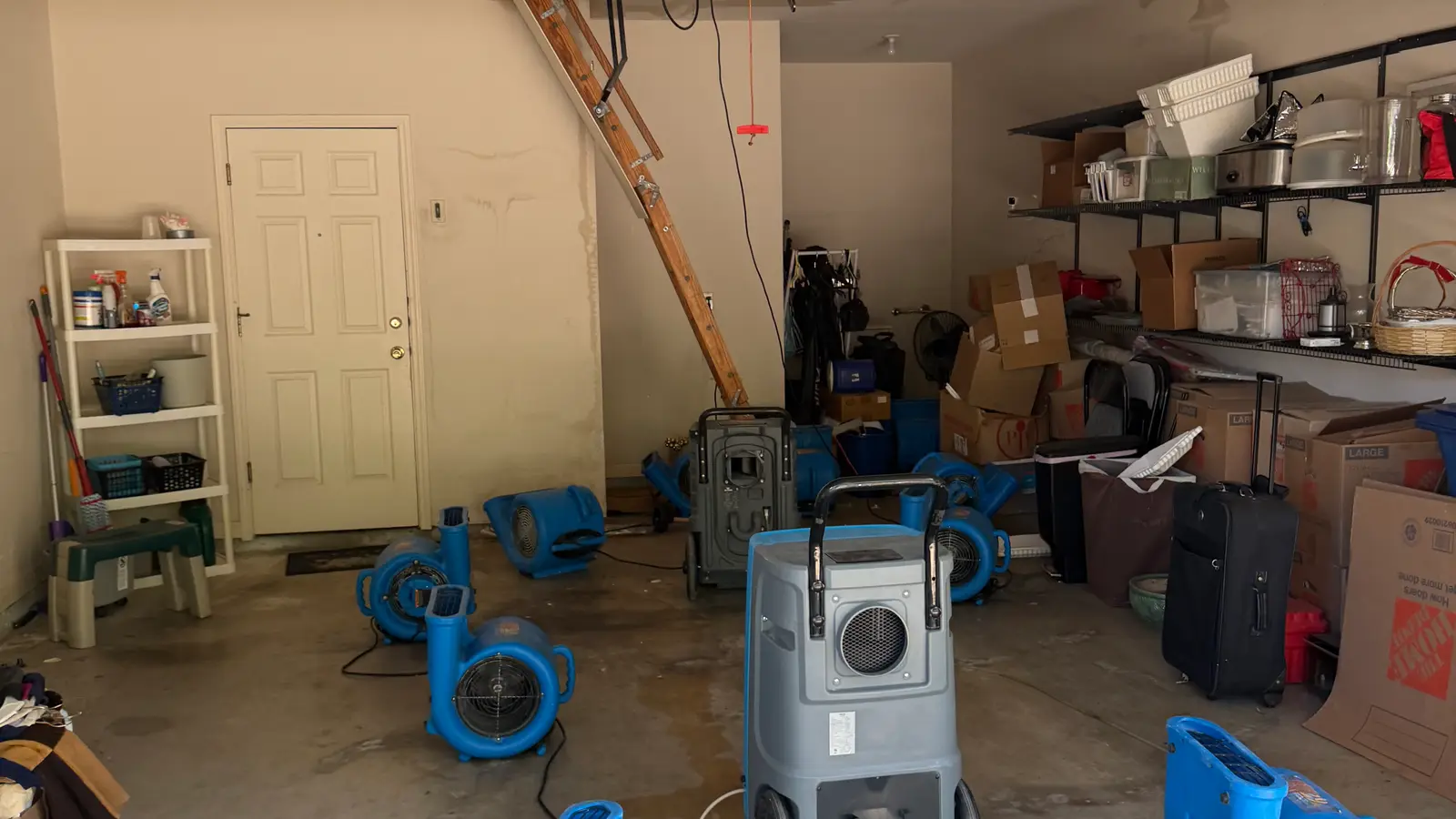
Then there's the claim. TDI's blog warns that your insurer may deny your claim if you don't protect your property, and TDI's tips page says to move wet items to a dry room or an area with fresh air. The same page notes that mold can start growing within a day after a leak. That's mitigation in plain words. Our complete water mitigation handles the professional side of the same job: stopping the spread, extracting standing water, protecting the rooms that are still dry and getting the drying started.
One leak, both phases
Picture a supply line under an upstairs bathroom sink that lets go overnight. By morning, water has soaked the vanity base, spread under the vinyl plank in the hall and started dripping through the kitchen ceiling below. The S500 lists a broken supply line as Category 1, clean water.
Mitigation starts that morning. Shut the water off at the main, as TDI advises for a sudden leak. If water has reached outlets or light fixtures, the CDC says to shut off power at the main breaker, but not by wading through standing water; call an electrician instead. Photograph everything before it moves. Then the standing water comes out, belongings move to dry rooms and readings map the spread before drying starts on the subfloor, the walls and the ceiling cavity. Ceiling drywall that has swollen or split at the seams comes down, following the EPA's wallboard guidance.
Restoration waits for dry readings. New ceiling drywall, paint, maybe a new vanity and flooring. None of it is urgent, and TDI wants permanent repairs held until your insurer sees the damage anyway.
Where mitigation ends and repairs begin
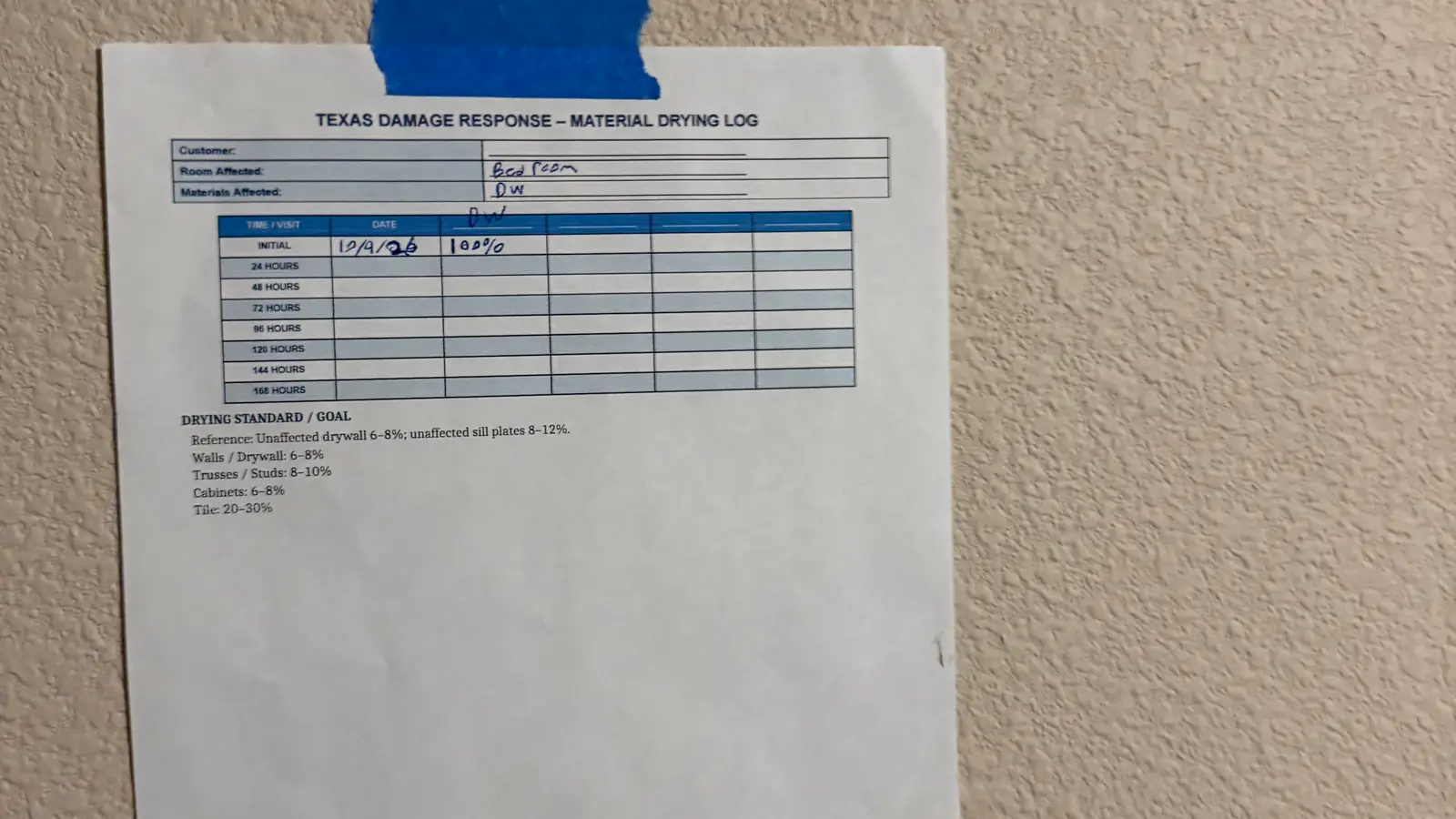
The hand-off point has a name: the dry standard. R&R magazine quotes the S500's definition, "a reasonable approximation of the moisture content or level of a material prior to a water intrusion." Readings make that call, not a date. That's why structural drying, with moisture readings until each material reaches its dry standard, is the last step of mitigation. Our post on how professionals dry a house covers that stage up close.
Some materials never make it to the hand-off. Drywall gets one test in the EPA's water damage table: no obvious swelling and intact seams, and it can dry in place. Fail that test and the guidance is remove, discard and replace. Wet fiberglass and cellulose insulation get the same discard-and-replace guidance. The removal belongs to the emergency phase, because a wall can't dry with soaked insulation inside it. The replacement belongs to restoration, once the cavity is dry.
One caution before anything leaves the house. TDI says to take pictures or video of the damage before making any repairs, and not to throw away damaged items until your adjuster has seen them. When drywall or pad has to go before the adjuster visits, photograph it, note where it came from and call your carrier about what to save.
Remediation, hazard mitigation and other terms you'll hear
Restoration vocabulary is a mess, and most water mitigation vs restoration confusion starts with five terms.
- Water damage restoration. The industry's umbrella term. The ANSI/IICRC S500 carries the title Standard for Professional Water Damage Restoration, and the IICRC's page describes it as the procedures and precautions for performing water damage restoration. In the trade, the word stretches over the whole job.
- Water mitigation. The first phase of that job, aimed at keeping the loss from growing.
- Water damage cleanup. A catch-all that can mean either phase, which is exactly why it pays to ask what a quote includes.
- Remediation. You'll see it most with mold. The EPA calls its guide for mold cleanup in larger buildings Mold Remediation in Schools and Commercial Buildings, and our mold remediation page uses the word the same way. Some companies say "water remediation" for mitigation work, too.
- Hazard mitigation. A different idea entirely. In FEMA's language, hazard mitigation assistance funds long-term solutions that reduce the impact of future disasters. Nothing to do with a wet kitchen tonight.
The claim, and the first call
How the two phases show up on a claim
In either phase, coverage is for your carrier and its adjuster to decide. We don't interpret policies, and only your carrier can tell you what yours will pay. What the phases change is the paperwork. Mitigation produces the record of the emergency: photos, moisture readings, notes on where the water traveled and, if belongings leave, a contents pack-out inventory. Restoration produces the repair estimate. TDI's tips page also says to keep receipts for any materials you buy to make repairs, so hold on to the receipt for anything you bought on day one.
We help document the damage and work with your insurance carrier throughout the restoration process. The claim and the deductible stay yours, and our insurance claims page explains where our documentation fits in your carrier's process.
Where to start if water is in the house now
If you remember one thing about water mitigation vs restoration, make it this: mitigation is the only part of the job on a clock. Our water damage service includes complete mitigation, emergency water extraction, structural drying and moisture monitoring, plus contents pack-out when a room needs emptying and mold remediation when a leak has already led to mold. Texas Damage Response is a veteran-owned and operated company based in San Antonio, with emergency response available 24/7.
See our restoration process for every step in order, read how long water damage restoration takes if you're planning around the work, or call us now and request service.