Water Damage
Who to call first for a water leak: plumber, restoration company or insurer?
Who to call for water damage? Close the valve, then call a plumber for the pipe, Texas Damage Response for the drying and your insurer to report the claim.
By Ricky Ballard7 min read
Close the valve before you call anyone, which is TDI's first step for a sudden leak. Then make three calls: a licensed plumber if a pipe or fixture failed, a water damage restoration company to pull out the water and dry the house, and your insurance company to report the damage.
That answers who to call for water damage, and it holds for most leaks inside a house. Once the water is off, all three calls can go out in the same hour, and the drying doesn't have to wait for the pipe repair. Some situations add a fourth call, like water near the breaker panel or a leak coming from the unit upstairs.
Before the first call: close the valve
Nobody you call can close your valve faster than you can, so you're the first responder here. For a sudden leak, TDI's advice is to shut your water off at the main. Its water damage tips also point to the smaller valves under your sinks and near appliances, which are often the quicker fix for a toilet, a sink or a washing machine.
In San Antonio, SAWS asks customers with a significant leak to turn off the water at the meter, and the same page explains how to request help if you can't shut it off. Outside SAWS territory, check your own water utility's website for its after-hours help.
Electricity changes the order. If water has reached outlets, cords or the breaker panel, the CDC says to turn off the power at the main breaker, but not to step into standing water to reach it. Can't get there safely? The CDC's answer is to call an electrician to turn it off.
Who does what after a leak
The jobs split cleanly once you see them side by side, and the industry's own standard draws the first line. The ANSI/IICRC S500, the Standard for Professional Water Damage Restoration, assumes that finding and fixing the source of the water is the property owner's responsibility, not the restorer's. In a house, that usually means hiring a plumber.
| Who | Their job | First move |
|---|---|---|
| You, the homeowner | Stop the water, keep people safe, record the damage, and file and own any insurance claim | Close the valve, then take photos or video before any repairs |
| Licensed plumber | Finds and repairs the pipe, fixture or supply line that failed | Confirms the source so the water can stay off |
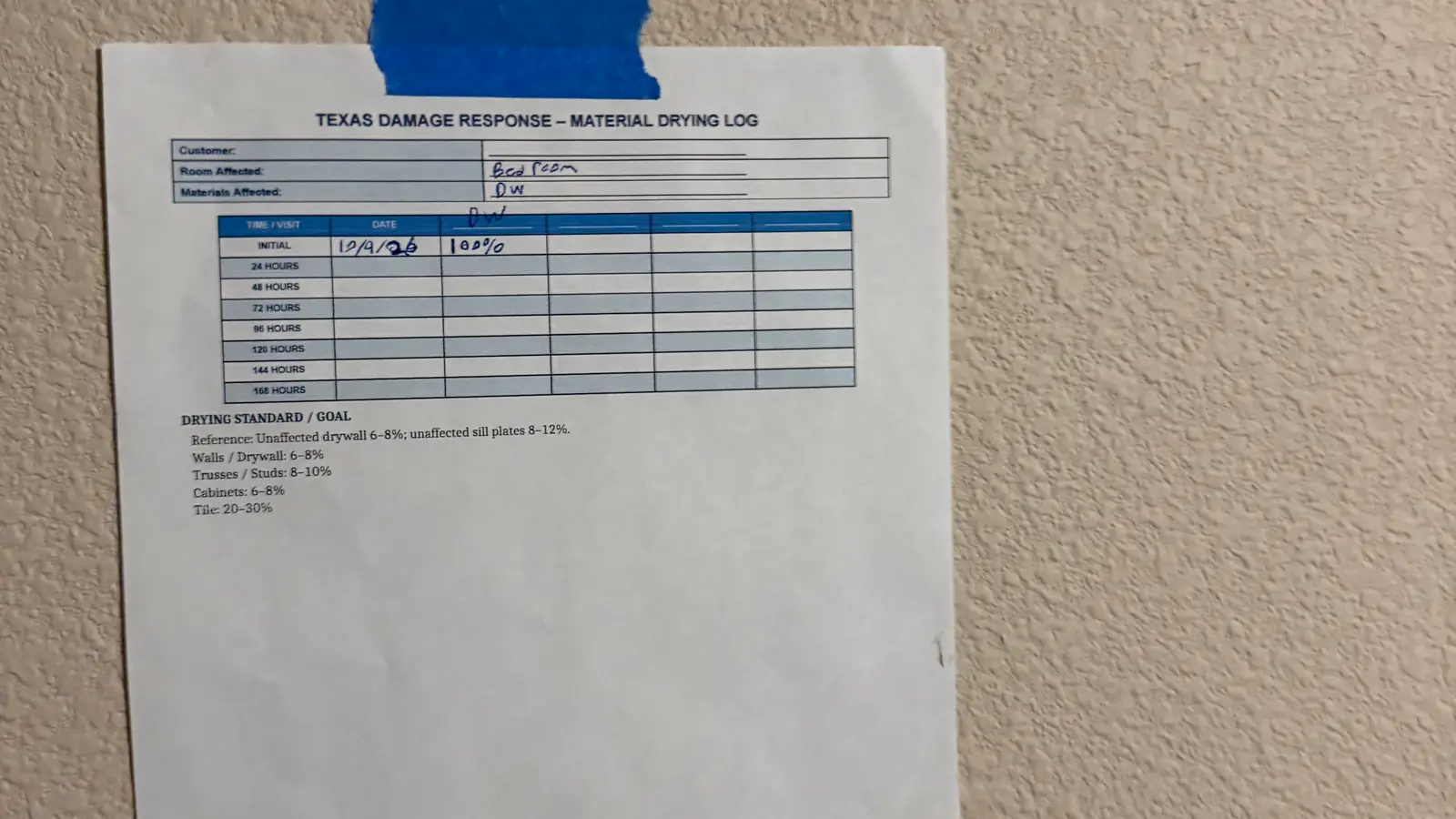
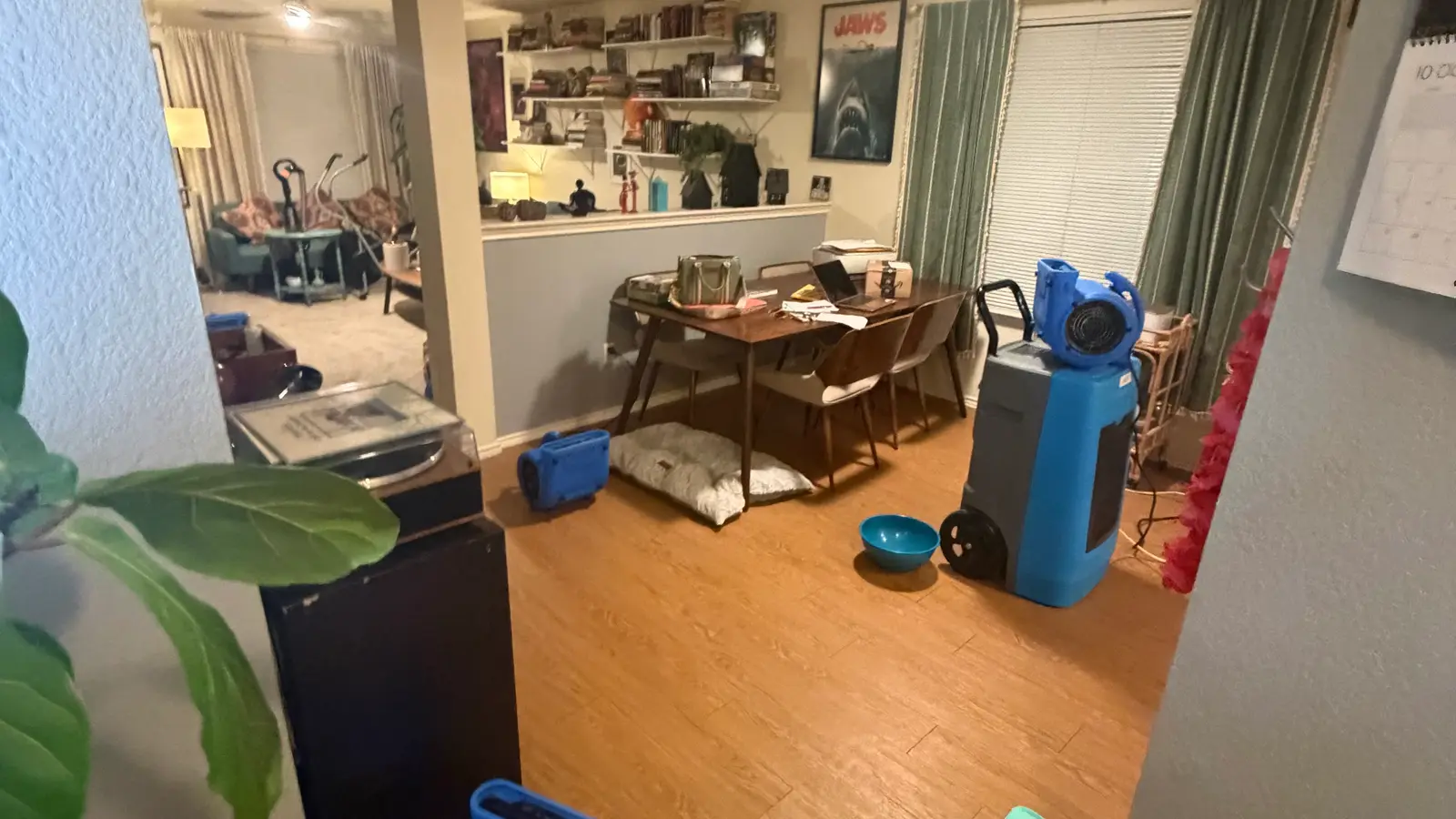
| Water damage restoration company | Extracts standing water, dries walls, floors and framing, tracks moisture, and helps document the damage | Measures how far the water traveled and starts extraction |
| Your insurance company and its adjuster | Takes your claim, inspects the damage, estimates the payment and decides coverage under your policy | Assigns an adjuster to your claim |
Two of those rows lean on TDI. Its water damage tips say to take pictures or videos of the damage before making any repairs. Its home insurance guide says the company sends an adjuster to look at your damage and bases its payment on the adjuster's estimate. And one line on TDI's adjuster page settles whose side that person is on: "The adjuster works for the insurance company paying the claim."
Plumber or restoration company: which call comes first?
It's a false choice. With the main closed, nothing is getting worse at the pipe. Plenty is getting worse in the floor. The EPA advises drying water-damaged areas and items within 24 to 48 hours to prevent mold growth, and TDI notes that mold can start growing within a day after a leak. That clock doesn't care whether the plumber has arrived.
Make both calls, back to back. The plumber repairs the source. Texas Damage Response doesn't do plumbing, and no restoration company should be guessing at a pipe it can't see. Extraction and drying can start while the repair waits its turn, which is how a burst pipe water damage cleanup usually runs.
What if nobody knows where the water is coming from? Then the plumber goes first, because the source has to stop before the drying can finish. We'd rather dry a house once than twice.
How to check a plumber in Texas
It's quick. The Texas State Board of Plumbing Examiners suggests getting the name of the company's Responsible Master Plumber, whose license number should appear in all of the company's advertising. Master Plumber numbers start with the letter M. Enter the number in the board's license search to confirm it's valid. The board also suggests getting written estimates and checking references before you commit, though in a true emergency the license check is the step worth keeping. A plumber who can't give you a license number on the phone has told you something useful.
When to call your insurance company, and what to have ready
Call early, before you know what the bill will be. TDI's tips say to tell your company as soon as possible, and you usually must report water damage that was hidden from view within days after you first see it. Have these ready when you call:
- Your policy number, or at least the company's name and your agent's contact information
- Photos or video of the damage, taken before cleanup started
- A list of damaged property, which TDI asks for, with the damaged items kept until your adjuster has seen them
- Receipts for materials you bought for temporary repairs
Drying the house isn't the insurer's job. TDI's own advice for that step, if you can't remove the water and dry the area yourself, is to use a service that specializes in cleaning up after water damage. Our page on working with your insurance carrier explains where our documentation fits. The claim stays yours, and so does the deductible.
Who to call for water damage in the ceiling, a wall or the floor
Where the water shows up tells you who else belongs on the list.
Water coming through the ceiling
Look at what sits above the stain. A bathroom upstairs points to a plumber. An air handler in the attic that overflows its drain pan points to an HVAC technician, the person who services your AC. In a condo or townhome, the first call may be the neighbor upstairs, and our guide to water damage from the unit upstairs covers that case. Whatever the source, the wet drywall and the cavity above it need drying, and our guide to water damage in the ceiling walks through the first steps.
Water in a wall or on the floor
A wet wall with no visible source usually hides a supply or drain line, and finding it is a plumber's job. On the floor, check the appliances first: the water heater, the dishwasher, the washing machine and the refrigerator's water line. A failed appliance needs its own repair, from a plumber or an appliance technician depending on the unit. Water that seems to rise through a slab floor goes to a plumber, too. Either way, the drywall, flooring and subfloor need drying, and moisture readings show when they're done.
If you rent
Your landlord or property manager goes near the top of the list. The EPA tells renters to report all plumbing leaks and moisture problems immediately to the building owner, manager or superintendent. On the insurance side, TDI's home insurance guide says renters insurance covers your belongings but won't pay to fix the house or apartment building. The building owner's policy does that.
One call for the water side of the job
Texas Damage Response takes calls 24/7. As a veteran-owned and operated company, we work from our home base in San Antonio, and our water damage restoration work covers the water side of the job: emergency water extraction, structural drying and moisture monitoring, with contents pack-out if a room needs emptying. We help document the damage and work with your insurance carrier throughout the restoration process. We don't act as an adjuster, though. Coverage stays your carrier's decision.
When you call, tell us what failed, which rooms the water reached and whether it's off. Still running? Close the valve first. For the full sequence after a break, see what to do when a pipe bursts. For the gray areas, our guides on whether water damage is an emergency and how to choose a restoration company help. Anything that can wait for a scheduled visit? Request service online.