Water Damage
Water heater leaking: how to limit the water damage
Water heater leaking? Cut the power or gas, close the cold-water valve, then dry what got wet. Texas Damage Response explains each step and who fixes what.
By Ricky Ballard7 min read
If your water heater is leaking, turn off its power or gas first, then close the cold-water valve that feeds the tank, the same order the U.S. Department of Energy's water heater guide uses. Those two moves stop the heating and the refilling, and they buy you time to get the water up before it soaks into drywall, baseboards and flooring.
After that, the job splits in two. A plumber decides whether to repair the heater or replace it. The water on your floor is a separate problem, and it's the one that grows by the hour. The steps below handle both, in the order that keeps the damage small, and show where your insurance carrier fits in.
Shut it down: power or gas first, then the water
The Department of Energy's tank-flushing guide sets the order:
- Electric heater: switch the water heater's breakers to "off" at the panel. Standing water near the panel? Stop. The CDC says not to enter standing water to reach the main power switch, and to call an electrician instead.
- Gas heater: follow the owner's manual. The DOE guide says it may tell you to shut off the gas valve or set it to "pilot."
- Then the water: close the valve on the cold-water inlet pipe, the line that brings water into the tank. No valve there? The DOE guide says to turn off the water supply to the entire house.
Keep your hands out of the stream. The Consumer Product Safety Commission says 150-degree water can cause third-degree burns in two seconds, and that burns also occur after six seconds at 140 degrees. Draining the tank can wait for the plumber.
If you smell gas
Forget the water for a minute. Ready.gov says that if you smell gas or hear a blowing or hissing noise, you should open a window, get everyone out quickly, turn off the gas at the outside main valve if you can, and call the gas company from a neighbor's home. The same page warns that electrical sparks can ignite leaking natural gas, and that once you turn the gas off for any reason, only a qualified professional can turn it back on. Leave the breaker panel alone and get outside; the puddle will still be there when the gas company says it's safe.
Read the leak before the plumber arrives
Grab a flashlight and find where the water starts. You're not diagnosing the heater. You're giving the plumber a head start, and the photos you take now are the same ones your insurance carrier will want later.
- Pipes and fittings on top. A drip up here runs down the side of the tank and can pass for a tank leak.
- The temperature and pressure relief valve and the pipe that runs from it toward the floor.
- The drain valve near the bottom, where a garden hose would attach.
- The tank itself, with nothing wet above it, which is the one to describe to the plumber in the most detail.
And if the heater shares a closet with an air handler, check the AC's drain line too. Our post on AC leaks inside the house covers that one.
Never cap the relief valve pipe
Water dripping from the relief valve's pipe is a message, not a nuisance. The International Code Council's Building Safety Journal says that when the heater, the water pressure and the valve all work as they should, no water should come out of that valve at all, and any discharge points to a problem in the water system, the heater or the valve. The same article warns that screwing a cap onto that pipe to stop the drip could create a dangerous situation, with severe damage to the building and injury or death for the people inside. Put a bucket under it, take a photo and tell the plumber.
Why water from a heater travels farther than you'd expect
A water heater holds a lot of water, and it rarely leaks where anyone can see it. The Insurance Institute for Business & Home Safety (IBHS) notes that tanks holding 40 to 100 gallons can release large amounts of water, and that leaks in closets often go unnoticed until significant damage occurs. The tank's size isn't the limit, either. While the cold-water inlet stays open, a leaking tank keeps refilling from the house supply, and the water heads for four places:
- Under the door and the bottom of the walls, into the next room.
- Up into the drywall, which wicks water like a paper towel.
- Into carpet pad, or under vinyl plank and laminate, where the surface can look dry while the slab or subfloor stays wet.
- Down through the ceiling, if the heater lives in the attic, a setup our post on attic water heaters and AC units covers.
Clean water, but not for long
The water itself starts out clean. The IICRC S500, the industry standard for water damage restoration, puts water from a sanitary source in Category 1, and its examples include broken water supply lines and appliance malfunctions involving water-supply lines, according to Restoration & Remediation magazine. That same summary lists elapsed time and elevated temperature among the things that can degrade clean water. Warm water sitting in a closet all weekend checks both boxes, and it's one more reason not to wait and see whether the floor dries on its own.
Dry it, document it, then deal with the claim
Get the standing water out first. Emergency water extraction pulls it off the floor and out of carpet and pad, and structural drying goes after what soaked into drywall, framing and subfloor. Speed matters here. The Texas Department of Insurance (TDI) notes that mold can start growing within a day after a leak.
Before anything gets torn out or tossed, take care of the paperwork. TDI's tips are short:
- Take pictures or video of the damage before any repairs.
- Keep damaged items until your adjuster has seen them.
- Report hidden water damage within days after you first see it, which TDI says you usually must do.
Coverage, our part and the cost
Coverage is where people get surprised. TDI says most homeowner and renters policies cover sudden and accidental water damage, but policies usually won't cover damage from gradual leaks. A sudden split and a months-long seep can land on opposite sides of that line. Your carrier and its adjuster make that call, and TDI's advice is to check by reading your policy or calling your agent.
We help document the damage and work with your insurance carrier throughout the restoration process. We don't adjust claims or interpret policies, and the deductible stays yours. Today's Homeowner's national cost guide (updated September 2025) gives this range for a typical water damage restoration project: Industry average: $1,300–$6,000 per project. That's an industry average, not our price. Our insurance claims page and our water damage restoration cost guide go further.
An older tank? Lower the odds of a repeat
Water heaters wear out on a schedule nobody prints on the tank. An IBHS study, summarized in a Connecticut Insurance Department pamphlet, found that the chance a water heater will leak or burst starts to rise dramatically once it's 5 years old, and that three-quarters of water heaters fail before they turn 12. IBHS's current checklist asks more of owners than most of us manage, and it's worth reading in full:
- Inspect the tank every six months for leaks, rust and corrosion.
- Flush it twice a year to clear sediment.
- Book a professional inspection once a year, and have the anode rod checked every two years (yearly once the warranty runs out).
- Plan on replacing the unit every 7 to 10 years, depending on your water quality and how hard you use it.
Sensors, pans and who does the work
Two cheaper safeguards help too. IBHS lists battery-powered leak sensors near appliances, water heaters included, among its prevention basics, and notes that some models can close the water valve on their own when they detect moisture. Also ask your plumber whether your heater has a drain pan and where that pan drains. A sensor that chirps at 2 a.m. beats a soaked closet you find at 7.
The bigger tank jobs are a plumber's: anode rods, pans and replacements belong to a licensed plumber, while the water damage, if it ever comes, belongs to us.
Who to call first, and who to call next
Call the plumber for the heater. Then call for the water. They're different trades, and waiting on one shouldn't stall the other, because a plumber won't dry your subfloor and we don't repair water heaters.
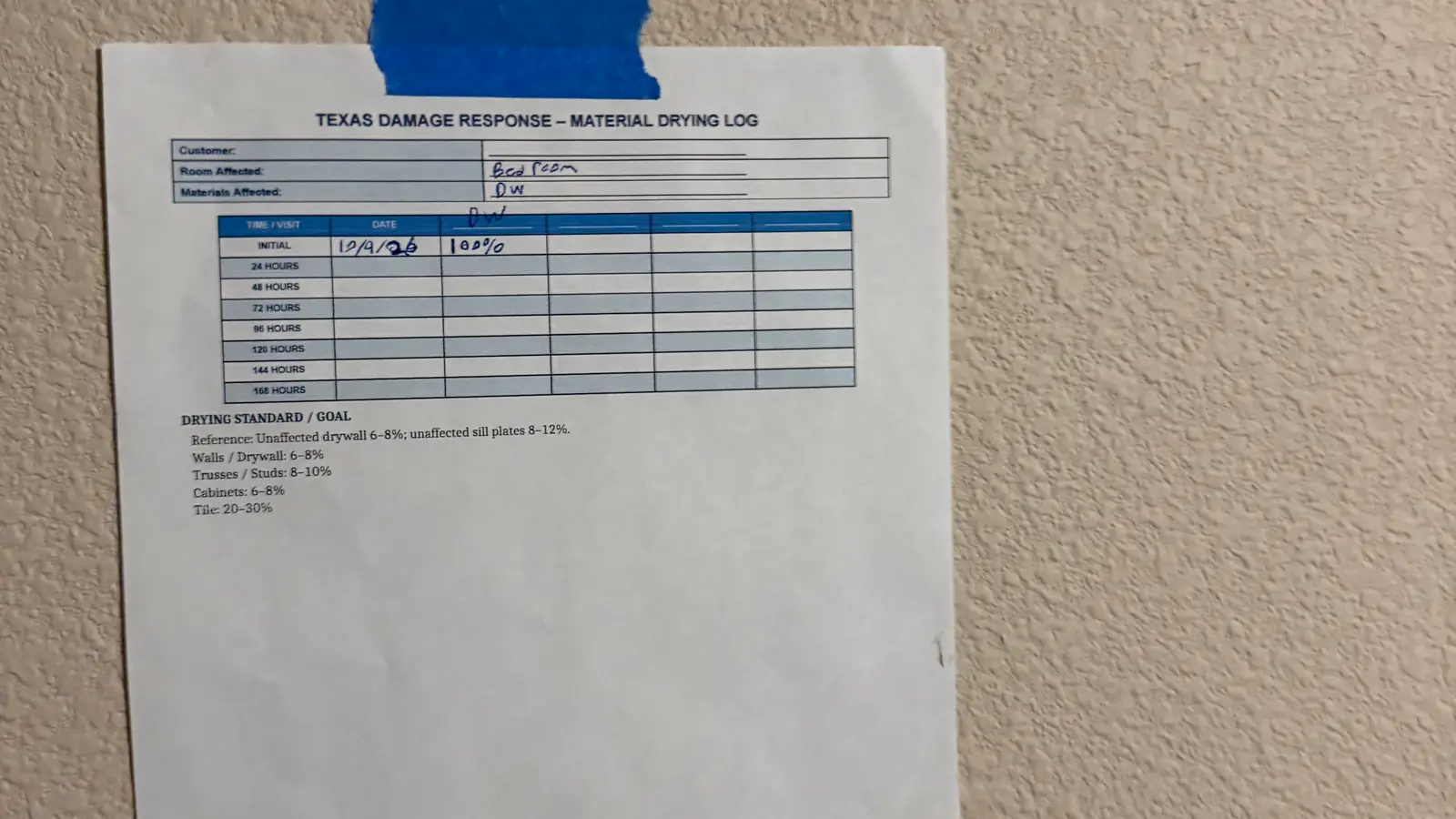
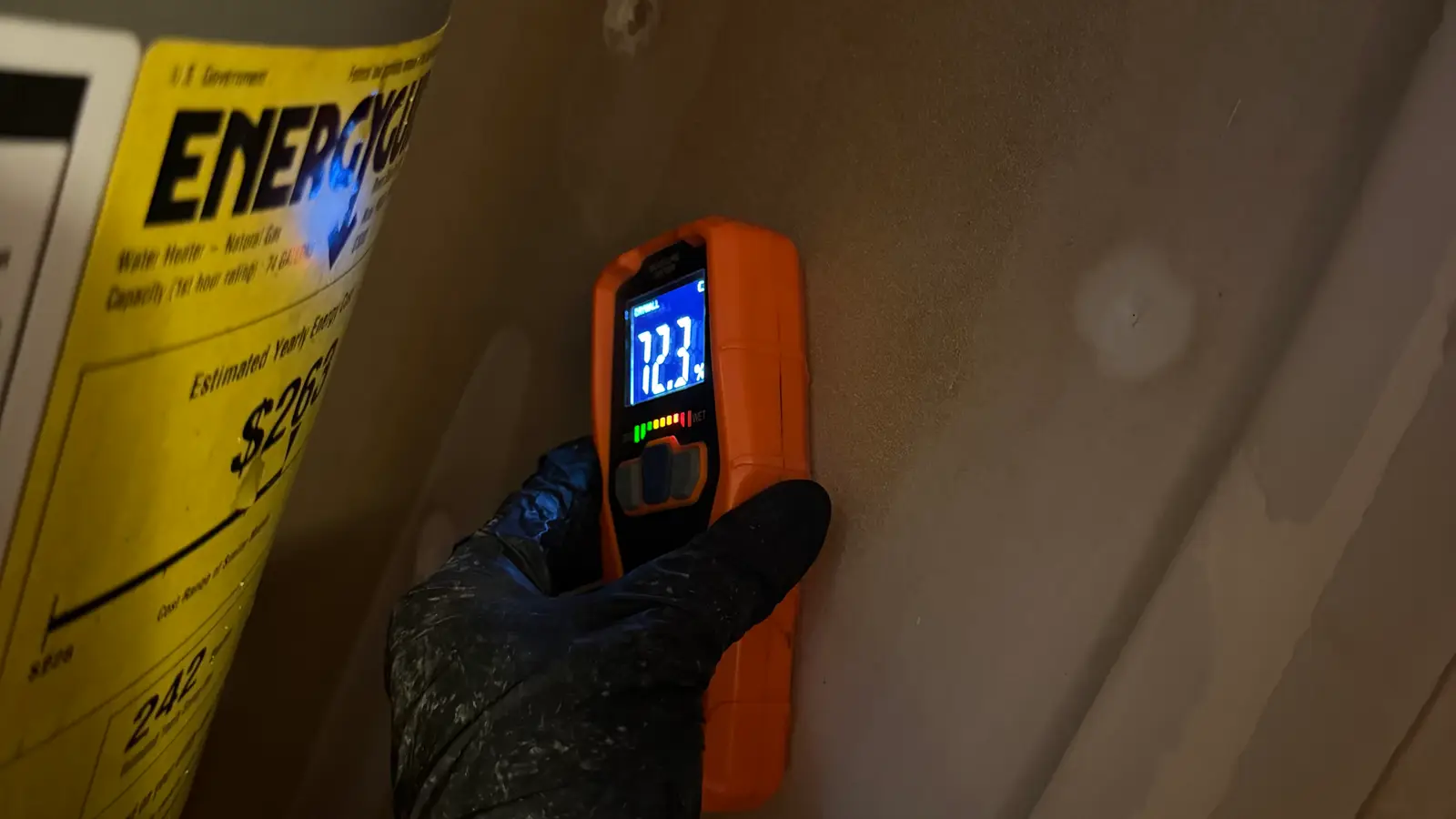
Once water reaches carpet, drywall or the next room, call Texas Damage Response, 24/7. We extract the standing water, dry the structure and keep taking moisture readings until the materials reach their dry standard. We're veteran-owned and operated and based in San Antonio. See how our water damage restoration works, or request service and tell us what you're seeing.